wayang kulit
Wayang Kulit, Indonesian shadow-puppet theater of Java. In a wayang kulit performance, dramatic shadows of flat leather puppets are cast onto a screen, accompanied by music, narration, and dialogue. The genre, also known in its ancient form as wayang purwa, stretches back to at least the 10th century, and was originally inspired by Indian models of dramatic performance. The stories were based on the ancient Indian epics, the Ramayana and Mahabharata. The purpose of the theater was principally moral and religious instruction in Hinduism. Although Islam spread throughout Java in the 15th and 16th centuries, the Hindu culture was so firmly entrenched that the shadow plays with their Hindu stories have survived to the present day. Shadow-puppet theater is also performed in China and throughout Southeast Asia, but the spiritual and religious characteristics of the wayang kulit are particular to Java.
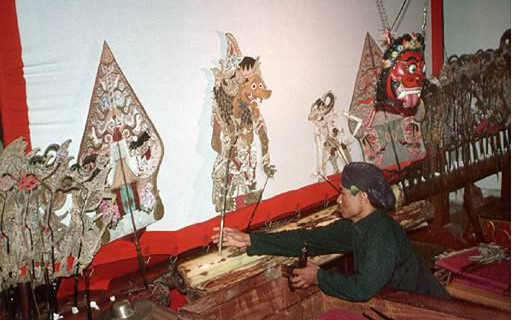
The flat puppets of wayang kulit theater are cut from the cured hide of water buffalo, then decorated with intricate perforations and paint. Each puppet is supported by a central rod of buffalo horn with smaller rods to manipulate movable arms. The silhouettes of the puppets are projected onto a screen by the light of an oil lamp.
The central figure in a wayang kulit performance is the dalang, a puppeteer and storyteller who operates the puppets while narrating the story, speaking all of the dialogue, providing the sound effects, and conducting the Hindu- and Buddhist-influenced gamelan orchestra, which provides musical accompaniment (see Indonesian Music: The Gamelan). As a full show will begin in the evening and continue until dawn, a dalang performance requires considerable endurance. The dalang is also recognized by audience members as a religious leader, or shaman, who communicates with the spirit world during the wayang kulit performance.
The ritual function of the wayang kulit is still strong in modern-day Java: Performances are commissioned in villages to celebrate marriages, births, circumcisions, and other rites of passage.*
Microsoft ® Encarta ® 2009. © 1993-2008 Microsoft Corporation. All rights reserved. |