| HEALTHY LIFESTYLE |
| ROTARIAN DR G. M. KULLO |
| MISSION To promote healthy behavior and healthy lifestyle thus preventing adverse effects on health and well-being and increasing quality of life. |
 |
| CLICK BUTTONS BELOW TO VISIT OTHER PAGES |
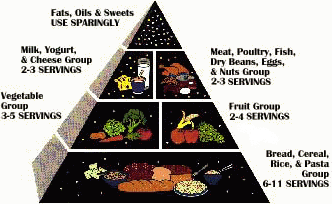
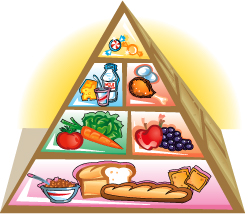
| Make healthful eating and physical activity a part of your everyday life Good nutrition is vital to your health. It is even more effective when coupled with regular physical activity. A physically active lifestyle offers many rewards -- from heart health to strong bones to stress relief. Study after study shows that people who follow healthful eating plans and stay physically active are more successful at losing -- and keeping off -- extra pounds of body fat. In fact, physical activity along with a healthful eating plan appears to be the key to maintaining a healthy weight. How can physical activity help you manage your weight and enhance your body image? " Physical activity burns energy. The longer, more frequently and more vigorously you exercise, the more calories you burn. When you burn more than you consume, your body uses its energy stores and you lose weight. " Physical activity helps you keep muscle and lose body fat. Without exercise on a weight-loss diet, you lose lean body tissue along with body fat. " Physically active people have more lean body mass. Even when you're not moving, lean body mass requires more energy to maintain than fat tissue. So at the same weight, you may be able toconsume slightly more calories without gaining weight than someone with more body fat. " Physical activity speeds up your metabolism for up to 12 hours, even after you stop. You'll burn more energy even at rest. " Physical activity can help relieve stress. " Many people who become more physically active opt for foods with less fat, fewer calories and more complex carbohydrates. For weight control, you don't need to be an exercise fanatic with strenuous daily workouts to get the benefits. Step aerobics or pedaling away on a stationary bike may not be right for you. That's OK, because moderate, consistent physical activity can do the job. In fact, any activity you enjoy and stay with can be the right one for you. If you make exercise enjoyable, you're more likely to stick with it. Food Guide Pyramid: Your guide to healthful eating No matter what your eating style, the Food Guide Pyramid is your personal manual to healthful food choices. It allows plenty of flexibility to enjoy foods that match your lifestyle and food preferences. The U.S. Department of Agriculture's Food Guide Pyramid contains all the building blocks of a healthful diet. There are five food groups with each group providing some, but not all, of the nutrients your body needs. Because foods contain different nutrients, no one food group is more important than the other. For good health, you need them all. The key messages of the Food Guide Pyramid are variety, balance and moderation. For variety, eat different foods from within the Pyramid's five groups. But for balance and moderation, you need to understand how many servings and what size portions to consume. The Food Guide Pyramid offers a range of servings for each food group. Everyone age two and over needs at least the minimum servings daily from all five food groups. However, the number of servings you need depends on the amount of calories you burn and your age, gender and overall health. So where do you fit in? The minimum number of servings from each group in the Pyramid provides around 1,600 calories. That's a good amount for most inactive women and some older adults. The mid-range of servings provides about 2,200 calories. This amount is appropriate for many children, teenage girls, active women and inactive men. Women who are pregnant or breast-feeding may need more. Teenage boys, active men and many athletes may need 2,800 calories or more daily, which would mean eating from the top of the serving ranges. Now that you know how many servings you need daily, you need to know how much food counts as a serving. Serving sizes differ among food groups. If the portion of food you consume is bigger than one serving then it will count as more than one serving. For example, a half-cup of cooked vegetables is one serving. So if you eat a three-quarter-cup portion of green beans, it would count as one-and-a-half servings of vegetables. You don't need to pull out your measuring spoons and kitchen scale to figure out how much you're eating. Serving sizes are meant as general guides. It's okay to eat smaller or larger portions as long as you balance them out over several days. To quickly estimate serving sizes, use these visual comparisons: Three ounces of meat, poultry or fish is about the size of one deck of cards One-half cup of fruit, vegetables, pasta or rice is about the size of a small fist One cup of milk, yogurt or chopped fresh greens is about the size of a baseball One-and-a-half ounces of cheese is about the size of two nine-volt batteries The Nutrition Facts Panel on food labels offers a reference for serving sizes. However, servings sizes on a label may differ slightly from serving sizes recommended by the Food Guide Pyramid because labels list "typical" serving sizes. =========================================================== HEALTH TIP Keeping your heart healthy When it comes to heart health, the messages of what to eat always revolve around fat. Is your eating plan keeping your heart healthy? "Heart healthy" eating means including whole grains, fruits and vegetables and choosing better sources of fat. Good fat choices include olive oil or canola oil, peanuts, walnuts, almonds or pecans. Plant fats have more unsaturated fat in them, and unsaturated fats help lower blood cholesterol. Animal fats -- meat and dairy foods -- are mainly saturated fats, the type of fat that increases cholesterol. In regards to heart health, these fats need to be monitored. Poultry and fish contain saturated and unsaturated fats, making them better choices than meat or dairy, but they also need to be limited. For heart health, consume more plant-based foods and contact a dietetics professional. Produced by ADA's Public Relations Team ==================== MORE HEALTHS TIPS To get health tips regularly by email, please join our Healthy Lifestyle Yahoo Group. Please send me an email asking to join the Healthy Lifestyle Yahoo Group. Email address is [email protected] Scroll down to see another attractive Food Pyramid Diagram ================================================ |
 |
 |
 |
| CLASSIC FOOD PYRAMID OF USDA See another nice diagram at bottom of this page. Also see update there. |
| THERE IS AN UPDATE OF THE FOOD PYRAMID WHICH IS THE OFFICIAL VERSION OF THE US DEPT. OF AGRICULTURE (USDA). TO SEE THIS IMPORTANT UPDATE, CLICK ON THIS FOOD PYRAMID DIAGRAM BELOW. |