
A gland is a group of cells that produces and secretes chemicals into the body. It selectively removes materials from the blood, concentrates or alters them, and secretes the finished chemical product for use somewhere in the body. Some types of glands release their secretions to specific areas. For instance, exocrine glands, such as the sweat and salivary glands, target the skin or inside of the mouth. Endocrine glands, on the other hand, release more than 20 kinds of chemical messengers, or hormones, directly into the bloodstream where they can be transported to exert their effects on cells in areas of the body distant from the gland itself.
The major glands that make up the human endocrine system are the hypothalamus, pituitary, thyroid, parathyroids, adrenals, pineal body, and the reproductive glands - the ovaries and testes. The pancreas is also part of this hormone-secreting system, even though it is also associated with the digestive system because the exocrine part of the pancreas also produces and secretes digestive enzymes into the intestine. Although the endocrine glands are the body's main hormone producers, some nonendocrine organs - such as the brain, heart, lungs, kidneys, liver, thymus, skin, and placenta - also produce and release hormones.
The hypothalamus, a collection of specialized cells that are located in the lower central part of the brain, is the primary link between the endocrine and nervous systems. Nerve cells in the hypothalamus control the pituitary gland by producing chemicals that either stimulate or suppress hormone secretions from the pituitary.
Although it is no bigger than a pea, the pituitary gland, located at the base of the brain just beneath the hypothalamus, is considered the most important part of the endocrine system. It's often called the "master gland" because it makes hormones that control several other endocrine glands. The production and secretion of pituitary hormones can be influenced by factors such as emotions and seasonal changes. To accomplish this, the hypothalamus relays information sensed by the brain (such as environmental temperature, light exposure patterns, and feelings) to the pituitary.
The tiny pituitary is divided into two parts: the anterior lobe and the posterior lobe. The anterior lobe regulates the activity of the thyroid, adrenals, and reproductive glands. Among the hormones it produces are growth hormone, which stimulates the growth of bone and other body tissues and plays a role in the body's handling of carbohydrates, fats, protein and minerals; prolactin, which activates milk production in women who are breast-feeding; thyrotropin, which stimulates the thyroid gland to produce thyroid hormones; and corticotropin, which stimulates the adrenal gland to produce cortisol and other hormones. The pituitary also secretes endorphins, chemicals that act on the nervous system to reduce sensitivity to pain, and hormones that signal the ovaries and testes to make sex hormones, and that control ovulation and the menstrual cycle in women. The posterior lobe of the pituitary releases antidiuretic hormone, which helps control body water balance through its effect on the kidneys and urine output; and oxytocin, which triggers the contractions in the uterus that occur during labor.
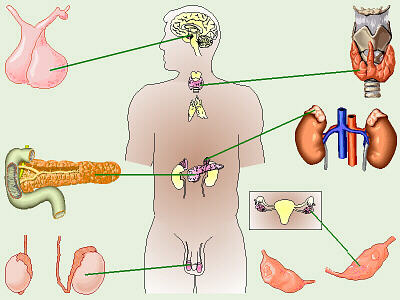
Although hormones circulate throughout the bloodstream, each kind of hormone affects only its target cells that are genetically programmed to receive and respond to its message. Hormone levels vary and can be influenced by factors such as stress, infection, and changes in the balance of fluid and minerals in blood. When the endocrine system doesn't function properly, a variety of disorders can arise.
Highly Recommended!!


