
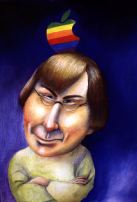
Info On Steve Jobs
Born: February 1955; full name is Steven Paul Jobs; grew up in Mountain View and Los Altos, Calif., an area later became known as Silicon Valley
Parents: Adopted from infancy by Paul and Clara Jobs; father a machinist for a company that manufactured lasers; mother an accountant; both deceased
Sibling: Biological, younger sister Mona Simpson, whom he tracked down; they now have a close relationship
High school: Graduated from Homestead High School, Los Altos, Calif. in 1972
College: Attended Reed College in Portland, Ore.; dropped out of baccalaureate program after one semester
Wife: Laurene Powell; they met at Stanford University he was speaking at a class; they married in 1991; both are vegetarians.
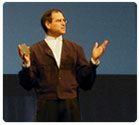
Children: Daughter Lisa born when Jobs was 23 (Jobs didn't marry her mother); Lisa lived with Jobs as a teen; he has three children with wife Laurene
Residence: English style red-brick home in Palo Alto, Calif.; built in 1930s; valued between $3 million to $5 million; sparsely decorated
Appearance: Slender; wears jeans, usually with a black turtleneck and running shoes
What's he like: People say he is a high-strung workaholic, motivates others with his enthusiasm, has a "reality distortion field," passionate about technology, a micromanager, arrogant and intolerant; can exude a Zen-like calm
Heroes: Dave Packard, Bob Noyce, late co-founder of Intel, and Andy Grove and singer Bob Dylan
Friends: Jerry Brown, former governor of California; Lawrence J. Ellison, billionaire software entrepreneur and chairman of Oracle; sister, novelist Mona Simpson
Worth: More than $900 million
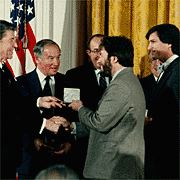
Honors: National Technology Medal from President Reagan in 1985, before founding NeXT; Jefferson Award for Public Service in 1987; Entrepreneur of the Decade by Inc. magazine in 1989
Brushes with fame: Dated Joan Baez in his 20s; Ella Fitzgerald sang at his 30th birthday party; entertained President Clinton at his home in Palo Alto, Calif.
Apple stock: Now owns only a symbolic one share; he's paid $1 a year from Apple so that he can be on the health plan
E-mails: Receives about 300 per day
First Apple sales: After receiving an order for 25 Apple I computers, Jobs and Wozniak raised needed capital by selling Jobs' Volkswagen van and Wozniak's Hewlett-Packard scientific calculator
Phenomenal growth: Sales of Apple II computer in the late 1970s totaled $139 million after three years, growing by 700 percent
Time Line
1970s
1974: Video game designer for Atari; worked there several months;
used savings to travel to India; returned to California and spent a brief
time on a communal farm
1975: Attended meetings of the Homebrew Computer Club in Palo Alto, Calif., attended by friend and engineering genius, Stephen Wozniak; they joined forces and built a marketable table-top computer in Jobs' parents' garage; co-founded Apple Computer Inc.
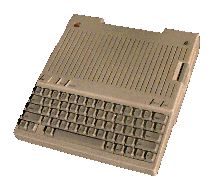
1976: Introduced Apple I computer for $666; first single-board computer with onboard Read Only Memory (ROM) that told the machine how to load programs from an external source and had a video interface
1977: Introduced Apple II; first mass-marketed personal computer; had a plastic case and included color graphics; Jobs encouraged programmers to create applications for the Apple II; this resulted in 16,000 programs from games to farm budgets; former Intel marketing manager Mike Markkula became Apple chairman and secured venture capital of $600,000
1979: Development of a computer named Lisa, which would redefine personal computing; Jobs removed as project manager; he began working on the Macintosh personal computer
1980s
1980: Initial public offering of Apple; market value of company
rose to $1.2 billion; Apple III introduced with eight applications, including
text and graphics; initial problems forced a recall; once fixed, it became
popular with professional customers; situation created a management shakeup;
Markkula became president, Jobs became chairman
1981: Stephen Wozniak took leave of absence after being injured in a private plane crash; IBM sold its first personal computer, four years after Apple II; Apple's sales continued to rise
1983: Public debut of Lisa, a powerful, more intuitive computer controlled by hand-held mouse; designed for computer illiterate; smaller, less expensive version called Macintosh also introduced; Jobs recruited former PepsiCo President John Sculley as new Apple president and CEO
1985: Jobs essentially ousted from Apple in a boardroom coup after a power struggle with Sculley; resigned with $150 million but personally hurt; formed NeXT Software to develop computer hardware and software; Microsoft sold its first Windows 1.0 operating system
1986: Bought Pixar computer animation studios from George Lucas for less than $10 million
1989: NeXT produced a powerful but expensive computer, which was rejected by the marketplace; Pixar won an Academy Award for computer-animated film "Tin Toy"
1990s
1993: Still unprofitable NeXT ended hardware division to focus
on software for programmers and building Internet sites; Sculley resigned
as CEO of Apple
1995: Walt Disney Pictures released Pixar's first feature film, "Toy Story," first animated feature created entirely on computer; was highest domestic grossing film that year
1996: Jobs contacted Apple; Apple acquired NeXT; Jobs returned as non-salaried adviser to chairman Gilbert F. Amelio
1997: Apple's revenues dropped significantly; Jobs negotiated deal with longtime competitor Bill Gates of Microsoft; Apple made deal to include Microsoft's Internet Explorer browser on Macintosh operating system; Microsoft agreed to invest $150 million of non-voting Apple stock and to develop Mac versions of popular Microsoft Office software; Amelio ousted by Apple board; Jobs offered CEO and chairman position, and he agreed to serve on an interim basis
1998: Apple Computer rebounded with three profitable quarters in a row
Quotes
"I was lucky to get into computers when it was a very young and idealistic
industry. There weren't many degrees offered in computer science, so people
in computers were brilliant people from mathematics, physics, music, zoology,
whatever. They loved it, and no one was really in it for the money."
(Fortune)
"The personal computer was created by the hardware revolution of the
1970s. The next change will come from a software revolution."
(Current Biography)
"The Macintosh turned out so well because the people working on it were
musicians, artists, poets and historians who also happened to be excellent
computer scientists."
(The New York Times)
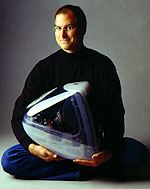
"We started out to get a computer in the hands of everyday people, and we succeeded beyond our wildest dreams." (Time)
"I'm not a hostile-takeover kind of guy."
(The New York Times)
"I am at a stage where I don't have to do things just to get by. But
then I've always been that way, because I've never really cared about money
that much."
(Fortune)