PEOPLE OF FORT ASTORIA


HOME | LINKS | LIVING HISTORY PROGRAMS | CONTACT | CHINOOK PEOPLE


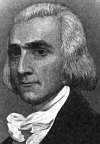
John Jacob Astor

One of America's first millionaires. Astor organized the Pacific Fur Company in 1810 to tap the rich Columbia River basin for beaver fur.John Jacob Astor was not born a wealthy fur trader. Instead, he was born in Baden, Germany in 1763, the third son of a butcher. One brother, Henry, left for New York, while another, George, travelled to London to open up business in musical instruments. John followed his brother George first, working with him in London. However, in 1783, Astor left for New York, whre, during the voyage, he met another immigrant who told him about prosperous fur trading opportunities in America. Astor was in New York by 1784, married in 1785, and had opened a shop by 1786. He would purchase furs and sell musical instruments of his brother's initially. Soon, Astor established connections in the rising industry, and, along with Montreal fur traders, began to look East to the Orient, whre American furs were in high demand. This is where the story of Astoria begins to take shape. Astor, in the late 1790s, paid great attention to the stirrings of Peter Pond, Alexander Mackenzie and other "prophets" who foretold the possible benfits of a western trade empire. He also met Alexander Henry, a businessman in Montreal, who furthered his education concerning the ideas of western trading posts. As Astor began to formulate how he could cash in on this opportunity, it became clear that the plan was not exclusively financial and technical, but political as well. Thus Astor would have to court local and national governmants, as welll as fur companies of America and Canada. His first connection came with New York Governor DeWitt Clinton, nephew of the Vice President. Astor revealed to Clinton his plan of a chain of fur trading posts in the Pacific Northwest. He didn't meet with Clinton, though, just to talk. He wanted first the approval and chartering of his comapny, the Pacific Fur Company. The charter was granted him in April of 1809. What he was mostly after, though, was the affect that Governor Clinton could impose on his uncle, the vice president. Astor wanted "approbation" from the federal government, a fairly vague term which meant full or part approval. Astor realized that in such a venture he would want governmental approval and protection. He recieved some help in 1808 when his letter was delivered to Vice President Clinton. Now Astor could move farther up in the government ranks in his seeking of approbation. Astor's next step was to meet with President Jefferson, which he did in summer of 1808 in Washington, DC. Jefferson promised "general support", and also that of protection from hostile actions of the North West company. In the fall, Astor went to Montreal, where he hoped to buy the Michilimackinac Company, which trapped in the Great Lakes region. He wanted to create a boundary line with Canadian fur traders - with control of this company he could be in control of the southern Great Lakes areas. However, his offer was rejected. Stern competition would continue with the Canadians. By 1809 the North West Company was back to their old ways by sending explorers to the west after a few years of inactivity. Simon Fraser and David Thompason both ventured west, and Astor forced himself to act in response to these activities. His plan was for a ship to sail to the mouth of the Columbia first, build a fort and then be joined by an overland party which would depart from St. Louis. He panned for Wilson Price Hunt to lead this overland group - leaving as soon as spring of 1810. Hunt was a man fascinated with the west, a merchant who had met Lewis and Clark. Astor would need more governmental support. Astor recruited American partners Wilson Price Hunt, Ramsay Crooks, Robert McClellan, and Joseph Miller, and Canadian partners, Alexander McKay, Duncan McDougall, and Donald Mckenzie


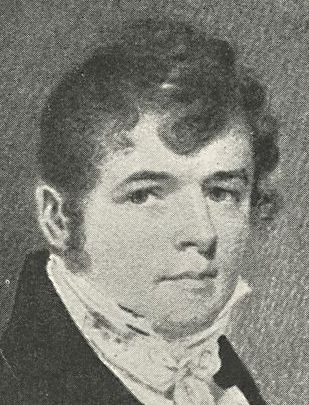
Captain Jonathan Thorn
. On August 10, 1810, he had been hired for his first command by John J. Astor to be captain of the "Tonquin".. " The "Tonquin" weighed anchor and set a course for the Columbia River on September 6, 1810. The "Tonquin" reached the mouth of the Columbia River on March 22, 1811. Thorn lost eight men over a two -day period trying to cross the Columbia River bar. On June 1, 1811, the "Tonquin" left Astoria for Vancouver Island was seized by Indian people about July 15th . One crew member left alive onboard set off a large powder magazine killing himself and nearly two hundred Indians.


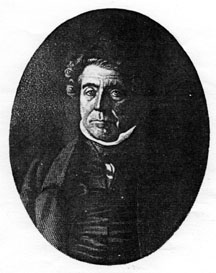
Donald Mackenzie

One of the partners in the Pacific Fur Company. He led his party by the overland route arriving at Fort Astoria on Jan. 18, 1812. He later became the head of a large party which engaged in hunting and trapping along the Willamette and Mackenzie rivers, which was named after him. He was known by the nickname "propetual motion" he weight close to 400 lbs.
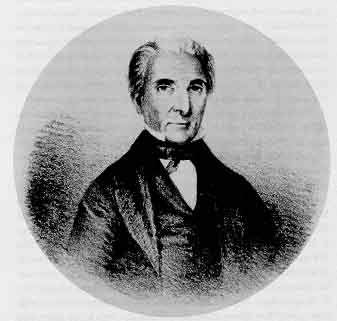
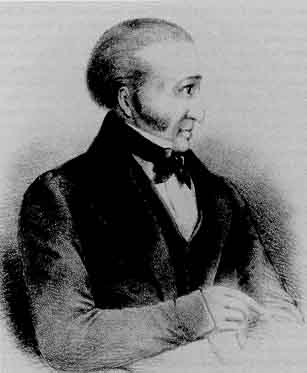


Gabriel Franceir

John Jacob Astor America's first millionaire.
He was head of the astorian company
the man ofojdfojaslf asjiofd oias jfihihfohoihofihaoihhofh


Hosted by www.Geocities.ws

1