
 Puppy mills & Pet shops
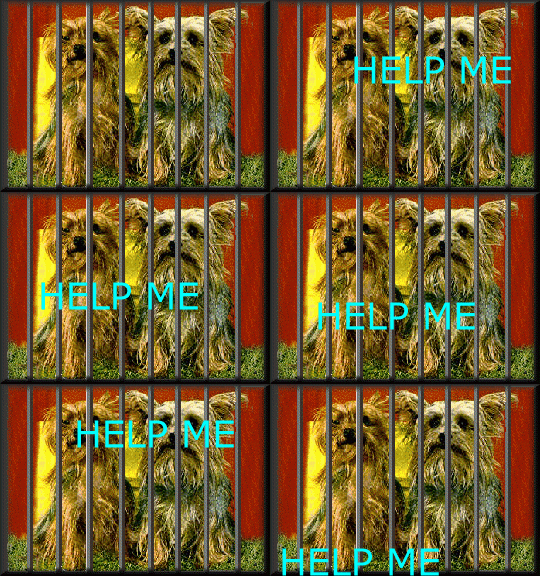
Most of these animals are
ill-fed, bred each heat, abused and/or neglected, left alone most of the time
except for feeding, and never see the inside of a house. Some are, at times,
house pets, and for the benefit of the children needing to see how nature works,
or the wanting to breed their female to the male down the street so they can
have one of Fluff's pups, they breed.
But what about the puppies? Are they
going to be healthy? Have either of the parents been screened for genetic
disease or other problems?
The offspring are then
found to be a nuisance, sold to those who will not have a clue as to their
condition other than they are cute...and they wriggle...and they are just so fun
when they are puppies. Or they are piled in a box and offered at the local
supermarket doorway. Or they wind up at the local shelter because they don't
want to be bothered with the training.
These puppies grow up. Many will have health
problems. Many will get sick and die. Some will be
shy and/or aggressive, either untrained or overstrained, and the hereditary
diseases they can carry as baggage, are to drain your pockets with vet visits.
Puppies and kitties do not have to be in this shape or be of these unknown
temperaments. Nor do they have to have these terrible diseases they come with.
When you buy a puppy or kitten from a pet store you are essentially buying a
"pig in a poke". You have no idea what you are getting until the vet bills begin
to roll in
If you are looking to purchase a puppy, I urge you to buy from a RESPONSIBLE breeder, and NOT a pet store. ALL pet stores buy from puppymills,regardless of what they may tell you. Buying a puppy mill puppy only helps them continue the abuse of these animals. Their ENTIRE life is spent in a cage.
One more thing to think about.....
Don't buy that doggie in the window!
10 Reasons NOT to Buy a Puppy from a Pet Shop

1. Health
That adorable puppy in the pet store is hard to resist, but you may be paying a lot of money for a dog that you know little about. Pet stores generally rely on impulse buys to sell their "product". There is a good chance that the pet store puppy will develop a health problem sometime in its life that may cost you a lot of money to remedy. When you buy a pet store puppy it is very unlikely that the puppy's parents were screened for genetic diseases that can be passed to their offspring. Every breed of dog has genetic problems that are passed from generation to generation by breeding dogs that carry the flawed gene. Most good breeders are more concerned about the health of the puppies that they are producing than the money that they will or won't make on the production of a litter.
2. The myth about AKC papers
Most pet shops would like you to believe that if a
puppy is registered by the American Kennel Club, this guarantees the puppy will
be healthy and a good example of the breed. This is
not so. The only thing that AKC papers certify is
that the puppy is a purebred and produced out of AKC registered parents. Even
this can be fiction, as some producers register more puppies than are actually
born in each litter to receive extra registration slips to pass out with
unregisterable puppies. They may also be horrible representations of the breed
that you are buying. Often times the parentage of pet store puppies is also
questionable due to poor record keeping. In other words, your puppy may not even
be a purebred, even though it has AKC papers. Responsible breeders do register
their puppies with the AKC, but that is only the beginning.
3. The pet shop guarantee
Many pet stores provide a form of
guarantee for people buying puppies from them, but their guarantees may be as
bad as none at all.
4. What will that puppy look like
when it is full grown?
You may have seen specimens of the breed that you
are buying, but this does not guarantee that this puppy will fit the breed
standard. There is no perfect dog, but a good breeder will be willing to discuss
the faults and strengths that each of their dogs possesses. Even then you can
not tell exactly what the puppy will look like, but you will have a much better
idea of what to expect.
5. What do you know about the
breed?
Employees of pet stores generally know very little
about the dogs that are in the store. Good breeders are full of information
about the breed of puppy that you are considering. They will also be able to
warn you about specific health problems that the breed is prone to and will be
able to tell you what aspects the breed excels in. There is no breed of dog
perfect for every person and a good breeder is concerned that their puppy goes
to a home that they will fit into.
6. Housebreaking and training
problems
This puppy that you are buying from a pet store has
most likely spent much of its life in a cage. Many pet store puppies have never
seen carpet and may never have even seen grass or dirt. Due to the conditions
that puppies are kept in at pet stores, they have been forced to eliminate in
the same area that they sleep and eat. This goes against the dog's natural
instinct, but your puppy has had no choice. This habit may make housebreaking
your puppy much more difficult. A good breeder keeps the puppy area very clean
and makes sure the puppy has a separate elimination area. It can be much more
difficult to teach a pet store puppy these daily exercises than a puppy that has
been brought up properly. Most pet store puppies' parents have not been selected
for any reason other than they can produce puppies that sell as cute "purebreds"
registered by the AKC.
7. How about Socialization?
Your pet store puppy may well have never been in a
house before. If this is the case then everything will be new and scary for
them. Good breeders will expose their puppies to many situations so that the
puppies are used to them by the time that they go to their new homes. A good
breeder will know, due to hours of observation, which puppies are dominant and
which are shy, which are energetic and which are easy going. Then the breeder
will be able to match the puppy to the new owner and make sure that energetic
pups go to active families and that shy puppies go to a home that can help them
overcome their insecurity. Good breeders can help you make an educated decision
about all aspects of your puppy's feeding, training and overall maintenance and
care based on your family situation. If you are going to spend so much money on
a dog that you plan to keep for its lifetime, why not find one that will fit
into your lifestyle well?
8. What is a pedigree worth?
Pet shops make a big deal out
of their pedigrees, which is interesting because they just contain a bunch of
names. Can the pet shop tell you how long the puppy's grandparents lived, and
what they died of? How many of the parents littermates are still alive? How long
do dogs in this pedigree usually live? A responsible breeder can answer all of
those questions. You get not just a pedigree, but all of the important
information behind the pedigree. The bottom line...Buy from any private breeder
you are comfortable with but,
NEVER BUY FROM A PET
STORE .
9. Do you want to support puppy mills?
How do you know most pet shop pups
come from puppy mills? Because NO responsible breeder would EVER sell their
puppies to a pet store, for two reasons:
1)
Responsible breeders care about the puppies they produce, and want them to go to
very carefully selected homes. They will NOT sell you a puppy just because you
want one. You will be interviewed to see if the puppy and your household is
compatible.
2)
Keeping track of litters is an essential part of responsible breeding. If two
puppies from a certain litter die from liver failure at a young age, the breeder
knows there's a problem in the line and will not breed the parents again. What
does that say about the breeders of pet shop pups?
10. After the puppy goes home
Once you take the puppy home from the pet store
they do not generally care what happens to the puppy. Most pet shops do not care
if the dog is left to run loose and kill livestock, or if it dies of liver
disease at one year old. Most do not care if you take your dog home and breed it
continually. Responsible breeders are more than people who sell puppies, they
will also be good friends to you and your puppy. They care what happens to their
puppies' once they are sold. Almost all good breeders sell on spay/neuter
contracts or limited registration. Some breeders sell show quality puppies on
co-ownership, so that they retain a portion of the dog's ownership, for better
control of what happens to their dog later in it's life. If you have a health or
training problem a good breeder will generally be able to offer you advice and
help you through the ordeal. Most reputable breeder care about each of their
puppies' futures and will be concerned about their welfare. They care not only
about their own dogs, but also the impact their dogs will make on the breed as a
whole.
So please next time you are looking for a new puppy to buy, do your research.
One of the best steps toward becoming an educated puppy buyer and dog owner is
to attending American Kennel Club sanctioned shows and carefully researching
each breed that you are interested in.
|
|
Favorite
links |
|
|
|
|
|
|
 Back
Back
 Next
Next Email
Email