Yule is celebrated at the winter solstice, and is an observance of the turning of the solar year form wanig to waxing. This is the most important sabbat in the Teutonic traditions, the word Yule coming from the Old Norse, jul, meaning "wheel". Some mythology teaches that the Sun is the newborn son of the Goddess, others that the Sun is the wintertime Crone who has turned into her Virgin form again. The Christmas practices of venerating lighted trees and burning the Yule log-both symbolic of the divine gift of fire to humanity- all come from European Pagan customs. It is also customary on this sabbat to greet the rising Sun on the day it starts to grow strog once again...
~Edain McCoy
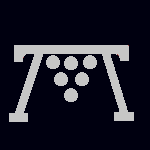
The long sequence of holy days around Yule is related to the old Roman celebration of Saturnalia, a time of intense merrymaking. The Yule festival ends at the Twelfth night, when the final trappings of Yuletide must be removed. In the circle of 24 runes, this time of year is ruled by the rune Jera, which has the meaning of the completion of the year, the enjoyment of the fruits of the harvest at the Yuletide feast. This is without doubt, the most sacred meal of the year. The traditional sigil of Yule is an enclosure containing dots, symbolizing the seed in the ground or people sheltering from the wintry weather.
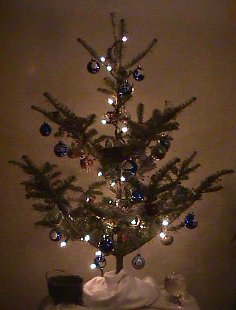
This is our Yule tree...a little balsam fir adorned with lights. For decorations, we used blue glass ornaments, which we painted with pagan symbols such as the spiral for rebirth and symbols for East, West, North and South. We also used clear glass ornaments, which we filled with herbs such as cinnamon, sage, chamomile and lavendar. For garland, we used dried red berries, purchased at our local craft store. I think another great garland would have been strung cranberries, with or without popcorn, if you have the fingers for it! Our tree also houses a bird's nest and several "fake" birds, a small cauldron, acorns, "snowflakes" and other natural objects from around the house.