 |
History of the Tonkinese
|
|
|
|
History of the Tonkinese
|
|

|
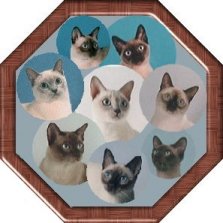
Tonkinese are considered a relatively new breed. In nineteenth century England, "Royal Siamese" were imported. They had blue eyes, dark brown points, and a pale buff body. "Chocolate Siamese" also worked their way into the cat fancy. They had less contrast between their bodies and points. The first known "Tonk" was Wong Mau, the ancestor of the Burmese. Wong Mau was a small, walnut colored cat brought to California by Dr. Joseph Thompson in 1930. Siamese breeders considered Wong Mau a poor example of the breed. Two ladies are credited with developing the Tonkinese breed in the 1960's - Jane Barletta of New Jersey and Margaret Conroy of Canada. They began their breeding programs for two separate reasons, and neither initially knew of the other. Jane was a Siamese breeder. She preferred a moderate breed and strove to achieve a "balanced" cat. Margaret's intentions were different. She couldn't find a male for her Burmese to mate with. She bred her cat to a Seal point Siamese. The kittens from these breedings were dark brown with seal points. Margaret discovered Jane's work when the latter placed an ad in Cat Fancy. The rest, you might say, is history. According to Dr. Mary Carsky, "Jane Barletta, more than any of the early breeders, deserves credit for championing the breed. Jane facilitated communication amongst breeders across the country, first by placing an advertisement in Cat Fancy in June 1970, and second, through her appearance on national television" in the game show Jeopardy. Today, this "man-made breed" represents neither the Siamese nor the Burmese in its body conformation. The head is rounder than a Siamese but not as round as a Burmese. The body is a combination of the muscular Burmese and the elegant Siamese. Some associations only accept Tonkinese to Tonkinese breedings. TICA considers them a hybrid breed, thus breeding to the original breeds is always allowed. This means that mating a Siamese to a Burmese, a Tonkinese to a Siamese, or a Burmese to a Tonkinese will always result in a registered, championship Tonkinese.
|


