THE FACT AND FICTION BEHIND OSCAR'S BEST PICTURE PICK OF 1984
By Dean Glass
Copyright 1984
Revised 2001, 2002
"During the first performance of 'Don Giovanni", when the whole theatre, full of astonished aficionados, were revelling in Mozart's harmony, somebody hissed--everyone turned indignantly to the man--and the famous Salieri left the auditorium in a fit of rage, eaten up by envy... An envious person who could hiss 'Don Giovanni' could very well have also poisoned its creator."
-- Aleksandr Pushkin, 1832.
RUMORS
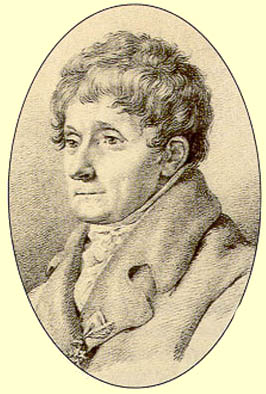
Rumors that the long-forgotten Italian composer Antonio Salieri murdered his musical superior Wolfgang Amadeus Mozart had been spread throughout Vienna since the time of Mozart's death at 35 in 1791, and had not been entirely forgotten, when, nearly forty years later, Pushkin wrote his poetic drama "Mozart and Salieri." Pushkin's 1830 drama was later transformed into an opera by Rimsky-Korsakov. The mysterious death of Mozart continued to capture the imaginations of countless writers well into the twentieth century. In 1970, a fictionalized novel on the subject, "The Assassination of Mozart" by David Weiss, appeared, as well as a 1982 stage adaptation of the Salieri murder legend, Hans Ungar's "Acqua Toffana", which was first produced in Salzburg (Mozart's birthplace).
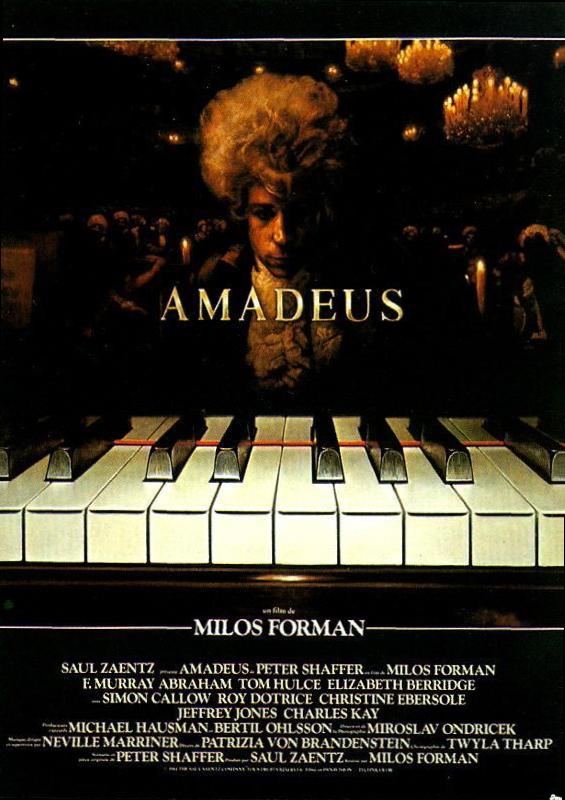
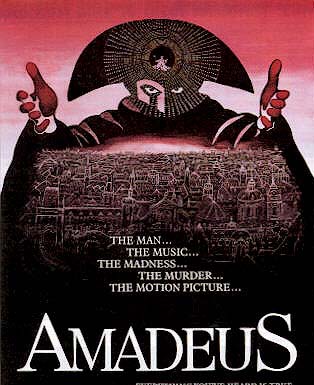
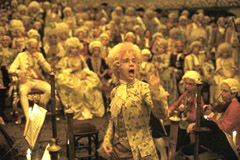
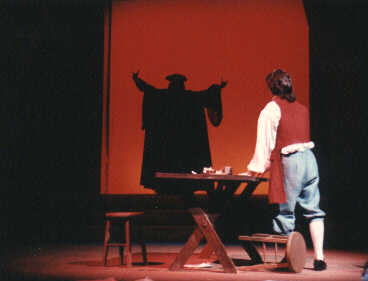
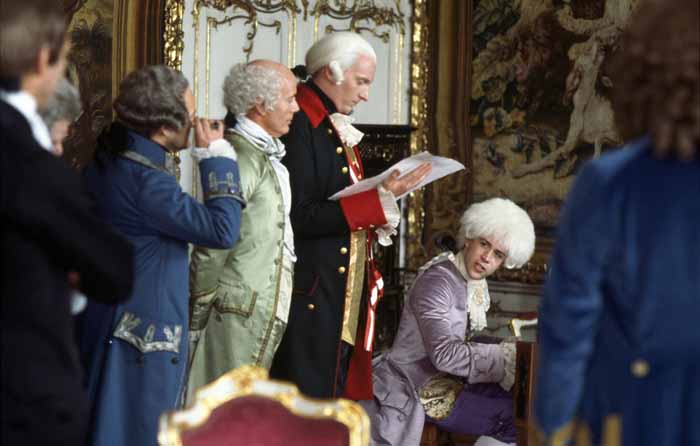
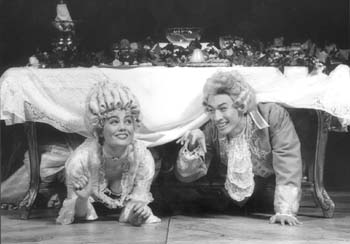
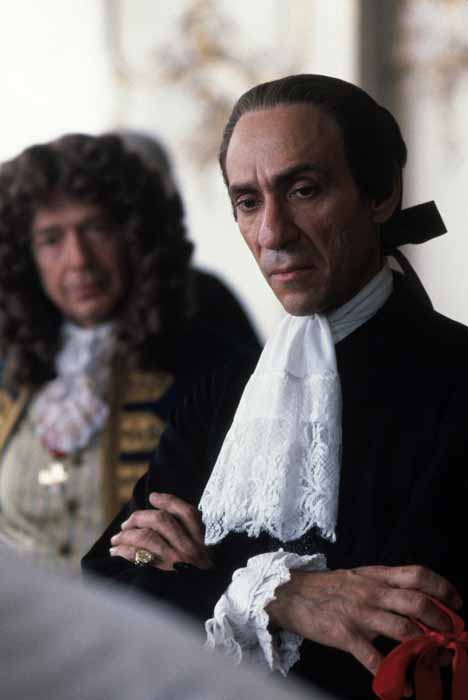
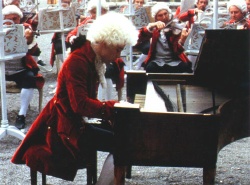
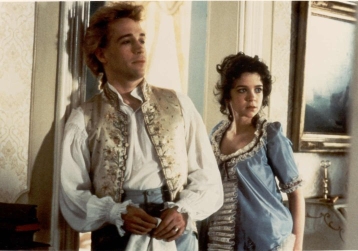
In September of 1984, Orion Pictures released a major motion picture of the story, "Amadeus", Peter Shaffer's adaptation of his own stage play, which has become by far the most famous version of the legend. Both the movie and the 1979 play present an interesting, if not entirely factual version of Mozart's life and death, and Salieri's involvement in both. Movie reviewer Stanley Kauffmann says that the movie contains 'dollops of Mozart and magnificent settings, [and] lots of distortion about Mozart and Salieri...". Michael Walsh adds: "Now comes Amadeus, Milos Forman's film, continuing the honorable tradition of spreading mis- and disinformation about Mozart. For all it's protestations of 'authenticity' (within the
fundamentally inauthentic play), Amadeus is surprisingly misleading."
It is true that both the play and the movie are, as far as the facts of Mozart's life go, "misleading", but Shaffer comes a bit closer to the truth in his characterization of Mozart as a rebellious brat. Shaffer says that his concern "was not with facts but with the undeniable laws of drama."
Incidentally, "Amadeus", aside from being Mozart's middle name, means "lover of God", and with a small stretch by Shaffer becomes "beloved of God".
Whether or not the Viennese of the late eighteenth and early nineteenth centuries actually belived the rumors is unclear, but the story became widespread once more when Salieri actually confessed to the murder after a botched suicide attempt. Salieri's confession poses a problem to those who believe that Salieri was innocent. Most of Mozart's biographers blame the confession on the fact that Salieri had become "old and dotty," [Kauffmann.] as does Richard Baker: "Because [Mozart's] body swelled up after he died the idea gained ground that he had been poisoned, and Salieri's name was linked with the crime. This story became widely current again in the mid-1820s when Salieri, who had become mentally deranged, claimed in his ravings that he had done away with Mozart by poisoning him, and the suggestion has never been conclusively disproved."
However, Sailieri was not the only person to be blamed for the alleged murder. Nearly everyone who knew Mozart, including his own wife, has been blamed at one time or another. One account has the entire freemasonry conspiring to kill the composer! [Borowitz.]
It is a well-documented fact that Mozart himself believed that he had been poisoned. One of Mozart's contemporaries, Franz Niemetschek, mentioned it in his biography of the composer:
"Mozart began to speak of death, and declared that he was writing the Requiem for himself. Tears came to the eyes of this sensitive man: 'I feel definitely', he continued, 'that I will not last much longer; I am sure I have been poisoned. I cannot rid myself of this idea.'" Bryna Donaldson quotes Mozart as saying, '"I know I must die. Someone has given me acqua toffana and has calculated the precise time of my death for they have ordered a Requiem.'" Donaldson goes on to explain Acqua Toffana: "Poisoners flourished in South Italy in Mozart's day, the most notorious being 'the woman Toffana' who is credited with the death of over 1,000 persons. Her career began when she was but a girl and ended at 70 when she was suddenly strangled. Her preparations, however, lived on and were distributed by her followers. Pictures of St. Nicholas of Bari who was associated with healing waters graced bottles of 'Acqua Toffana' which decorated women's vanities as cosmetic preparations." Whether or not Mozart was poisoned, the fact remains that it is very unlikely that Salieri plotted against Mozart, much less murdered him. "The New Grove Dictionary of Music and Musicians" says that "even if Salieri did not go out of his way to help Mozart, there is little evidence for the intrigues that are frequently attributed to him." The "Dictionary" goes on to state quite plainly that "there is no evidence to support the anyway improbable notion that [Mozart] was poisoned by Salieri or anyone else."
SALIERI'S INTRIGUES
According to Albert Borowitz, "Mozart, his father, and many of their contemporaries believed that Salieri had caused the emperor [Joseph II of Austria] to be unfavorably disposed towards 'The Abduction from the Seraglio' and had also been responsible for the later plot (fortunately unsuccessful) to induce the court to hamper the opening of 'The Marriage of Figaro.' In his letters to his father, Mozart also accused Salieri of having prevented him from obtaining as a piano pupil the princess of Wurttemberg. In December, 1789, Mozart wrote his fellow Freemason and benefactor, Puchberg, that the next time they met, he would tell him about Salieri's plots 'which, however, have completely failed.'"
Shaffer's Salieri was involved in two of the "plots" mentioned. It is he that points out that "The Marriage of Figaro" contains "balleto" which Emperor Joseph has forbidden, and he is also responsible for persuading the Emperor to choose someone else to instruct the princess.
Other Shafferian "intrigues" against Mozart include Salieri's spies. In the play, Salieri learns all the latest gossip about Mozart from his two "Venticelli". In the motion picture, the "Little Winds" (as he calls them) are replaced by Lorl, a maidservant hired by Salieri to infiltrate Mozart's home. There is no evidence that the real Salieri had any spies at all.
In both the play and movie, the mysterious visitor who orders the "Requiem" (Death Mass) is, of course, Salieri in disguise, trying to drive his rival insane. According to at least one source, the visitor was actually a messenger from Count Walsegg-Stuppach, a man who was evidently in the habit of commissioning music from great composers to pass off as his own work.
Many other inaccuracies about Salieri's participation in the end of Mozart's life plague "Amadeus". The film shows Salieri secretly attending the premiere of Mozart's last opera "The Magic Flute". In reality, Salieri attendied the opening at Mozart's invitation. In a letter to Constanze, Mozart wrote that "Salieri listened with the utmost attention from overture to final chorus, and every item elicited from him a 'Bravo!' or a 'Bello!'" [Hutchings.] The movie also has Mozart dictating parts of the "Requiem" to Salieri on the last night of his life. Actually it was Sussmayr, one of Mozart's pupils, to whom Mozart dictated parts of the "Requiem", and it is believed that Sussmayr finished the incomplete "Requiem" after Mozart's death.
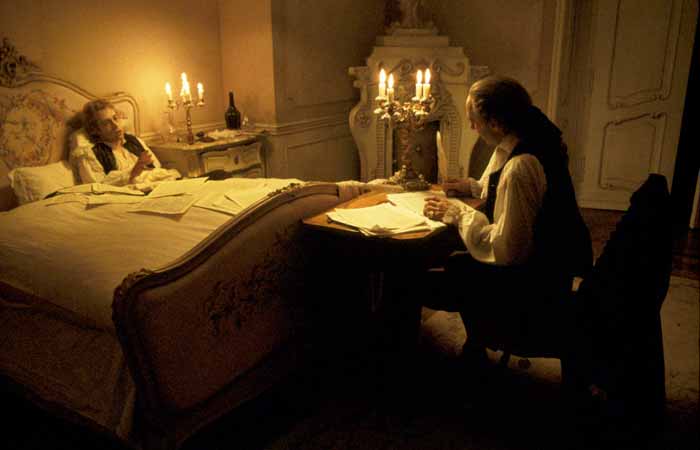
In the play, the method Salieri uses to do away with Mozart is arsenic poisoning, staying true to the rumors. In the movie, Salieri instead works his rival to death, coercing him to work on the "Requiem" when he is obviously too ill. In both the play and film, Salieri is present when Mozart dies. In actuality, at the moment of his death, Mozart was being attended by two of Vienna's best physicians, as well as Constanze and her sister. The funeral, as presented in the film, is also inaccurate. There were actually only five mourners at Mozart's funeral, while on screen, practically the entire cast appears to give Mozart a teary-eyed sendoff, although it is true that Antonio Salieri was present at the real Mozart's funeral. The grief-stricken Constanze, on the other hand, was not in attendance as she is on film. Even the manner in which Mozart's burial is presented is misleading. It appears to the viewer that Mozart left his family so destitute that they could only afford a pauper's burial. In reality, Mozart was one of the highest-paid composers of his time, and his survivors were just observing one of Emperor Joseph's laws which forbade church burials and required bodies to be thrown into limepits. Michael Walsh points out that "a 1784 decree by Joseph II abolished most funeral ceremonies, ordering the dead to be sewn into sacks and covered with lime rather than buried in coffins. The order was rescinded after a bloody riot, but the spirit of the decree persisited among the enlightened, such as Mozart's brethren in his Masonic lodge."
In both of Shaffer's dramatizations, Salieri proclaims himself "Patron Saint of Mediocrities!" Sacheverell Sitwell states that "it is the most tragical point in human history that these two men [Mozart and Schubert] should have died as they did when every mediocrity in their profession was allowed to flourish comfortably." This may have been true, but Salieri was hardly a "mediocrity". Michael Walsh points out that "Salieri's pedagogy was so highly esteemed that his pupils included Beethoven, Schubert, Liszt and even Mozart's own son, W.A., JR. (born Franz Xaver). Some mediocrity!" Bryna Donaldson adds that "it is hard to believe Constanze would have entrusted the musical education of her son to a man she believed to be the murderer of his father."
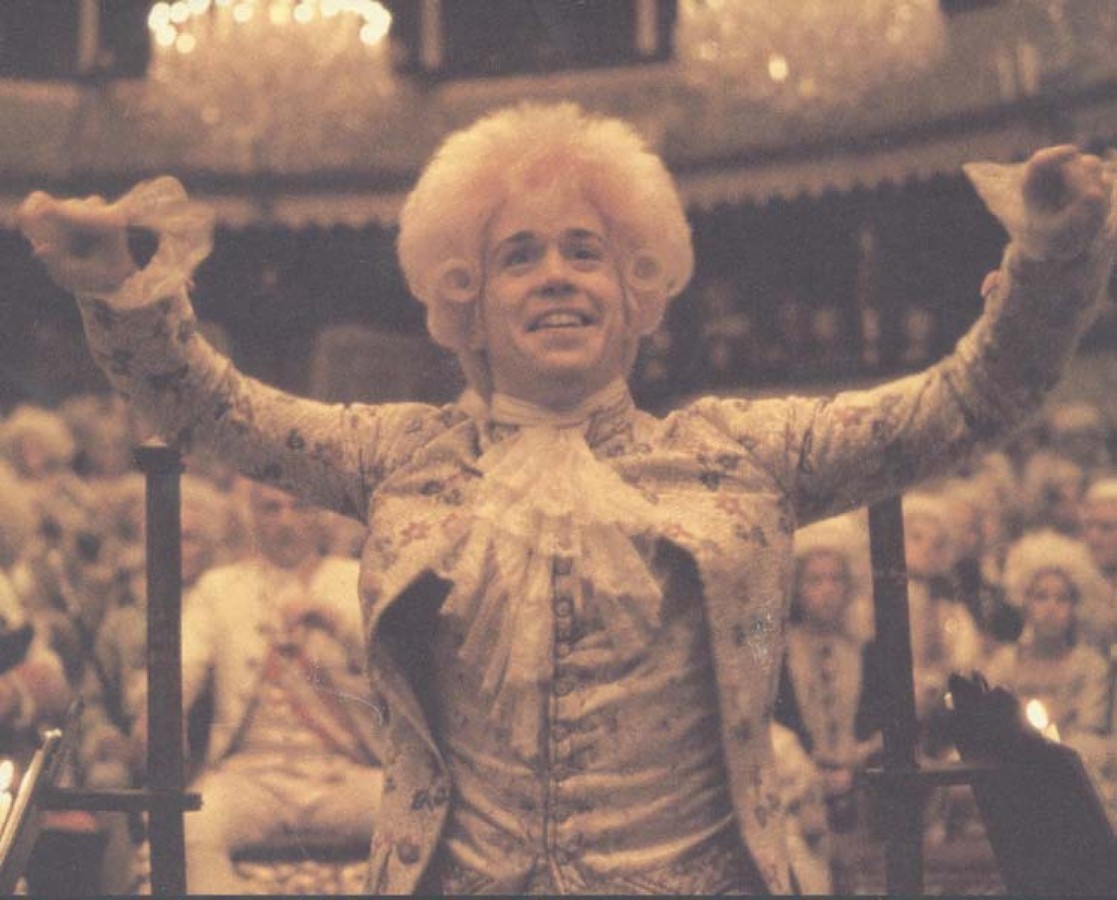
In all likelihood, Salieri felt little or no jealousy of Mozart, while "Amadeus" greatly exaggerates his hatred of the composer. Stanley Kauffmann points out that "the muzziness of Shaffer's exploration is exposed by one question: Would Salieri have been any less jealous of Mozart's genius if the other man had been conventionally well spoken and modest? The implication is that Salieri is more incensed by bad manners than jealous of genius." The question Kauffmann poses is a valid one considering the fact that Shaffer's Mozart "has the sex habits of a randy poodle and the court manners of John McEnroe." [Sheppard.] Indeed, the character of Shaffer's Mozart is a bit surprising to those who visualize the composer as being as pristine as his music, but here, with Mozart's character, is where Shaffer comes closer to reality, than he does with the historical facts of the composer's life.
OBSCENE CHILD
According to Mozart's first biographer, Franz Niemetschek, "Mozart was always receptive to the pleasures of entertainment and friendship. Among his friends he was as confiding as a child, full of fun; he showed this by most amusing ideas. His friends in Prague still remember with pleasure the happy hours spent in his company; they cannot praise his guileless nature enough. In his presence we quite forgot that we were in the company of Mozart, the much-admired artist." Another of Mozart's friends, Karoline Pichler "recalled how she knew both Mozart and Haydn. 'They were men', she wrote, 'in whose personal intercourse there was
absolutely no other sign of unusual power of intellect and almost no trace of intellectual culture, nor of any scholarly or other higher interests. A rather ordinary turn of mind, silly jokes and in the case of the former, an irresponsible way of life, were all that distinguished them in society.'" [Baker.]
Pichler went on to say that "Mozart was in the habit of jumping up from the piano, springing over chairs, and meowing like a cat." [Gelatt.]
It is obvious that Mozart was no angel. Aside from his body of work, music which suggests perfection by its very sound, the widespread notion that the composer was nothing less than perfect was helped to proliferate in part by Constanze and her second husband, Georg Nikolaus von Nissen, who edited incriminating (vulgar) passages out of many of Mozart's letters. Mozart's sister Nannerl (who does not exist in Shaffer's world) quite possibly put it best when she said that "Mozart remained a child all his years." [Baker.]
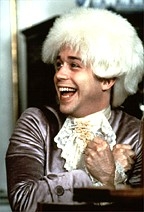
One of the most memorable characteristics of "Amadeus"' Mozart is his "obscene giggle." [Shaffer.] "The laugh is historical," says Tom Hulce, who portrays the composer in the movie. "People who knew Mozart refer to it in their letters." Hulce goes on to say, "I've never been able to make that sound except in front of a camera. When we did the looping nine months later, I couldn't find the laugh. I had to raid the producer's private bar and have a shot of whiskey to jar myself into it." [Stark.]
Apparently Mozart's laugh was not his only unique character trait. He was also fond of absurd speech, as is evident in this excerpt from a letter to Constanze: "Tears rained upon the paper as I wrote the foregoing page, but now let us cheer up! Catch! An astonishing number of kisses are flying about. I see a whole crowd of them, too! Ha! Ha! I have just grabbed three--they are delicious!" [Sitwell.] Shaffer's Mozart also has an unusual way of expressing himself: "My father's right again. He always tells me I should padlock my mouth... Actually, I shouldn't speak at all!"
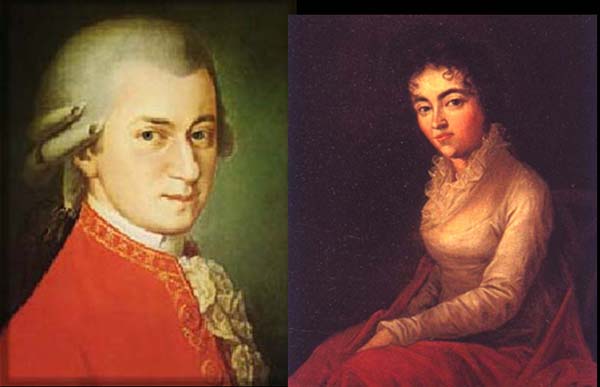
It is also evident that the composer was quite a lady's man. He had been courting Constanze's sister for quite some time, when he suddenly proposed to Constanze. "The inference is that Wolfgang had seduced Constanze, and though this is none of our business, there is every reason to believe it was true. Seduction, in the Weber family, cannot have been an affair of much difficulty." [Sitwell.]
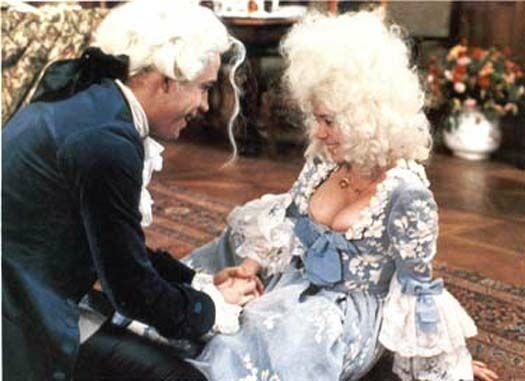
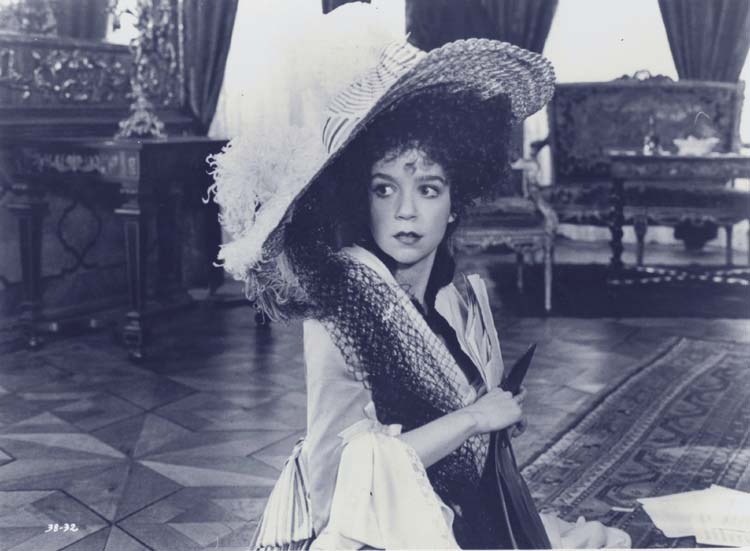
One real-life event concerning Constanze which is presented somewhat differently in each version of "Amadeus" is explained in this letter from Mozart to Constanze shortly before their marriage: "You were so shameless and bold as to tell your sisters in front of me that you let a young gallant measure the calves of your legs. No woman who cares for her honour does a thing like that... If the baroness [Waldst�dten] allowed it to be done to her, that is quite another matter, for she is an old woman who can no longer entice men. Besides she is all too fond of you-know-what, and I should hope, my darling, that you would not want to pursue a life like hers even if you decide not to be my wife. If you could not resist the temptation to join in what the others were doing... You could have taken the tape and measured your own calves, as decent women have done in similar circumstances when I have been present." [Hutchings.] In the play, Mozart walks in in the middle of a game of forfeits. "MOZART: A young wife does not allow her legs to be handled in public. Couldn't you at least have measured your own ugly legs?" In the film version, Mozart is playing the game with the others. When it is Constanze's turn for a penalty, Mozart yells, "Give her a good one!" and laughs merrily when his wife exposes her legs to a crowd of people.
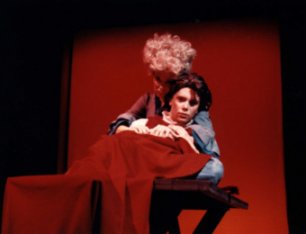
The dialogue which occurs in Mozart's first scene in both versions of "Amadeus" plays up the craziness of the couple's relationship. Roland Gelatt describes the scene in this manner: "Mozart jumps on top of her and begins to talk dirty, not so much sexy dirty as excremental dirty." In the play, he calls Constanze "shitwit" and utters such "dirty" lines as "I think you're going to shit yourself... In a moment it's going to be on the floor!" In the movie, the composer asks his fianc�e to say "Saa I'm sick" and "Tish I'm tea" backward, which are, respectively, "Kiss my ass" and "Eat my shit." Several of Mozart's letters (ones that survived the Constanze/von Nissen censorings) indicate that profanity was not unfamiliar to the composer.
Apparently, when writing "Amadeus", Shaffer felt at liberty to stray a bit from the facts of the composer's life, but decided to depict Mozart the man in the manner in which he was remembered by his contemporaries. Even though it is mostly fictional, "Amadeus" is undeniably very popular. |