MOVIE OF THE YEAR
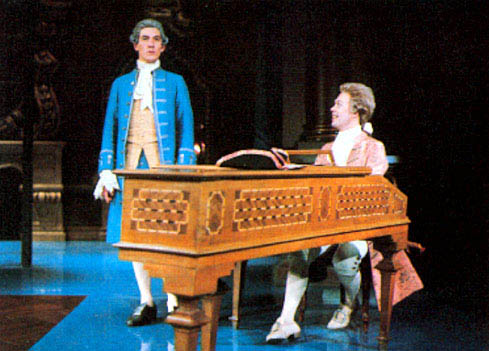
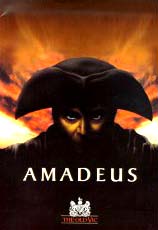
"On its first appearance, Peter Shaffer's play... met with rather mixed reactions from professional theatre critics. With theatre audiences on both sides of the Atlantic, however, 'Amadeus' has been enjoying tremendous popularity. Its world premiere was given on November 2, 1979, in London's National Theatre, where it ran in repertory for eighteen months before the production was transferred to the West End in July 1981. After its American premiere in Washington, D.C., in November 1980, the play opened on Broadway in December of the same year, where it was greeted with enthusiasm similar to that of its later receptions in France, Austria and West Germany. The great number of awards Amadeus has earned itself and its author also make it 'officially' the most successful (and best?) drama of recent years." [Huber.]
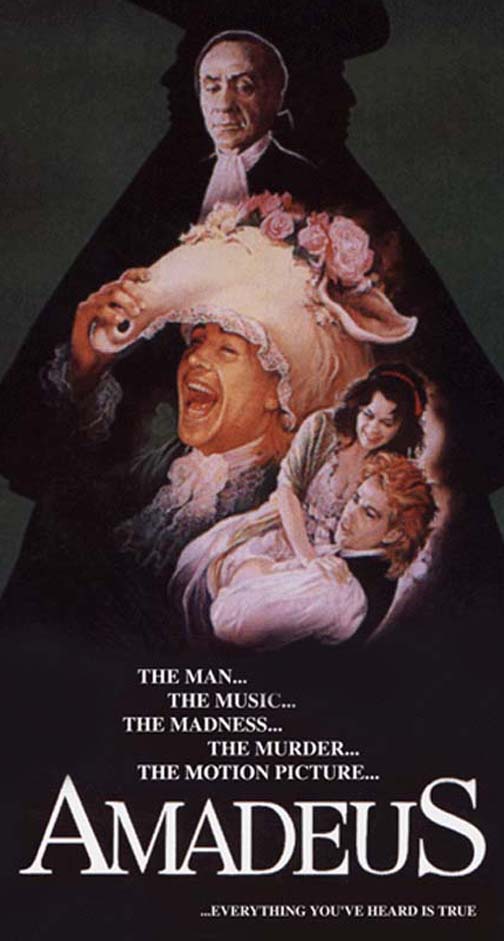
The movie also enjoyed great critcal praise and box office success, spawned one of the best-selling classical music albums of all time, and was nominated for eleven Academy Awards, winning eight of them, including Best Picture, Best Actor (F. Murray Abraham), and Best Director.
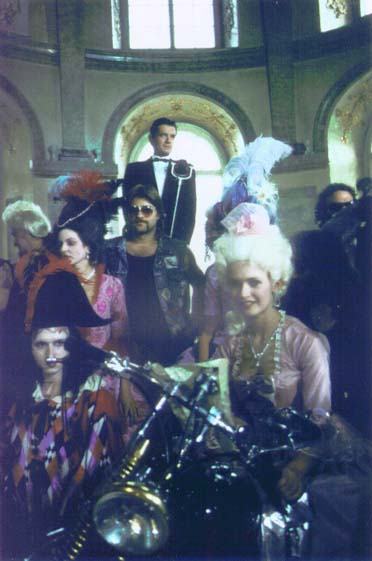
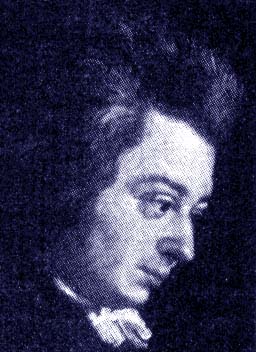
"In no way did [Tom] Hulce think that a movie about a classical composer would be so popular, especially with younger audiences. 'Teachers don't tell us the truth about historical people,' he says. 'If we knew the truth, parents couldn't hold their lives up as examples. Mozart rebelled against authority, married badly, gambled obsessively, drank, danced and rolled around a lot.' When Hulce saw Prince in 'Purple Rain', he wasn't ready for a certain juxtaposition that helps explain 'Amadeus'' appeal. 'To my surprise they showed a preview for 'Amadeus'... Mozart was wearing the same clothes as a rock star in 1984!'" [Stark.]
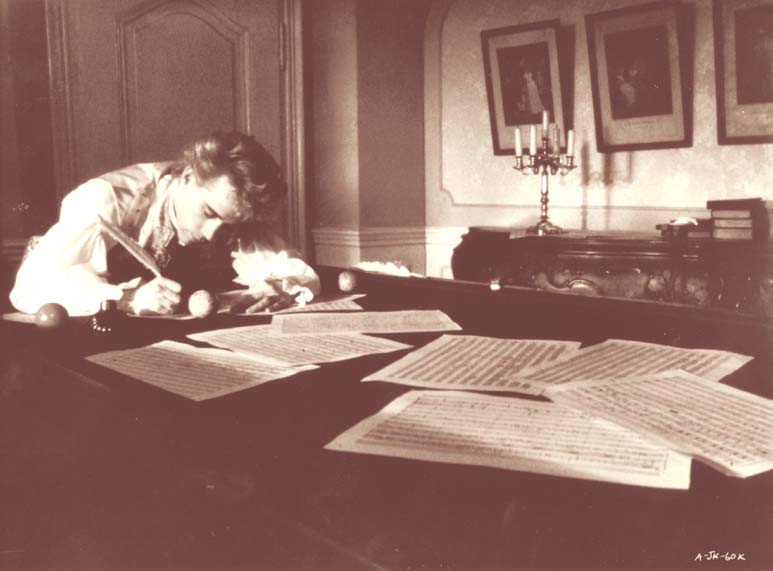
The fact that Mozart was a "vulgar, childish drunk with a braying giggle who would be right at home in National Lampoon's Animal House, Hulce's best-known movie [pre-'Amadeus']" [Fayard.] does not entirely explain why the story of two eighteenth century composers is so appealing to late twentieth and early twenty-first century audiences. One reason may be that Shaffer chose to focus on Salieri and his jealousy of Mozart, rather than writing a simple biopic about Mozart. Another is that the actors in the film speak in plain American English, rather than in the proper British accents one might expect in a period/costume drama, making the film less stuffy and more inviting to a wider (and younger) audience. The film's popularity might also have something to do with the magical music of Mozart which dominates the soundtrack of the film, being practically a character itself. Whatever the reason, "Amadeus", though historically inaccurate, will continue to excite and please both theater-goers and movie-goers for many years to come.
ENDURING POPULARITY
Due to the film's popularity, Mozart became the subject of a pop song in 1985, Falco's "Rock Me, Amadeus", which remains a staple of all-Eighties radio stations to this day. The play is constantly being revived all over the globe, and the film has been available on home video for many years, starting with the video tape in 1985, a rather colorless, washed-out looking, pan-and-scan transfer. Ten years later, a boxed-set laser disc package appeared, as expensive as it was elaborate. It included a sharp, colorful transfer in widescreen (2.35:1 aspect ratio), an hour-long "making-of" featurette called "The Last Laugh", a remastered version of the original soundtrack albums on two CDs, a copy of the play, and a beautifully illustrated 50-page book by Charles Kiselyak. "Amadeus" was one of the first movies to be released on DVD, and the limited technology of the time (1997, when "layering" was in its infancy, and not yet feasable for widespread distribution) required that the single disc be flipped over during the film to accommodate its 158-minute running time. Furthermore the few "extras" included on the DVD were disappointing at best, although the DVD did preserve the picture and sound quality of the laser disc without the bulkiness of the discs themselves, making it the most convenient home-video version available for the past five years.
REWRITING WHAT'S PERFECT
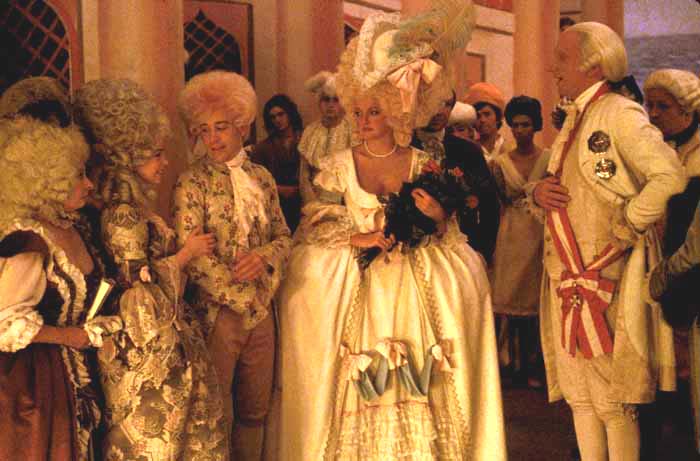
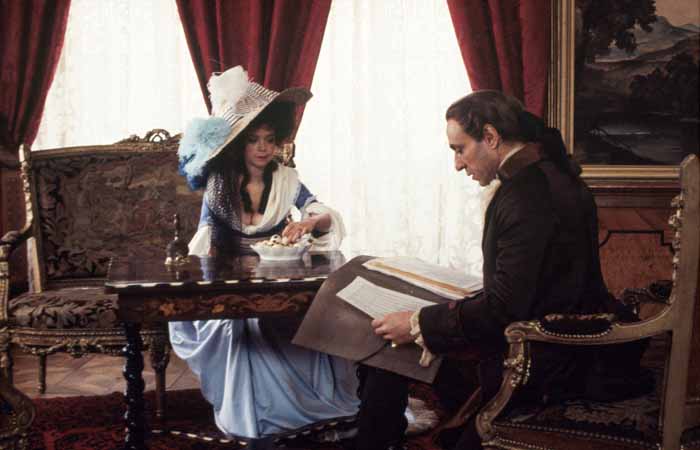
In June of 1998, The American Film Institute (AFI) ranked "Amadeus" 53rd in its list of America's 100 Greatest Movies. Four years later, in 2002, the film was given a limited theatrical rerelease, with a newly remastered soundtrack utilizing the most up-to-date technology. The producers took this opportunity to reinstate several whole scenes and portions of other scenes which had been deleted from the original 1984 cut of the film. The new "Director's Cut" contains more than twenty minutes of restored footage, bringing its running time to just over three hours. According to Forman, "When we made the film and then watched it for the first time, these 20 minutes were in the film. But it was being released at the time when MTV was hitting the airwaves. . . To expect an audience to sit for over three hours and watch a period film about classical music, we just thought we better cut anything that doesn't push the plot forward. This just brings the movie back to where we originally had it." [Crosby.] The most interesting of the added scenes deal with Constanze's failed sexual tryst with Salieri, intended to further her husband's career, and her subsequent hatred of Salieri for rejecting her, establishing Constanze as a much more important, complex, and sympathetic character. Of these restored scenes, film critic Mick LaSalle says, "... these minutes feature some of [Elizabeth] Berridge's best work and, had they been allowed to remain 18 years ago, might have earned her the supporting-actress Oscar nomination that eluded her." Discussing the same scene, Roger Ebert complains "The one brief scene of Constanze's breasts, in medium-long shot, has inspired the flywheels at the MPAA to re-rate the movie R from its original PG. Thus high school students are discouraged from seeing this movie. Our rating system is held hostage by sick crypto-moralists. Surely PG-13 would have been adequate to advise parents of this scene, while acknowledging that anyone over 13 in America who is alarmed by the simple sight of a woman's breasts is in need of counseling (I include our attorney general)." The new inclusions also feature a scene set in Katarina's dressing room after the "Seraglio" opening, featuring a good comic turn by actress Christine Ebersole, and also a good dramatic scene in which Salieri tells the Emperor, untruthfully, that Mozart has "molested" a young girl. Other added scenes deal with Mozart's alcoholism, financial woes, and declining health. Several passages of dialogue were tacked on to existing scenes, but most of these seem unnecessary, merely lengthening the film rather than enhancing the plot.
LATEST DVD RELEASE
The inevitable DVD of "Amadeus: The Director's Cut" was released by Warner Bros. in September of 2002. This new DVD provides viewers with the most beautiful picture (in a 2.35:1 anamorphic transfer) and the best sound (including options for both Dolby Digital 5.1 and Dolby Surround 2.0, as well as a French language track) of any home video release to date, higher quality than the original DVD in every department, and does not have to be flipped over. A commentary track by Peter Shaffer and Milos Forman also appears, and although it was supposedly created expressly for this DVD, it sounds as though much of it was taken directly from the laser disc's commentary track, with new material added sporadically, such as during the added scenes. A second disc has a one-hour featurette "The Making of Amadeus", which was made newly for this release, and although different in many ways from "The Last Laugh", it is not necessarily better, and even contains much of the same interview footage of F. Murray Abraham, suggesting he was not interviewed for the new featurette. However,the delightfully kooky Elizabeth Berridge, who did not appear in "The Last Laugh," is interviewed in the new featurette. Although, which cut of "Amadeus" will become the definitive version has become a topic of opinion and discussion among fans and critics alike, only time will tell. The "Director's Cut" is not the same film that won eight Oscars in 1984, but the superior quality of the new DVD leads me to believe that fans of the film will opt to watch the restored cut over the original.
|