
Some 5000 blacks migrated to Canada after the American Revolutionary War - 3500 as freemen and 1500 still enslaved. The British had offered arms, uniforms and freedom in exhange for labor and military service.
|
|
|
|
|
|
|
|
|
|
|
|
|
|
|
|
|
|
|
| Africans in Canada | ||||||||||||||||||
| Africans participted in many of the earliest explorations of Canada along with other North, Central and South American countries. There are stories that one of Jacques de Cartier's crew was from Africa but the first African recorded in Canada was Matthew de Costa, a fisherman formerly enslaved by the Portuguese who arrived around 1605 to serve as a translator with the MicMac Indians for Samuel de Champlain, governor of Acadia. The holding of slaves was legal under both French and British law. During the colonization of Canada, known then as New France, Africans were enslaved by the upper classes to care for their homes and personal needs. The first record of a person transported from Africa to Quebec in 1628 by Englishman David Kirke. The young boy was sold to a local when Kirke left in 1629, baptized as Olivier le Jeune and died enslaved in 1654. Direct importation of enslaved people from Africa was never established in Canada so most enslaved people came by way of what was to become the United States and the West Indies. Some 5000 blacks migrated to Canada after the American Revolutionary War - 3500 as freemen and 1500 still enslaved. The British had offered arms, uniforms and freedom in exhange for labor and military service. |
||||||||||||||||||
|
||||||||||||||||||
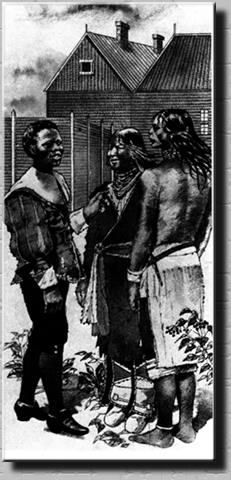
| Matthew Da Costa | ||||||||||||||||||
| When the colonialists won, an agreement was crafted to allow those Black soldiers who could prove service to evacuate with the British. Most chose passage to Nova Scotia and were settled by the government. | ||||||||||||||||||
| The promise of equality and self sufficiency in Canada was better than the reality. In 1792, 1500 people, a third of the total Black population left Nova Scotia for the British colony of Sierra Leone in West Africa and founded Freetown, the capital city. | ||||||||||||||||||
| Other people of African descent arrived in Nova Scotia by way of Jamaica. In 1796 a band of almost 600 Jamaican maroons, runaways who created independent communities, were captured during a military operation and exiled to Halifax. After providing labor during the 1812 war with France but not fitting in culturally with the formerly enslaved from America, the British shipped the maroons to Sierra Leone. When they arrived in Freetown, Black Loyalists were rebelling against the British government. The maroons sided with the authorities instead of with the other Blacks so the rebellion was short lived. | ||||||||||||||||||
| During the War of 1812, men of African descent once again fled enslavement to fight for the British. In April 1814 the British commander issued a proclamation offering to send runaway American slaves as "free settlers" to British colonies. By the end of this war, more than 1500 more Black Loyalists were settled in Nova Scotia and another 500 settled in New Brunswick. Just as with the earlier refugees from America, they were placed in segregated settlements near Halifax with land grants of 10 to 40 acres per family. | ||||||||||||||||||
| Elgin Settlement | ||||||||||||||||||
| Home | ||||||||||||||||||