Knapsacks and other military impedimentia were in confused disarray on shelves above each bunk. The outer hall conatined a row of tin basins hung on hooks, one for each boy. Each morning the basins were filled with pump water cold enough to make the perfomance of personal ablustions both expedious and invigorating.
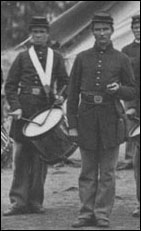
When dressed the boys gathered outside the sally port of what is now Fort Jay to sound reville in unison. they then marched to the mess hall for a breakfast of cold salt pork an dfour ounces of bread, washed down with a cup of black coffee. A foul smelling dish of grease was available as a butter substitute for those whose could stomach it.
Returning to the parade outside the sally port, they beat Three Camps, followed by Guard Mount at eight. A geberal police of the grounds and quarters followed this performance. School began promptly at nine, continuing until eleven. A free hour beofre lunch was consumed by individual practice.
The noon meal, showing little improvment over break fast, consisted of a bowl of rice or bean soup mixed with assorted dessicated vegetables, accompanied by the ever present ration of bread.
After a second hour of practice, from 1:00 to 2:00 PM, the boys gathered for two additional hours of class. At 4:00PM, they received insturctions in the "School of the Solider" (salutings, facings) followed by squad and company drill. At 5:00PM, they returned to the mess hall for a supper of stewed dried apples, another slice of bread, and the evening bowl of black coffee. Retreat, the final call of the day, was sounded en masse.
Weekdays followed the same schedule, while most of Saturday was absorbed by an inspection of person, quarters, and gear. Sunday afternoon was reserved for divine service.

|