|
With the firing on Fort Sumter and the start of the Civil War, the mass raising of regiments also called for the need to recruit large numbers of musicians. Army regulations of 1863 allowed the superintendent of recruiting depots to cause "such of the recruits as are found to possess a natural talent for music, to be instructed on the fife, bugle, and drum, and other military instruments; the boys of twelve years and upward, may be under his direction, be enlisted for this purpose. But as recruits under eighteen years of age and under size must be discharged, if the are not capable of learning music, care should be taken to enlist those only who have a natural talent for music." Many musicians who had served in their local militias filled the ranks of the bands of volunteer units. On some occaisions, recruits who recognized what the instruments were, even though they couldn't play them, or perhaps gave them a toot in their childhood were assigned to the band.
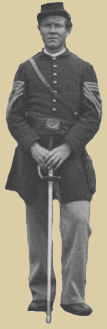
Army regulations called for each regiment to field 1 fifer and drummer per company of 100 men, supervised by the drum major. His was a position of overall authority. He was directly responsible for the musical and military training of all of the field musicians in his regiment. He wrote necessary requisitions, and organized and assigned the calls for each day, after consulting with the regimental adjutant. He saw to the training of new recruits, and submitted requests to the adjutant for replacement personnel. He established times for practice and supervised its execution. He was the first man of the regiment up in the morning and the last one to bed at night.
|