`Victoria Park opened on 16th June 1897. The original plan was to call it Ely Common Park, but Queen Victoria`s Diamond Jubilee on 22nd June inspired a change of heart. The first municipal bowling green in Cardiff was opened there in 1905. The first zoological presence was in 1900 when some bantam storks were introduced to populate an "aviary".
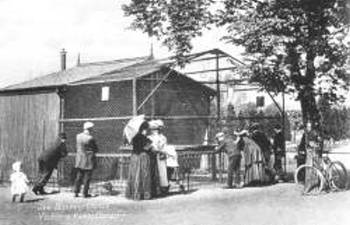
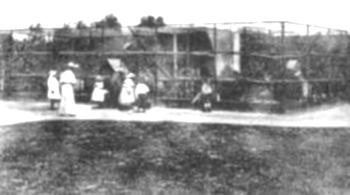
A few months later two monkeys joined the birds as the nucleus of a zoo. As time passed, the collection began to grow. Many animals were donated by the public and by sailors visiting the port. In 1909, new cages opened up on the East side of the park. Over the years, the new cages housed goats, Wally the kangaroo, peacocks, guinea pigs and hares. Animals presented to the Corporation included gazelles, parrots, armadillos, an ostrich, a mongoose and emus. Kind offers of lions and indian snakes were politely refused. A regular problem was that the poor animals died soon after their arrival.
The monkeys sometimes had cruel tricks played on them by the local lads - they would feed them "John Willies" on the quiet. John Willies were sugar coated capsules with cayenne pepper inside. The monkeys would always fall for it, and realize their mistake too late. Then, with their mouths searing, they would go berserk, leaping in a frenzy from side to side of the cage, and shaking the cage wire in anger.
Until World War I Cardiff`s animal collection measured up well to Bristol Zoo. During the Great w ar and World War II, the park was used to boost food production. Then, after WWI money was short and the zoo declined. A mangy old wolf, apparently in a perpetual state of moult is typical of the memories of the time. Despite critisism in the local press, the zoo never really became a focus for civic pride. By 1935, just about all that remained was a peacock, guinea pigs and some hares. |