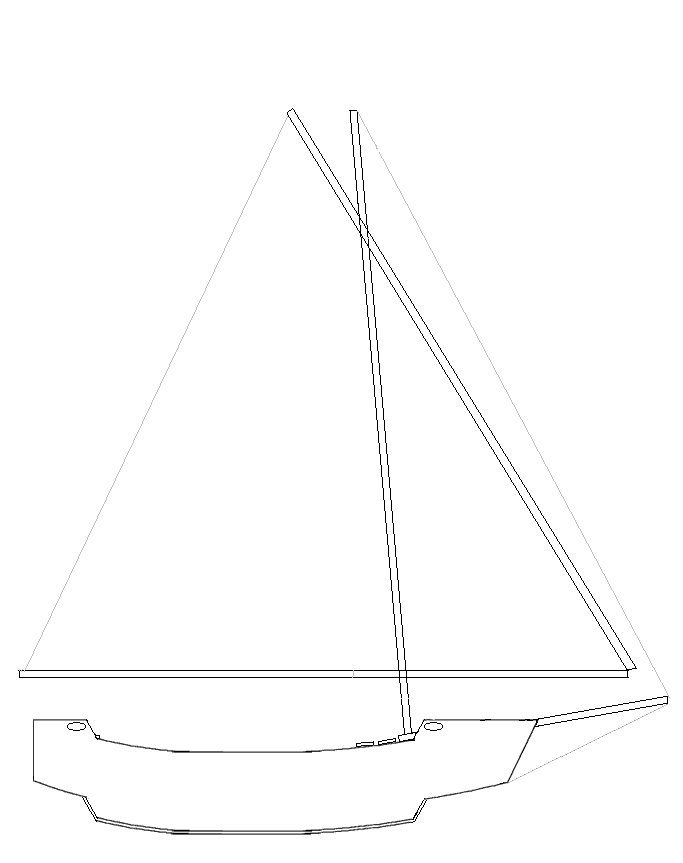
Here are some pictures of the PD Racer hull and rig I've been playing around with. The hull is a side airbox, bilge keel hull based on the 18" high hull, with convex topsides to minimize the wasted wood by nesting side panels. There is no rudder, the plan is to use a steering oar, with roughly 1 square foot of area. Unlike a rudder, the oar will allow the boat to be rowed in circles, which means it won't get caught in irons. The boat uses a gaff rig to keep the center of effort low, and, to tell the truth, because the gaff rig just looks right on that hull shape.
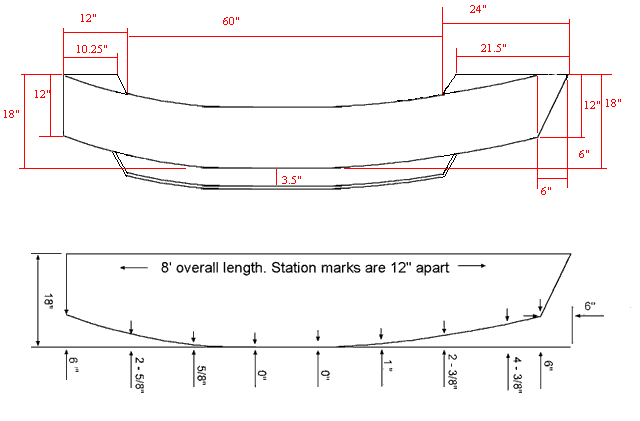
Here's the basic dimensions of the hull, compared to the spec 18" hull:
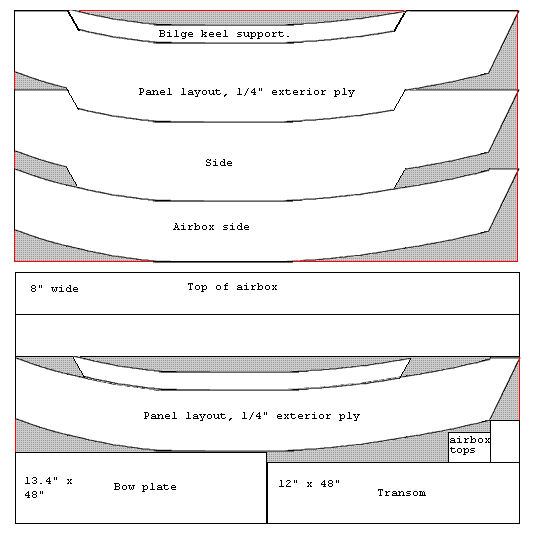
And here are the panel layouts:
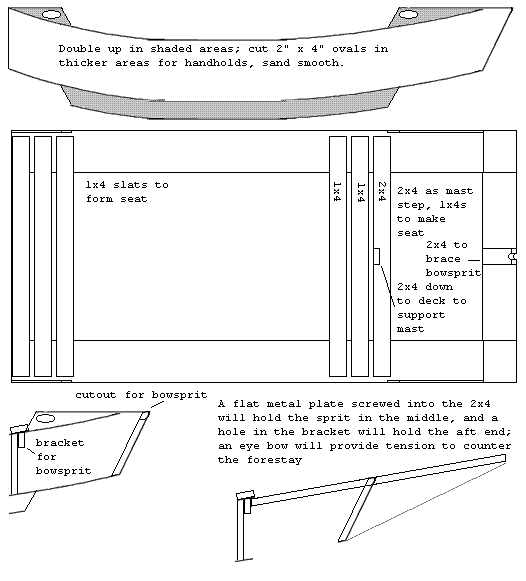
Here's what the hull looks like assembled:
Here you can see the bilge keels assembled. The inside layer of plywood is installed with chine logs for support, and 1x4 lumber is screwed in from each side to provide strength. The 1x4s should stick out slightly past the plywood, to provide a sacrificial surface to get beat up when the hull is beached, and they should project slightly more at front and rear so they can be streamlined.
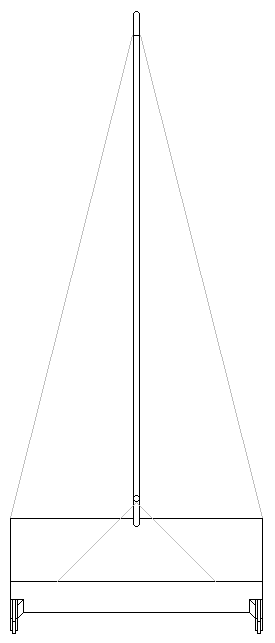
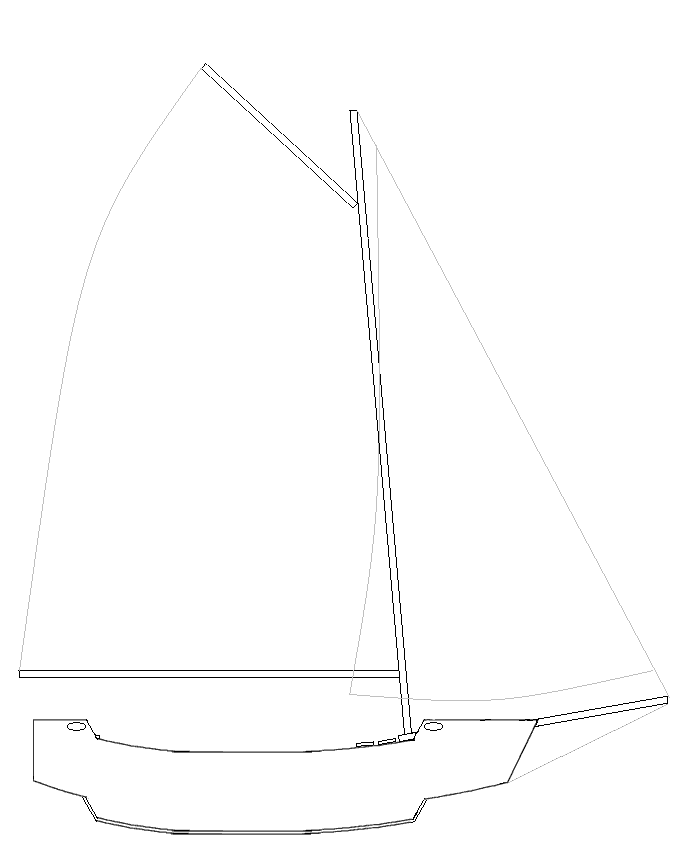
Here is a fairly well balanced 62 square foot gaff rig:
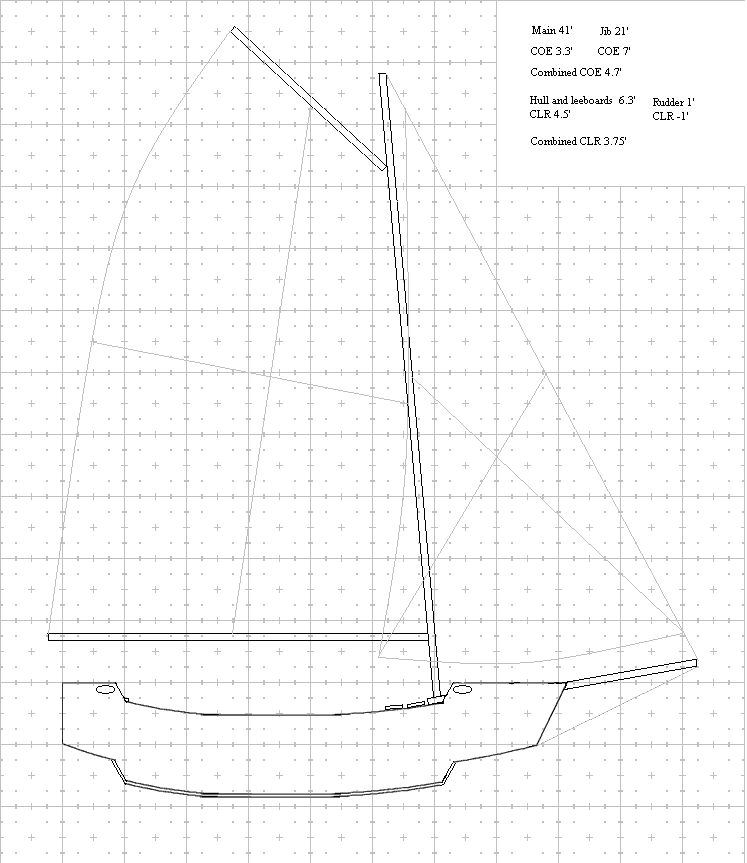
And here it is on a scaled grid, with the rough COE and CLR calculations:
The same exact hull and mast could also use a slightly smaller lateen sail, for easier handling. The lateen also gives a low center of effort, and since it uses the same mast, you could start a beginner with the lateen and move to the gaff/jib combination with more experience. The lateen as pictured might put the center of effort a bit far forward, but that can be changed by just moving the attachment point forward on the sail, thus moving the sail aft. A jib could also be added with the lateen, though it should be a roller furling one (see here for instructions) so it can be rolled out of the way for tacking the lateen.