|
F E A T U R E
|
In the minds of murderers
No one is sure why some teenagers choose to act out their aggression in, but most likely, it is a combination of many factors which can drive a student to murder. According to psychiatrist Dr. Teresa Schultz, whose practice is in Hinsdale many factors_familial, personal, environmental, and biological_can go into creating a violent person.
Though there are many warning signs for a potentially dangerous teenager, it is highly probable that the teen shows few or none of these signs. Signs may include being a loner or being overlooked throughout school years, fascination and access to weapons, open threats of killing one's self or someone else, or a traumatic event or radical change in one's life. Everyday stresses and criticisms may feel life threatening to someone in that emotional stage.
The level of violence at home, involvement and quality of parenting, accessibility to weapons, violent peers, and the influence of the media have also all been linked to violent acts. In 1999 alone, over ten million children suffered some sort of violence at home. While not all of these children went on to become violent themselves, they still have a higher risk of exhibiting this behavior.
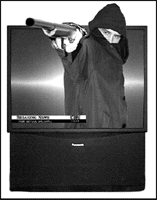
According to Dr. Schultz, another origin for all of the violent acts is the "copy cat violence" syndrome, when someone consciously or unconsciously mimics an action he or she has seen, heard, of read about. Many people claim that television and video games are to blame for corrupting and desensitizing today's youth. However, statistics reveal that the level of violence of adolescents has declined in the past few years. The publicity of school shooting and the emphasis placed on these events by public figures has created an atmosphere of fear and chaos, thus entailing more shootings.
"Our country has been the constant victim of general rage and is one of the most violent countries in the world," said Dr. Schultz. However, avoiding violence or trying to stop creating violent people is a hopeless task. "Although many school officials are trying to take a stronger hand and are trying to practice early intervention, the question," said Dr. Schultz, "is to what extent can someone intervene?"
|
|
 [ main ]