|
|||||||||
|---|---|---|---|---|---|---|---|---|---|
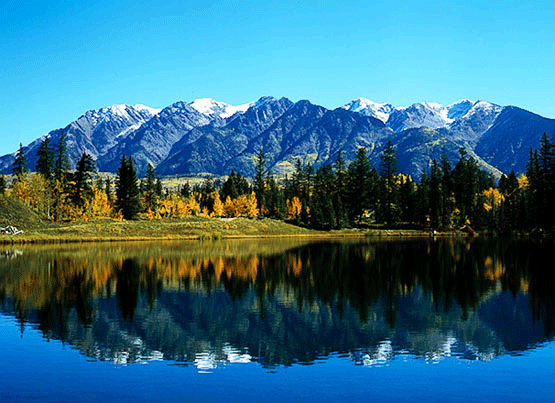
In a sense the united states and canada have very similar physical features.However, there are many differences. the united states genarally has a much warmer climate than canada. Also the united states has a very wide variety of physical features that include mountains, rivers, streams, gulfs, plains, basins and many others. The two most known mountain ranges are the rocky mountains and the appalachian mountains.These mountains run through Montana, Idaho, Utah , Colodado, and Arizona. The highest peak in the rockies is on Mt. elbert reaching 14,440', which is much larger than mt. mitchell which reaches 6,684 in the appalachians.Both mountain ranges occur both in the u.s. and canada.
Rocky Mountain Range
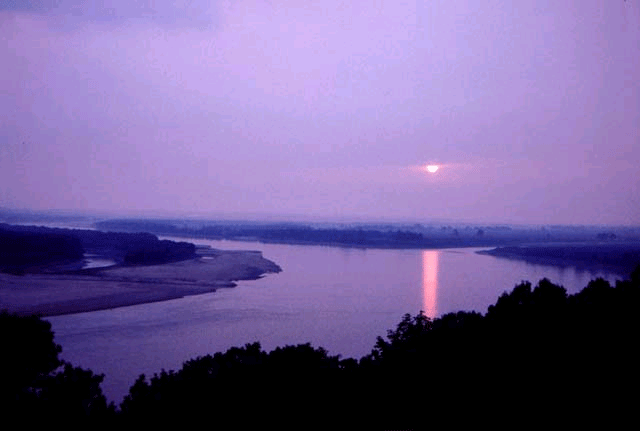
There are also many famous rivers in the United States and Canada. The Mississippi river is the second largest river in north America, flowing 2,320 miles through many southern states. This river source is at lake Itasca and empties out into the gulf of Mexico. Towards the begginingof the river it is so narrow that a person can jump across it. However, in some places it can be more than one mile wide!
Mississippi River
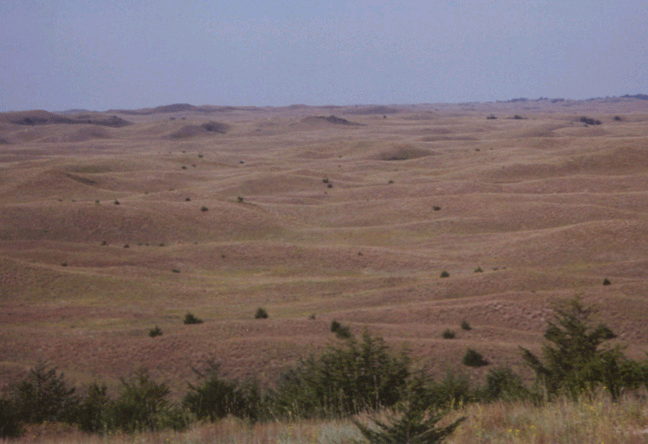
East of the rockies, the land falls and flattens into the great plains, which extend 300 to 700 miles across the center of the United States. tThe great pllains are often refered to as the interior plains or the high plains because of their location and elevation, which reaches up to 6,000 FT.
GreatPlains
STANDARD
Physical | Culture | Government | Today | Environment
|