
Facts
A Peranakan Legacy
Elaborate wedding practices are another exclusive feature of the Peranakan community. A Nyonya bride is adorned in an elaborate costume and decked in fine jewelry on her wedding day. On her head is a decorative headgear made of gold or silver, huge earrings, a completely embroidered baju kebaya and with expensive brocade shoes completing the attire.
A typical Nyonya wedding takes at least six months from the initial agreement between the families to the Big Day (It took us nine). According to Peranakan customs, the bride-to-be has to personally embroider her wedding costume. (haha)
Yaaaam Seng
Yaaaam Seng
Yaaaaaaaaaaa...
aaaaaaaaaaaa...ammm
Seng
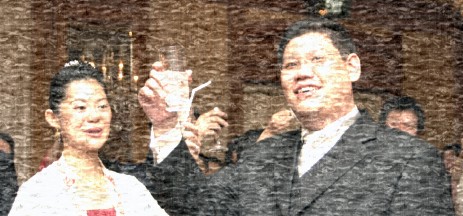
During the feast, the couple and their retinue (normally made up of parents from both sides, siblings and close friends) will go from table to table for a toast with the familiar-sounding "Yam Seng" (which means "drink to success" in Cantonese). The glass is held up high with both hands before everybody shouts (or even screams) "Yam Seng" for multiple seconds and in perfect synchrony.....
Probably used because it is China's national drink and serving it is a sign of respect.
Lotus seeds and two red dates are used in the tea for two reasons. First, the words "lotus" and "year," "seed" and "child," and "date" and "early," are homophones, i.e. they have the same sound but different meanings in Chinese. Secondly, the ancient Chinese believed that putting these items in the tea would help the newlyweds produce children early in their marriage and every year, which would ensure many grandchildren for their parents. Also, the sweetness of the special tea is a wish for sweet relations between the bride and her new family. (uh oh... should have gone with the wine! now we know)
SERVING THE TEA
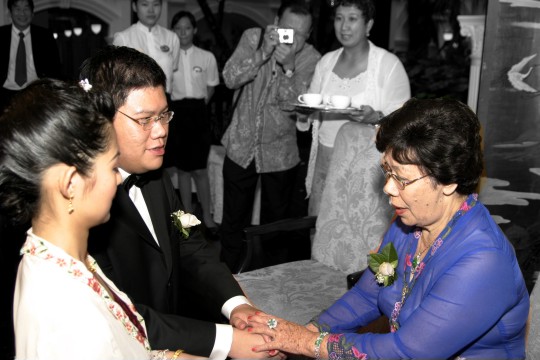
Traditionally, after the wedding ceremony, the newlyweds serve tea (holding the teacups with both hands), inviting their elders to drink tea by addressing them by formal title. The general rule is to have the woman on the left side and the man on the right side (We didn't know then). The people being served will sit in chairs, while the bride and groom kneel. For example, when the newlyweds serve tea to the groom?s parents, the bride would kneel in front of her father-in-law, while the groom would kneels in front of his mother. The newlyweds serve tea in order, starting with the parents then proceeding from the oldest family members to the youngest, e.g. the paternal grandparents, then the maternal grandparents, then the oldest uncles and aunts, and all the way to his older siblings. In return, the newlyweds receive lucky red envelopes stuffed with money or jewelry. The helpers, are usually women blessed with a happy marriage or wealth






The Authors
Daniel Koo
www.enigmaproduction.com
