Don't miss:
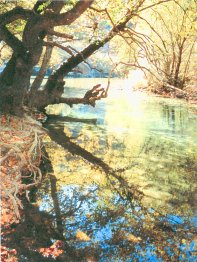
- a stroll next to the lake
- a visit to the island
- the baklava (a filo sweet), chilopites(home made pasta) and tiropita (cheesepie) of Ioannina
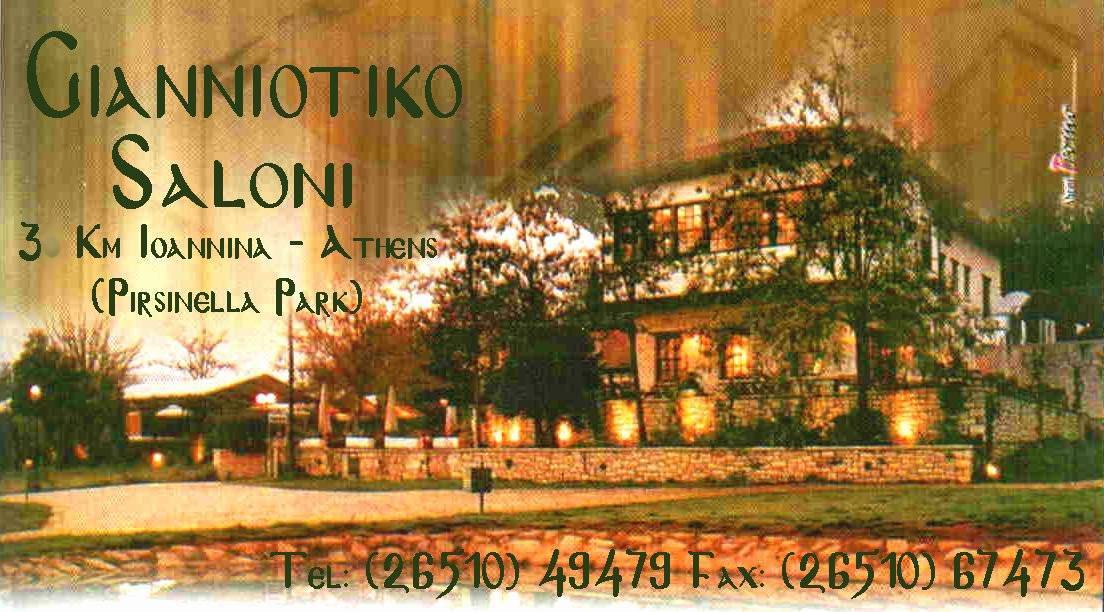
- a lunch at "Gianniotiko Saloni"
- a dinner at Liggiades
- the Zitsa wine
- the Vrellis wax museum
- the Perama cave
- an ancient thatre performance in Dodoni
- a visit to Zagorochoria

Festivals
21 February
Celebration for the liberation of the city
Begining of July
Wine festival in Zitsa
9-13 July
Panhellenic commercial exibition
Epirotica
26 July-10 August
Theatrical performances, concerts, etc.
August-September
Rowing races at the lake
1st week of september
Bazaar
September
Convention of History, Folcklore or Philosophy in cooperation with the University of Ioannina
.........................
The boats for the island depart every hour from 6:30 to 22:00. The trip is 10'.
The Vrellis wax museum is open every day until 16:00. The ticket costs around 3 euros for adults and 1,50 euros for students and children.
Tel: 26510-55055
The Perama cave is open every day until 20:00. The ticket costs around 4,50 euros for adults and 2 euros for students and children.
Tel: 26510-81521
"GIanniotiko Saloni" cafe-restaurant is located in the Pirsinella park at the 3rd Km of Ioannina - Athens national highway. The price pp with wine is around 10 and 11,50 euros.
.........................
Ski:
Pindos mountain
Location Karakoli
Tel:26560-41211
Camping:
Limnopoula
tel:26510-25265
.........................
How to get there:
- By plane:
From Athens or Thessaloniki. Olympic Airways tel: 26510-23120 Aegean Airlines Tel: 26510-65200
- By bus:
If you depart from Athens Tel: If you depart from Thessaloniki Tel:
.........................
Useful telephones:
Airport
26510-26218
KTEL Ioannina
to Agrinio - Patras, Preveza and Arta
26510-25014
to Athens
26510-26286
to Igoumenitsa
26510-26211
to Thessaloniki
26510-27442
local busses
26510-22239
Police
26510-26226
26510-35913
26510-26280
Tourist police
26510-25673
Hospital "Hatzikosta"
26510-33461
26510-80111
University Hospital
26510-99111
OTE
26510-41699
26510-27099
ELTA
26510-26500
26510-25498
ELPA
26510-49695
26510-49643
Taxi
26510-21044
26510-26235
26510-28444
26510-38400
Radio Taxi
26510-46777
26510-46778
26510-46779
EOT
26510-25086
26510-31456
26510-46662
26510-41142
Vrellis museum
26510-55055
25510-22414
Folk art museum
26510-20515
Municipal museum
26510-26356
Perama cave
26510-81521
Dodoni theatre
26510-82287
Archaeological museum
26510-33357
Byzantine museum
26510-39580
Municipal museum
26510-26356
Frontzos folklore museum
26510-23566
Museum of national resistance
26510-37644
Art gallery of EHM
26510-25233
Municipal art gallery
26510-75131
Zosimaia public library
26510-25591
Library of EHM
26510-24190
Digital library
26510-38656
YWCA Childrens' library
26510-44608
Pre-revolution era museum
26510-81791
.........................
Average temperature
(C - F)
Jan 04.7 40.4
Feb 06.2 43.2
Mar 08.9 48.0
Apr 12.6 54.7
May 17.4 63.4
Jun 21.7 71.1
Jul 24.8 76.6
Aug 34.4 76.0
Sep 20.2 68.3
Oct 14.9 58.8
Nov 09.8 49.6
Dec 06.6 42.8
........................
EOT = National Tourist Organisation (GNTO)
ELTA = Post office
ELPA = Road assistance
KTEL = Bus system
EHM = Society for Epirotic Studies
.........................
See also:
http://ioannina.
uoi.gr/index2.html
http://www.arafura.
net.au/greeksnt/
ioannina.html
|
Ioannina
 The prefecture of Ioannina is the northernmost part of the Epirus area. The capital is the city
of Ioannina. It is one of the most preferred winder vacation resorts in Greece and one of the most
popular destinations for extreme sport lovers and ecotourists. The romantic city of Ioannina with
the picturesque castle and its famous silver artisans gives way to dense forests and National
Parks, gorges and wild rivers, crystal clear mountain lakes and snow-covered mountains, Byzantine
monasteries and ancient theatres. It is the land of god Zeus and goddess Artemis, the land of the
ancient people of Selli and the Dodoni oracle, the land of the legends, the dragons, the fairies
and the folk traditions.
In
Ioannina prefecture one can visit the city of Ioannina, Zagorochoria, a
group of traditional mountain villages, number one choice for the Athenians for winder vacations,
the Vikos Gorge and the Vikos - Aoos National Park for extreme sports, trekking or
simply enjoyng nature, Pirsogianni, the village of the famous stone artisans, Katsanochoria, Metsovo and Pramanta
|
| The city of
Ioannina
|
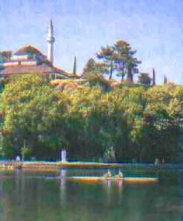 Ioannina (or Giannena or Yiannena or Jannena) [Iωαvvιvα or
Γιαvvεvα] is the prettiest and the largest city in Epirus, decorated with
old buildings, narrow streets, and natural charms. It is built 500 Km above sea level right next
to the shores of lake Pamvotis. The importance of the lake to the survival of the local people
since antiquity is evident in its name which in Greek means "she who feeds everything" or "where
everything lives". The city is a mix of the old with the new, of the tradition and the modern
western spirit. The University of Ioannina that attracts lots of young people from all over
Greece in combination with the local people, famous for their explosive temperament, forms an
atmosphere both intellectual and folklore that blends surprisingly well. Ioannina (or Giannena or Yiannena or Jannena) [Iωαvvιvα or
Γιαvvεvα] is the prettiest and the largest city in Epirus, decorated with
old buildings, narrow streets, and natural charms. It is built 500 Km above sea level right next
to the shores of lake Pamvotis. The importance of the lake to the survival of the local people
since antiquity is evident in its name which in Greek means "she who feeds everything" or "where
everything lives". The city is a mix of the old with the new, of the tradition and the modern
western spirit. The University of Ioannina that attracts lots of young people from all over
Greece in combination with the local people, famous for their explosive temperament, forms an
atmosphere both intellectual and folklore that blends surprisingly well.
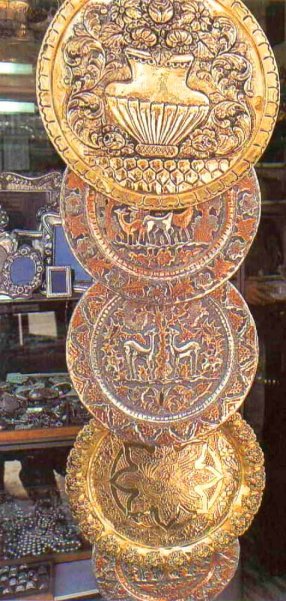 Ioannina used to be a cultural and commercial centre during the tourkokratia, the period
during which Epirus was under the occupation of the Ottomans. It was famous for its fur and
silver artisans and today one of the most representative epirotic souvenirs is a decorative
silver plate bought from the street of the silvery shops near "molos", the mole next to the lake.
The city boasts some of the earliest schools and universities in east Europe and most of the
Greek benefactors that founded schools, libraries, universities etc. and helped actively for the
liberation of the country and its intellectual enhancement come from Ioannina and the broader
area of Epirus. The rich merchants from Epirus used to be so successful as to expand their
operations abroad with the basis of their operations in Venice, Liborn, Vienna and other big
cities of central Europe and Russia. The peak of this flourishing era was during the government of
Ali Pasha as the
amazingly large amounts of money he would spend for his army, his charem, his courtyard and the
often visits of foreign diplomats and travellers created ideal situations for the commercial and
economic advancement of the area. Ioannina used to be such a rich and powerful city that when
Lord Byron visited it he talked with great enthusiasm about its wealth and its people and the
Greeks even today say in remembrance of that glorious era:
Ioannina used to be a cultural and commercial centre during the tourkokratia, the period
during which Epirus was under the occupation of the Ottomans. It was famous for its fur and
silver artisans and today one of the most representative epirotic souvenirs is a decorative
silver plate bought from the street of the silvery shops near "molos", the mole next to the lake.
The city boasts some of the earliest schools and universities in east Europe and most of the
Greek benefactors that founded schools, libraries, universities etc. and helped actively for the
liberation of the country and its intellectual enhancement come from Ioannina and the broader
area of Epirus. The rich merchants from Epirus used to be so successful as to expand their
operations abroad with the basis of their operations in Venice, Liborn, Vienna and other big
cities of central Europe and Russia. The peak of this flourishing era was during the government of
Ali Pasha as the
amazingly large amounts of money he would spend for his army, his charem, his courtyard and the
often visits of foreign diplomats and travellers created ideal situations for the commercial and
economic advancement of the area. Ioannina used to be such a rich and powerful city that when
Lord Byron visited it he talked with great enthusiasm about its wealth and its people and the
Greeks even today say in remembrance of that glorious era:
"Γιαvvεvα, πρωτα στ'
αρματα
στα γρoσια και
στα γραμματα"
"Giannena,
excels in battle,
in commerce and the arts"
Unfortunately, even though the city used to be decorated by many beautiful buildings only few
remain today because of the series of destruction it has faced by the many conquerors.
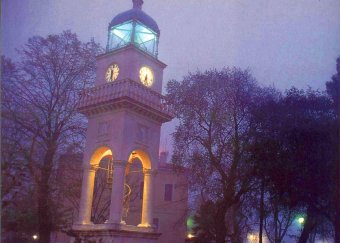 The heart of the city and the major meeting point for the people of Ioannina is the main square
next to the municipal clock. You can hear the locals arranging a meeting by saying simply "sto
roloi" which means "at the clock". A few metres away from the "Roloi" there are lots of modern
cafes which attract mostly young people and students of the university and many traditional
zacharoplasteia, pastry shops that attract slightly older customers. Some of them are
rather old and renowned such as the "Vretannia" and "Diethnes" which are often preferred by the
locals as the most traditional. Keep in mind that in Greece most of the pastry shops serve coffee
and ice-cream as well and they usually have tables outside for the customers. Around there one
can find some of the best tiropita and bougatsa of Ioannina as well that is,
cheesepie and creampie. Remember that some of the best delicacies are served in places which
don't have tables to sit and they look very modest and small from the outside.
The heart of the city and the major meeting point for the people of Ioannina is the main square
next to the municipal clock. You can hear the locals arranging a meeting by saying simply "sto
roloi" which means "at the clock". A few metres away from the "Roloi" there are lots of modern
cafes which attract mostly young people and students of the university and many traditional
zacharoplasteia, pastry shops that attract slightly older customers. Some of them are
rather old and renowned such as the "Vretannia" and "Diethnes" which are often preferred by the
locals as the most traditional. Keep in mind that in Greece most of the pastry shops serve coffee
and ice-cream as well and they usually have tables outside for the customers. Around there one
can find some of the best tiropita and bougatsa of Ioannina as well that is,
cheesepie and creampie. Remember that some of the best delicacies are served in places which
don't have tables to sit and they look very modest and small from the outside.
Behind the clock there is a small park that leads to a large plateau overlooking the lake. It is
one of the best places to be when the night is sweet and the moon is full. Next to it the
"Litharitsia" cafe-restaurant with a beautiful view to the lake. By the way don't forget to taste
the pontikaki pastry (not necessarily in "Litharitsia"!), a type of chocolate cake that
looks like a small mouse! It is one of my favourite! You can find it at pastry shops as well.
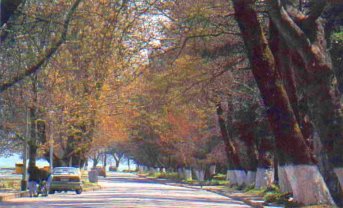 At a short walking distance there is molos, the dock. Molos is one of the meeting points of the
city, especially during summer when all the cafes and restaurants of the area are open. There one
can enjoy a coffee, a juice or even some ouzo with meze and play backgammon, a game the Greeks
seem to play passionately, or eat some of the local specialities next to the lake. Near molos one
can find some of the most "funky" cafe-clubs of the city such as the "Stathmos". On the right of
molos there is the castle and one of the most romantic areas of the city. The road around the
castle next to the lake covered with the foliage of the ever-present in Epirus plane-trees. This
is probably my favourite spot in the city!
At a short walking distance there is molos, the dock. Molos is one of the meeting points of the
city, especially during summer when all the cafes and restaurants of the area are open. There one
can enjoy a coffee, a juice or even some ouzo with meze and play backgammon, a game the Greeks
seem to play passionately, or eat some of the local specialities next to the lake. Near molos one
can find some of the most "funky" cafe-clubs of the city such as the "Stathmos". On the right of
molos there is the castle and one of the most romantic areas of the city. The road around the
castle next to the lake covered with the foliage of the ever-present in Epirus plane-trees. This
is probably my favourite spot in the city!
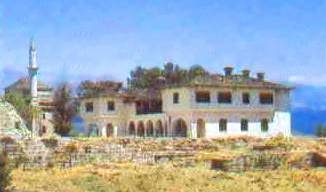
The castle itself depicts in its architecture the rich historical past of the city. It has
accepted the influences of all the people that passes from Ioannina ranging from the Vikings to
the Byzantines and from the Normands to the Turks. Inside its walls there is a residential area,
something vary rare for such a historical structure. Usually places like that are used today only
as museums but the community of the castle of Ioannina or as the locals call it, the "Kastro", is
a traditional but integral part of the city. A stroll to the narrow maze-like roads of the Kastro
among the small traditional houses, the laughter of children and the smell of the launch being
prepared coming from the open windows is like a travel back to time. One of the best things about
that area is the fact that cars are not allowed.
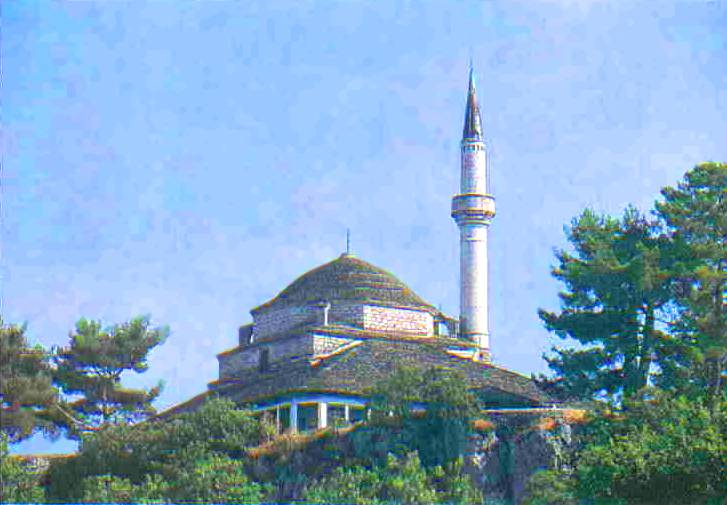 On the north side of the Kastro (or as it is referred sometimes with its Turkish name, the Its
kale) there is the Aslan Tzami, a Turkish mosque that many believe it was build on top of the
Christian church of St. John the Baptist. It is visible from everywhere in the city and it is
probable the most recognisable landmark of Ioannina. A little bit further the second mosque of
the city, the Fetihe Tzami, and next to it the small Byzantine Museum in which some of the most
exquisite jewellery made by the famous local artists is exhibited. A few metres away there is the
rest of the old castle, an area that easily excites the imagination of the visitor as it has
changed only slightly since the 17th century. There one can feel extremely vividly something
that is present all over the city but inside the old part of the castle is even more evident, the
dramatic mix of romanticism and sadness as the past of the place was marked by glorious times and
times of oppression and extreme cruelty. The elders are always keen to narrate tragic stories from
the tourkokratia with most known being the stories of Skylosofos and of Ali Pasha and Kira Frosini.
On the north side of the Kastro (or as it is referred sometimes with its Turkish name, the Its
kale) there is the Aslan Tzami, a Turkish mosque that many believe it was build on top of the
Christian church of St. John the Baptist. It is visible from everywhere in the city and it is
probable the most recognisable landmark of Ioannina. A little bit further the second mosque of
the city, the Fetihe Tzami, and next to it the small Byzantine Museum in which some of the most
exquisite jewellery made by the famous local artists is exhibited. A few metres away there is the
rest of the old castle, an area that easily excites the imagination of the visitor as it has
changed only slightly since the 17th century. There one can feel extremely vividly something
that is present all over the city but inside the old part of the castle is even more evident, the
dramatic mix of romanticism and sadness as the past of the place was marked by glorious times and
times of oppression and extreme cruelty. The elders are always keen to narrate tragic stories from
the tourkokratia with most known being the stories of Skylosofos and of Ali Pasha and Kira Frosini.
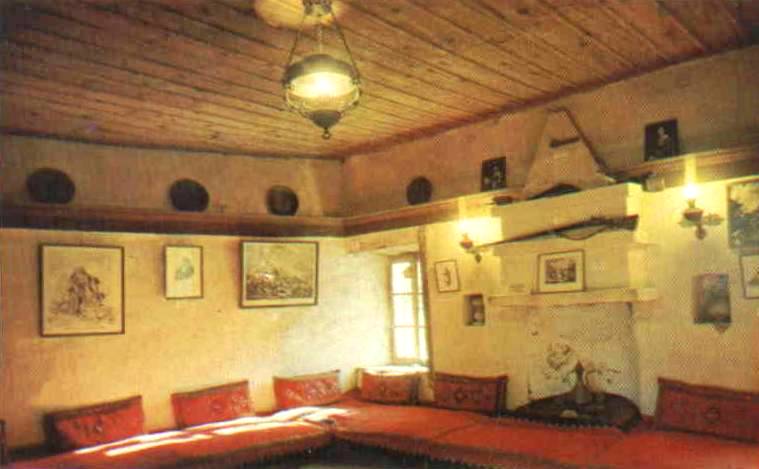 From Molos one can take one of the little boats that cross the lake and visit the islet that the
locals simply call Nisi, the Island. During summer they depart very frequently, sometimes so
frequently as every 10 minutes. These little boats are practically the only connection of the
island with the city of Ioannina and during winder, when most of the external tourism dies down,
operate solely for this purpose. The boats arrive in a small open area filled with restaurants
with large aquariums filled with fish, shrimps, crabs and other sea food. The customer can choose
his fish of preference which is fished out of the tank with a net before it end up to the kitchen
and eventually to his plate. Some of the most famous delicacies of the island are, trout,
frog legs, crayfishes and eels. The island is really small, only 675 sq. km. It consists
practically from a major stone covered street that runs through the island from which smaller
paths begin which very often end up in a dead end in somebodys frond yard.
From Molos one can take one of the little boats that cross the lake and visit the islet that the
locals simply call Nisi, the Island. During summer they depart very frequently, sometimes so
frequently as every 10 minutes. These little boats are practically the only connection of the
island with the city of Ioannina and during winder, when most of the external tourism dies down,
operate solely for this purpose. The boats arrive in a small open area filled with restaurants
with large aquariums filled with fish, shrimps, crabs and other sea food. The customer can choose
his fish of preference which is fished out of the tank with a net before it end up to the kitchen
and eventually to his plate. Some of the most famous delicacies of the island are, trout,
frog legs, crayfishes and eels. The island is really small, only 675 sq. km. It consists
practically from a major stone covered street that runs through the island from which smaller
paths begin which very often end up in a dead end in somebodys frond yard. 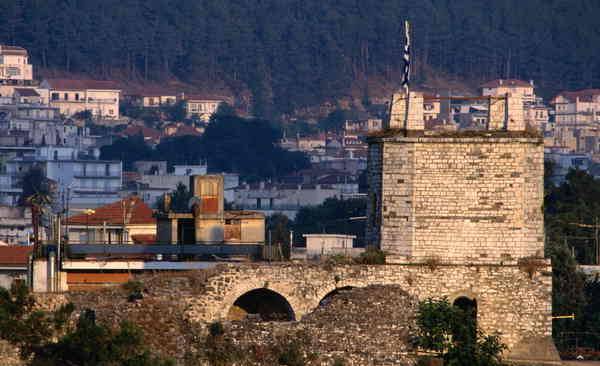 Across the main road
there are numerous silvery shops with local products very often of great artistic value. The road
leads to the summer house of Ali Pasha, the most known of a series of Turkish
governors of the broader area, who marked the history of the city. For a very low ticket one can
visit the interior of the house in which the decoration has been kept almost untouched and relive
in imagination the assassination of Ali Pasha. On the wooden floor there are still visible the
wholes from the large bullets from the big pistolia used from the soldiers of the time that killed Ali Pasha. Next to Ali Pasha's house there is the Philanthropinon monastery. Inside one of the things the visitor can see is the frescoe of the seven sages of antiquity. It is one of the many ways the Greeks express their dual historical and cultural background that embraces both antiquity and orthodoxy. Across the main road
there are numerous silvery shops with local products very often of great artistic value. The road
leads to the summer house of Ali Pasha, the most known of a series of Turkish
governors of the broader area, who marked the history of the city. For a very low ticket one can
visit the interior of the house in which the decoration has been kept almost untouched and relive
in imagination the assassination of Ali Pasha. On the wooden floor there are still visible the
wholes from the large bullets from the big pistolia used from the soldiers of the time that killed Ali Pasha. Next to Ali Pasha's house there is the Philanthropinon monastery. Inside one of the things the visitor can see is the frescoe of the seven sages of antiquity. It is one of the many ways the Greeks express their dual historical and cultural background that embraces both antiquity and orthodoxy.
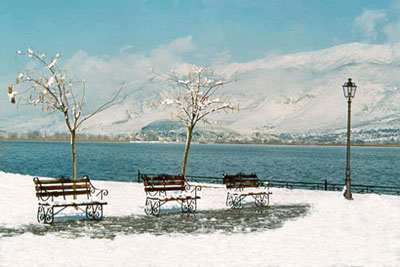 Right above the lake looms the mountain Mitsikeli. With its peak snow-covered throughout the year
is not only a landmark, source of inspiration for many folk songs and legends, but also an
important part of everyday life of the locals and not only because it attracts so many climbers
and skiers. I still remember my grandmother looking at its direction every time she wanted to
predict the weather. Unfortunately this ability died with her. On the side of Mitsikeli Mt.
lies the village of Liggiades, one of the beautiful group of mountain villages called Zagorochoria. At
night it is visible from Ioannina as a series of lights against the dark mountain side. When I
was a child I used to call it "fish" because its shape reminded me of one. Liggiades, which name
comes from the Greek illigos that is, dizziness probably because of its altitude, is very
popular among the locals because of its many restaurants that look over the lake and the city of
Ioannina. I cannot think nothing more romantic than a night stroll next to the lake and then a
nice dinner in Liggiades over the lights of the city.
Right above the lake looms the mountain Mitsikeli. With its peak snow-covered throughout the year
is not only a landmark, source of inspiration for many folk songs and legends, but also an
important part of everyday life of the locals and not only because it attracts so many climbers
and skiers. I still remember my grandmother looking at its direction every time she wanted to
predict the weather. Unfortunately this ability died with her. On the side of Mitsikeli Mt.
lies the village of Liggiades, one of the beautiful group of mountain villages called Zagorochoria. At
night it is visible from Ioannina as a series of lights against the dark mountain side. When I
was a child I used to call it "fish" because its shape reminded me of one. Liggiades, which name
comes from the Greek illigos that is, dizziness probably because of its altitude, is very
popular among the locals because of its many restaurants that look over the lake and the city of
Ioannina. I cannot think nothing more romantic than a night stroll next to the lake and then a
nice dinner in Liggiades over the lights of the city.
|
|
Beyond the city |
|
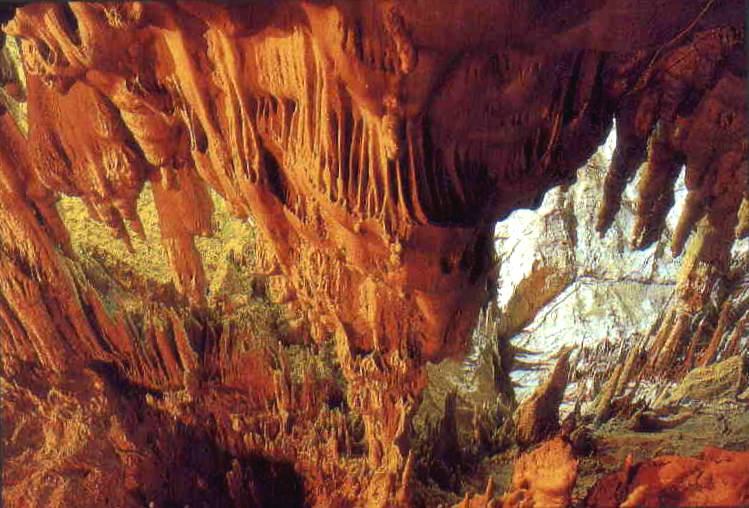 5' away from Ioannina there is a small village called Perama. Perama is a very popular
destination for both the locals and the tourists for two reasons. First it is the place that most
of the clubs go during summer. In many cities of Greece this practise is very common. Big clubs
operate downtown during winter and they move next to the sea or in this case the lake during
summer. The second reason is because of the famous cave of Perama. It was explored by the
renowned couple of spileologists Petrocheilos and it is one of the most interesting caves. There
are guided walks that last around 45' where one can see all those stalagmitic and
stalactitic formations that remind ordinary objects such as the Sphinx of Aegypt or the statue of
Liberty in New York. The tour ends in a small cafe with a view to the city of Ioannina.
5' away from Ioannina there is a small village called Perama. Perama is a very popular
destination for both the locals and the tourists for two reasons. First it is the place that most
of the clubs go during summer. In many cities of Greece this practise is very common. Big clubs
operate downtown during winter and they move next to the sea or in this case the lake during
summer. The second reason is because of the famous cave of Perama. It was explored by the
renowned couple of spileologists Petrocheilos and it is one of the most interesting caves. There
are guided walks that last around 45' where one can see all those stalagmitic and
stalactitic formations that remind ordinary objects such as the Sphinx of Aegypt or the statue of
Liberty in New York. The tour ends in a small cafe with a view to the city of Ioannina.
 In exactly the opposite direction and a few kilometres away of the city there is the Vrellis wax
museum where one can see representations of the local history in a chillingly realistic way. Keep in mind that small children might find some of the exhibits scary! The
problem is that since I visited the museum last time (which was quite a few years ago) it has
been divided into two sections. One is located there, a few kilometres away from the city in Mouzakei and the
other next to the Kastro. I am not sure why this has happened and what is the difference if any
between them.
In exactly the opposite direction and a few kilometres away of the city there is the Vrellis wax
museum where one can see representations of the local history in a chillingly realistic way. Keep in mind that small children might find some of the exhibits scary! The
problem is that since I visited the museum last time (which was quite a few years ago) it has
been divided into two sections. One is located there, a few kilometres away from the city in Mouzakei and the
other next to the Kastro. I am not sure why this has happened and what is the difference if any
between them.
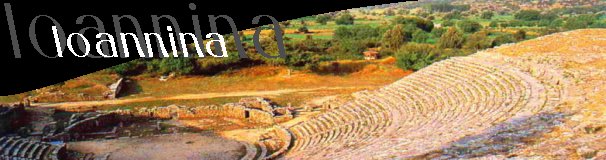
35 km away from Ioannina is the village of Dodoni with the ancient theatre and oracle of Dodoni,
the second most important oracle of antiquity after Delphi. 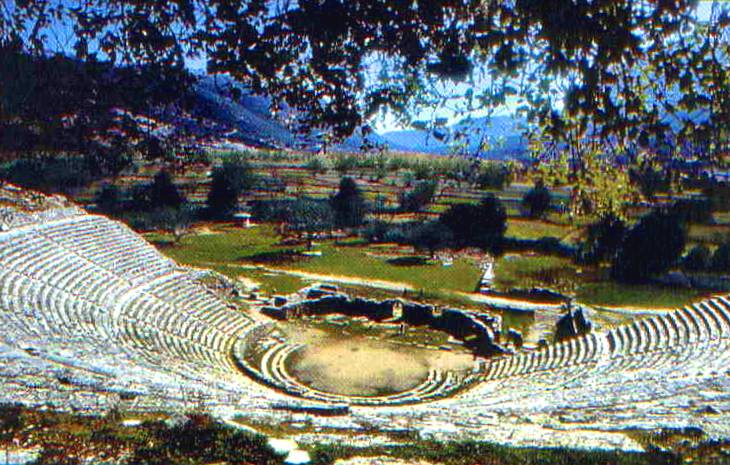 The theatre of Dodoni is in a very
good condition and very often every July and August there are performances there of ancient
dramas and comedies during August. I cannot remember how many times I have watched Medea performed there. Unfortunately it seems that for the next few years the
theatre will be closed for performances since it needs to be restored. The area of Dodoni was a
sacred religious place since 3.000 BC dedicated to the Goddess Gaia (Earth). Later on, the Greek
phylae who immigrate there brought with them the religion of the sacred oak-tree which mixed with
the religion of Gaia-Nature. In the 13th century BC the patriarchal religion of the pelasgic Zeus
appeared and in combination with the already existing religion formed the religion of Zeus whose
wife under the name Dioni was the goddess Gaia and they both lived in the sacred oak-tree. The
religion was an earthly one and originally the priests used to receive divine messages from the
vibrations of the ground to their naked feet. The theatre of Dodoni is in a very
good condition and very often every July and August there are performances there of ancient
dramas and comedies during August. I cannot remember how many times I have watched Medea performed there. Unfortunately it seems that for the next few years the
theatre will be closed for performances since it needs to be restored. The area of Dodoni was a
sacred religious place since 3.000 BC dedicated to the Goddess Gaia (Earth). Later on, the Greek
phylae who immigrate there brought with them the religion of the sacred oak-tree which mixed with
the religion of Gaia-Nature. In the 13th century BC the patriarchal religion of the pelasgic Zeus
appeared and in combination with the already existing religion formed the religion of Zeus whose
wife under the name Dioni was the goddess Gaia and they both lived in the sacred oak-tree. The
religion was an earthly one and originally the priests used to receive divine messages from the
vibrations of the ground to their naked feet. 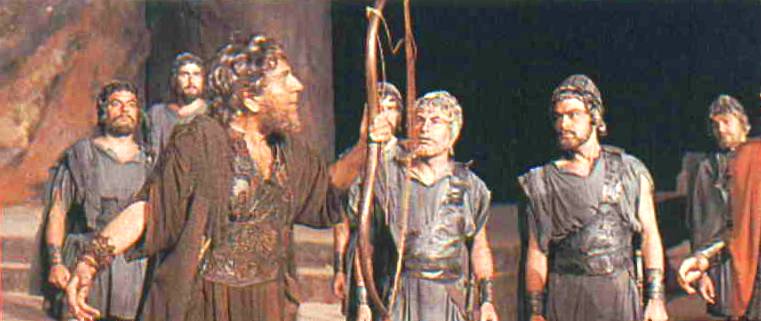 Later they developed a method to read the whisper
of the leaves and the flying of the pigeons. Finally someone offered as a gift a metal statue of
a boy holding a chain over a metal pot. With the wind the chain would hit the pot producing a
sound through which the priests could interpret the will of the God. The oracle and the theatre
were destroyed by the Romans. The theatre was restored by the emperor Augustus and was turned
into an arena. Later they developed a method to read the whisper
of the leaves and the flying of the pigeons. Finally someone offered as a gift a metal statue of
a boy holding a chain over a metal pot. With the wind the chain would hit the pot producing a
sound through which the priests could interpret the will of the God. The oracle and the theatre
were destroyed by the Romans. The theatre was restored by the emperor Augustus and was turned
into an arena.
26 km from the city of Ioannina there is the village of Zitsa famous for its wine. It is build in the middle of vine fields. It is a very typical epirotic vilage with stone houses, narrow stone roads known as kalderimia and beautifully decorated wooden doors. A place to visit there is the monastery of Prophet Ilias (Elijah) for the view which was mentioned by Lord Byron as well. In the begining of July there is a wine festival there and in the 20th of July there is the fiest in honour of Prophet Ilias.
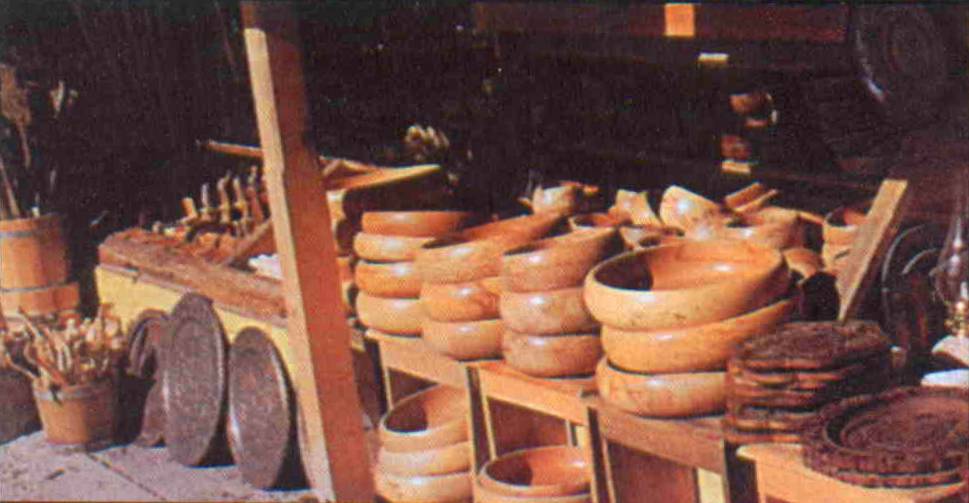 63 km from Ioannina there is the small provincial city of Konitsa built next to the Aoos river. From the church of Agia Varvara (Santa Barbara) one can see a beautiful view to the Vikos gorge with a unique in its kind stone bridge. 12km away from konitsa there is Bourazani, an area in the shores of Aoos river with a wild life park with dears, wildboar, wildgoads, etc and the peripteron of enviromental education. One can also visit a resored operational traditional watermill and workshops of woodcarving and weaving. 63 km from Ioannina there is the small provincial city of Konitsa built next to the Aoos river. From the church of Agia Varvara (Santa Barbara) one can see a beautiful view to the Vikos gorge with a unique in its kind stone bridge. 12km away from konitsa there is Bourazani, an area in the shores of Aoos river with a wild life park with dears, wildboar, wildgoads, etc and the peripteron of enviromental education. One can also visit a resored operational traditional watermill and workshops of woodcarving and weaving.
|
|
The story of Skylosofos |
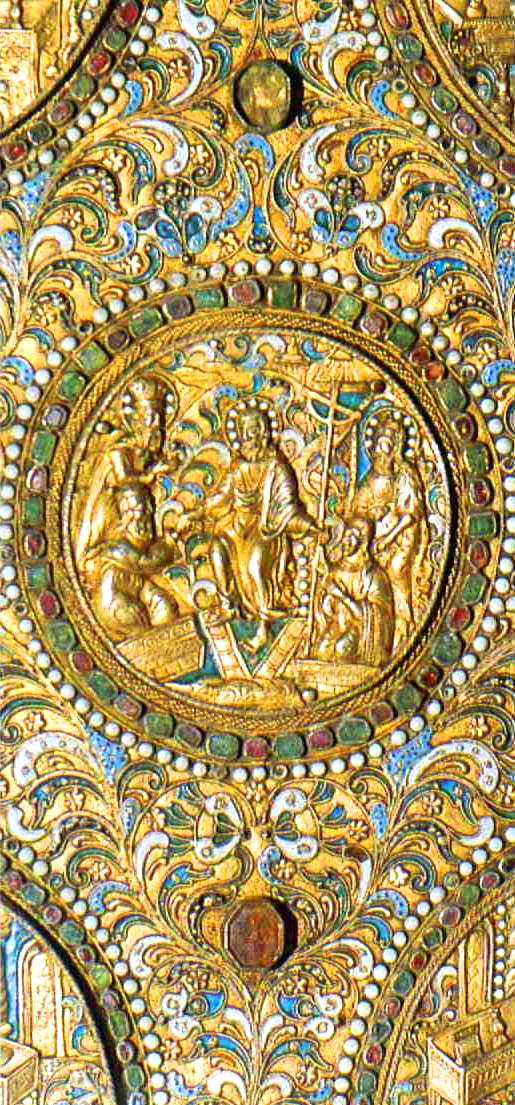
Dionysios, known as Filosofos (the Philosopher), was an archbishop of Epirus. He was highly
educated and unsatisfied with the situation in Greece. He was in conduct with the kleftes,
the Greek freedom fighters, illigal then for the Ottoman state, the Spanish regent, the Pope and
the knights of Malta dreaming about the independence of Epirus. He attempted a first unsuccessful
revolution in 1600 AD in which lots of revolutionists got captured, tortured and killed. He
himself managed to escape in Italy and prepare a second revolution. Meanwhile he was unfrocked.
The second attempt was in 1611 and it almost succeeded as the Pasha hardly managed to escape. The
Turkish army though retaliated and broke the resistance once more. Dionysios was captured and
skinned alive. His skin was filled with straw and was send in Constantinople with the heads of
250 more revolutionists to be seen by the Turkish people. The name Skylosofos is a depreciatory
nickname the Turks and the Greek noble class gave to the revolutionist archbishop that literally
means "the philosopher of the dogs" as very often the Greeks themselves were called "dogs" but
Dionysios became a national hero to the conscience of the people. In the castle of Ioannina one
can still see the cell in which he was killed.
|
|
The story of Ali Pasha and Kira Frosini |
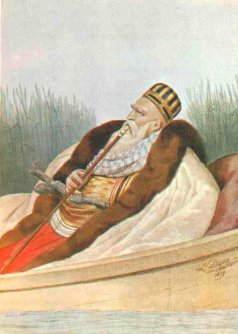
Ali
Tepelen was born in 1744 spend the first years of his adulthood as a thief. In 1768 married the
daughter of Kaplan Pasha and stopped being illegal. With the years he managed to climb to the
position of Pasha of Epirus after he had betrayed his father-in-law to the Turks who decapitated
him, attacked and destroyed lots of areas of Greece and fought and allied the army of Napoleon
according to his interests. His ultimate goal was to declare the broader area of Epirus
independent from the Sultan with his as absolute ruler so he treated both the Greeks and Albanians
some times with extreme cruelty and sometimes with great favour. He is known for the atrocities
he had done to the local population but at the same time for the benefits he gave to the
merchants and the people of Ioannina. He used to help the kleftes, the Greek freedom
fighters, as long as they were serving his purpose.
A woman that tied her name with his was Kira Vassiliki, a Greek woman that was his mistress for
many years until his death. Another woman whose name has remained remembered was Kira Frosini, a
Greek woman who was accused of having an illegal romance with Ali Pashas' son Mouhtar as she was
married. Mouhtar had the reputation of being cruel and oppressive as his father and very soon
Kira Frosini had to face Ali Pasha himself. The legend says that Ali Pasha fell in love with the
extremely beautiful Frosini but because she would refuse his advances as she had done earlier
with those of Mouhtar, Ali Pasha ordered her death. She was sentenced to be drown in the lake
alongside with 16 more Christian women in 1801. Folk tradition says that Ali Pasha gave the order
to empty sacks of sugar in the lake before her so as the water to accept her to be sweet. Since
then Kira Frosini's name has remained attached to that of the Ioannina's lake.
Ali Pasha himself, who had grow extremely dangerous for the Soultan, was declared illegal and
eventually had to face the Turkish army. He fought hard but finally he had to seek refuge to his
summer house in the island with Kira Vassiliki, the great love of his life. The Turkish soldiers found him and killed him by
shooting through the wooden floor of the house in 1822. (If you visit Ali Pasha's house in
the island you can see that the rooms are on the first floor and underneath there is a roofed
veranda.) The soldiers send his head and those of his children and his grandchild to
Constantinople.
|
|
|