| Primates |

|
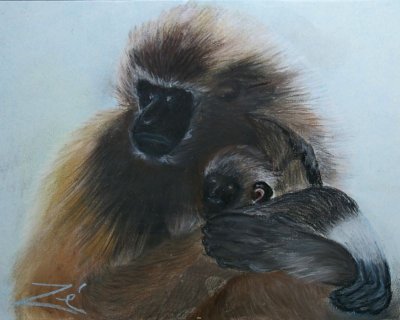
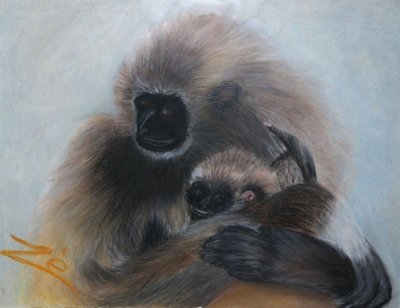
| White Handed Gibbon with baby Endangered - Southeast Asia and Sumatra The White-handed gibbon, like the gorilla, chimpanzee and orangutan, is an ape, not a monkey. The chief characteristics distinguishing apes from monkeys are the absence of a tail, their more or less upright posture and the high development of their brain. The White-handed gibbon (also know as the Lar gibbon) has a black to pale brown or yellowish-gray fur body, with white hair framing a black naked face. The palms of the hand and soles of the feet are also free of fur and white in color, hence its name. The animal's long arms and grasping hands with thumb, contribute to its ability to swing through the trees. Threats - The White-handed gibbon is declining in numbers as man enters its forested territory, often killing the mothers in capturing the young for a lucrative pet market. |
 |
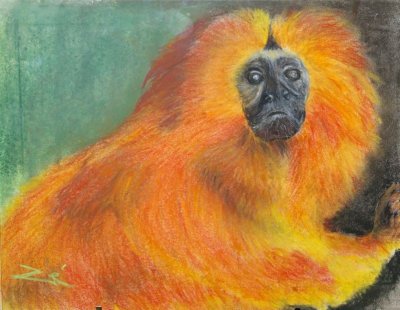 |
| Golden Lion Tamarin Monkey Critically Endangered - Brazil Lion tamarins have a mane derived from long hairs on the top of the head, cheeks and throat. The golden lion tamarin's color is predominantly golden with occasional orange, brown or black coloration on the tail and forepaws. It weighs about 0.5 kg (1.1 lb) and averages about 25 cm (10") in head/body length, not counting the tail. More than 90% of the original Atlantic coastal forest, which contains the golden lion tamarin's habitat, has been lost or fragmented to obtain lumber and charcoal and to clear out areas for plantations, cattle pasture, and development. Capture for zoos and private collections also contributed to its decline in the past. The golden lion tamarin is still under severe threat from continued deforestation, much of which is undertaken to create weekend beach properties. Less than 2% of the forest remains in the region where the golden lion tamarin lives |
 |
 |
| Gibbon |
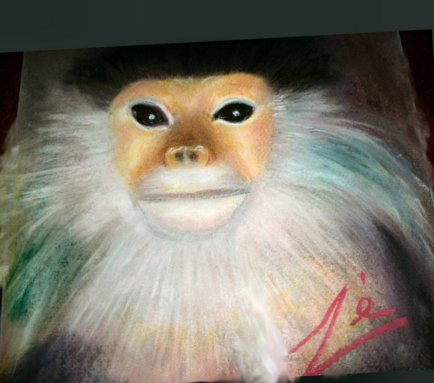 |
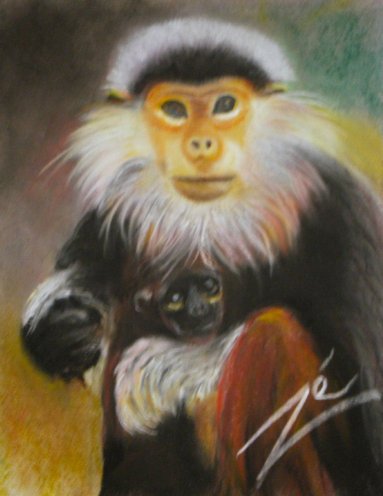
| Red - Shanked Douc Langur
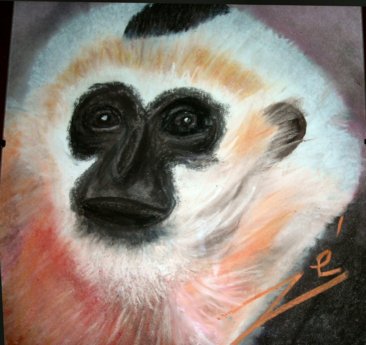
Critically Endangered - Southeast Asian countries of Cambodia, Laos and Vietnam. The diet of the red-shanked douc langur consists mostly of leaves high in fibers. One of the many species of colobine monkeys, or leaf-eating monkeys, they have large stomachs which are divided into sacs containing bacteria that break down the cellulose in leaves, which give them their pot-bellied look. This also makes them burp a lot from the resulting gas. They prefer to eat small, young and tender leaves, but will also eat fruit like figs, buds, flowers and bamboo shoots. They get all the liquid they need from the food they eat, and don't need to descend to the ground to drink. They are messy and chaotic feeders, dropping much of their food onto the forest floor. They eat peacefully together, not quarreling over their food, and have been known to share it with others. The main predator of the red-shanked douc langur are humans. They are threatened throughout their limited range by habitat destruction and hunting. Native people hunt them for food and body parts, which are used in traditional medicine. There is also a very lucrative and illegal wildlife trade for the red-shanked douc langur. During the Vietnam War the douc habitat was heavily bombed and sprayed with defoliants like Agent Orange. Soldiers also used them for target practice. |
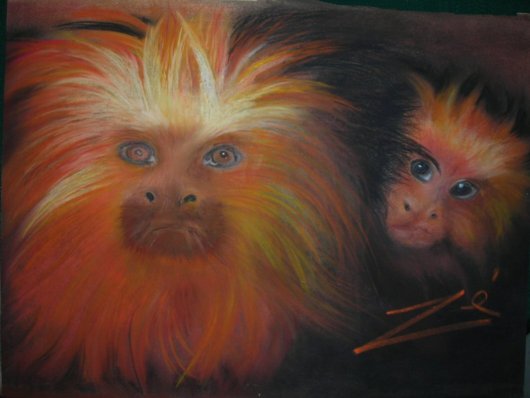 |
| Tamarin Monkey with Baby Critically Endangered - Brazil |
 |
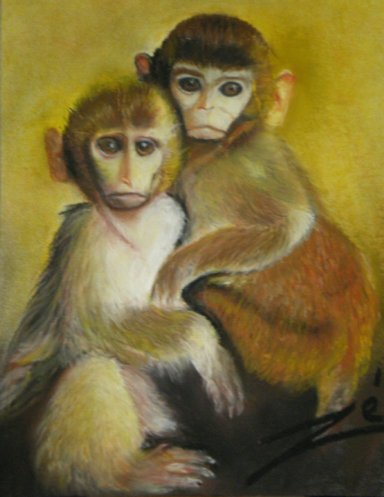 |
| Assamese Macaque (young) Critically Endangered The Assamese macaque is a rare and endangered species found from northern India and Nepal to Vietnam. In China, this species is only found in southeast Tibet and southwest Yunnan. Illegal trade, loss of habitant and pouching are their major threats. |
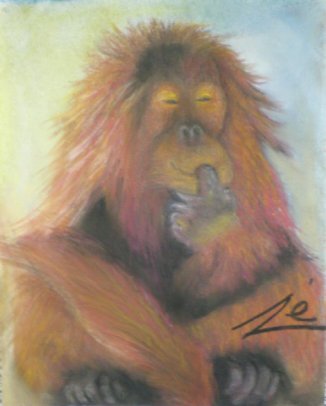 |
| Sumatran Orang U Tan Critically Endangered - Indonesia Orangutans are the largest tree-climbing mammals, they have a characteristic ape-like shape, shaggy reddish fur and grasping hands and feet, with very long arms that may reach more than 6 feet in length. Orangutans' legs are relatively short and weak, but their hands and arms are powerful. Orangutans (also called "red man of the forest") will become extinct within a decade unless serious efforts are made to stop illegal trading and poaching. The orangutan population living on Sumatra island estimated to become extinct in the next five years, and those on Kalimantan island in the next 10 years. |