 |
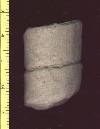
Calamites.
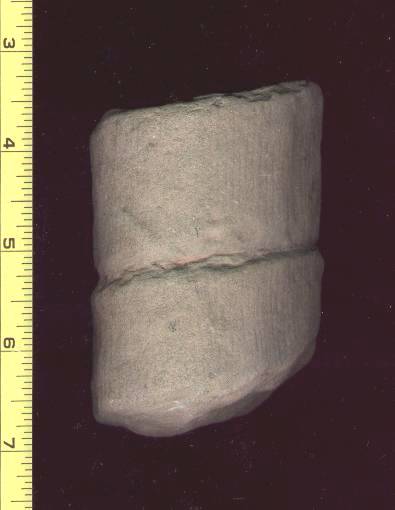
One of the more common and easily identifiable fossils found at Joggins.
The plant resembled the present day Horsetail and grew to a height of between
5 and 10 meters. Much of the distinctive parallel ridges
has been worn away by the action of the wind and waves of the Fundy shore |
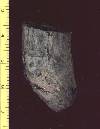 |
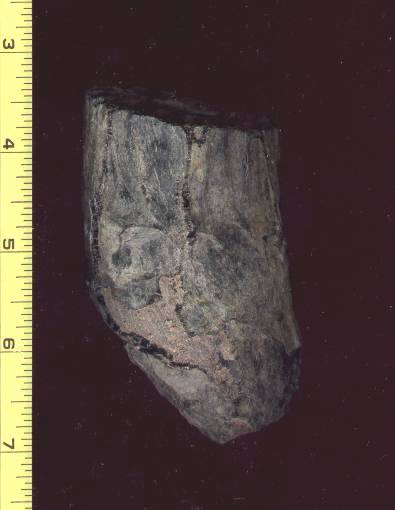
This Calamites is
of interest because it is still surrounded by a thin layer of the coalified
bark of the plant itself. You can see the fresh ridges
of the fossil where the coal has begun to break off. |
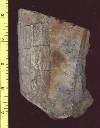 |
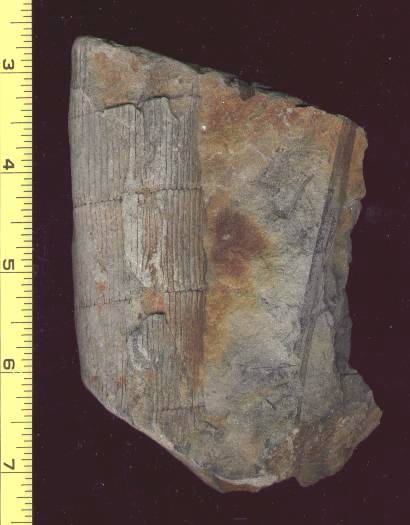
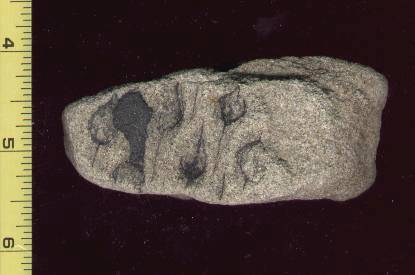
This Calamites, still contained in the surrounding mudstone
shows very fine detail, distinctive of the plant. |
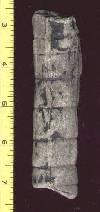 |
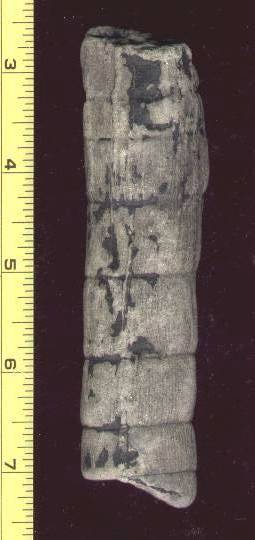
Calamites showing several of the rings where the needlelike
leaves would have been. |
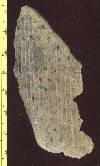 |
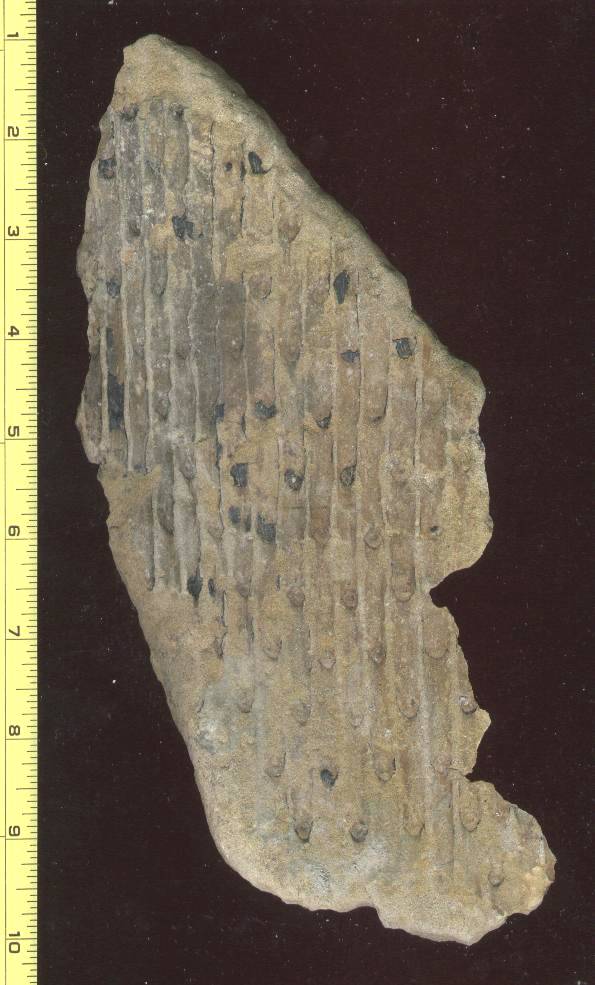
Sigillaria is a Lycopod
tree easily identified by the scale-like pattern of leaf scars found on
it's bark. The scars are arranged in vertical rows separated by ridges. |
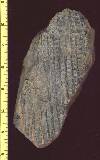 |
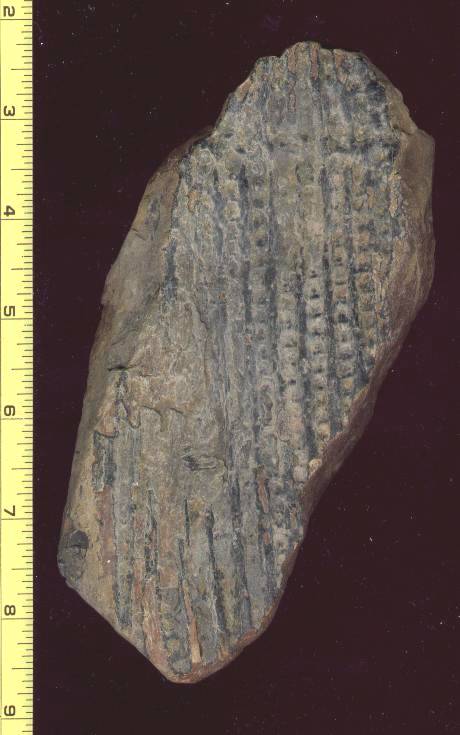
Another piece of bark showing
the distinctive pattern associated with Sigillaria. |
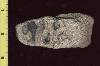 |
Lepidodendron is another large fossilized tree found at Joggins.
Also easily distinguishable by it's leaf scar pattern, Lepidodendron has
a pattern of elongated diamond shaped scars arranged in a spiral around
it's trunk. Both of these trees grew to a height of about 30 meters. |
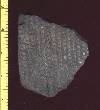 |
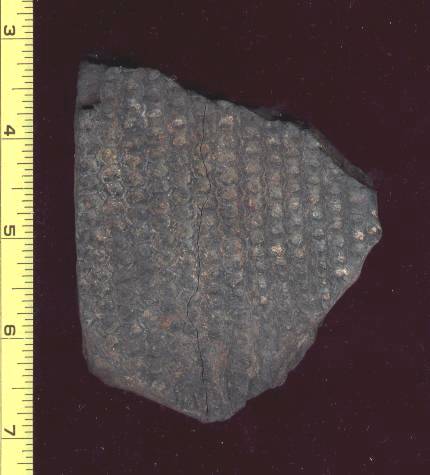
Another piece of bark showing
distinctive hexagonal scales, not diamond-shaped scales like the classical
pattern associated with Lepidodendron, and not linear
scales like the classical Sigillaria. Emmanuel Maicas has
suggested it might be Subsagillaria. |

![[Next Page]](NEXT.gif)