

[1] Ancestors of E=mc2. June 2005. Agnes Scott College, Department of Mathematics. 18 Dec. 2005 http://www.pbs.org/wgbh/nova/einstein/ance-sq.html

|
|
|
|
|
|
|
|
|
|
|
|
|
|
|
|
|
|
|
|
|
| E=mc2 Contributions | ||||||||||||||||||||
|
||||||||||||||||||||
|
||||||||||||||||||||
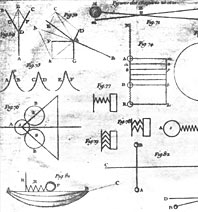
| Emilie's contribution to the equation comes with her questioning: what is energy? Most people felt energy was understood, using Newton's equation of E=mv1, an objects mass multiplied by its velocity will give you its energy. However, Emilie knew of another theoretical view from a German natural philosopher and mathematician, Gottfried Leibniz. Leibniz's theory was based that the important factor was mv2. Emilie and her researchers found conclusive evidence in an experiment done by a Dutch researcher, Willem Gravesande. His experiment was simple, he let weights fall into a soft clay floor. If mv1 proved to be true, a weight falling twice as fast would sink twice as far into the clay, and a weight falling tree times as fast would sink three times as far into the clay. However, this was not observed. A weight falling twice as fast was observed to sink 4 times as far into the clay, and a weight falling three times as fast sank 9 times as far into the clay! Emilie deepened Leibniz's theory and used the Dutch findings within it, making mv2 a justifiable equation for energy. Over time physicists were used to this equation, and when mc2 appeared in Einstein's equation, it was not a big leap for them to understand. It seemed fitting, or natural for the velocity part of the equation (c) to be squared. The domains of energy and mass were connected, and Einstein used c, the speed of light as the bridge. [1] [1] Ancestors of E=mc2. June 2005. Agnes Scott College, Department of Mathematics. 18 Dec. 2005 http://www.pbs.org/wgbh/nova/einstein/ance-sq.html |
||||||||||||||||||||
| This plate of diagrams is from du Ch�telet's Institutions physiques, her elaboration on the ideas of Leibniz. | ||||||||||||||||||||
|
|
||||||||||||||||||||
| Home | ||||||||||||||||||||
| E=mc2 Contributions | ||||||||||||||||||||
| Quotes | ||||||||||||||||||||
| Other Accomplishments | ||||||||||||||||||||
| Student Links | ||||||||||||||||||||
|
|
||||||||||||||||||||