|
A funny
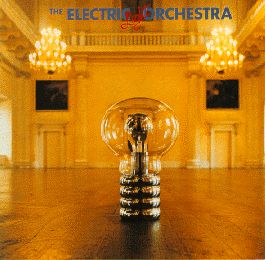
thing happened to this record on it's way to being released in America.
The story is a secretary was instructed by her boss to inquire about the
name of ELO's debut album (so as to do the artwork for the US release).
The secretary made the phone call and there was noone there to pick up.
So she scratched a note on a piece of paper that there was no answer on
the line in the UK.
The record company executive got the note and thought the secretary said
that the name of the record was No Answer! So,
that may be a bit of ELO lore, and there may be a bit of fiction involved,
but none the less, this album is brilliant. From start to finish, it is
a rock masterpiece.
For those of you thinking ELO="Out Of The Blue" type sound,
this record will break ....no wait ....it will shatter all reason to think
ELO has any particular sound. Hard strings, ripping guitars, massive drums,
passionate vocals... ELO had all this and more.
Roy Wood was the main catalyist for ELO. With relative newcomer Jeff Lynne,
Roy Wood hit on the ELO Project will sails full of gusto.
It is a pity, however, that Roy Wood would soon abandon this pet project
and leave it in the hands of a young and untested Jeff Lynne to persevere
with.
Roy Wood, the musical genius that he is, instantly formed another rock
and strings band (with saxophones even!) called Wizzard. Wizzard enjoyed
a brief succcessful run in the mid-early 70's, mostly as a singles band.
But, I digress!
This album starts off with the opening riff of ELO's first single, "10538
Overture", and swirls around in orchestral textures grabbing your
aural senses finally ending with the very surreal and soft Roy Wood penned
tune "Whisper In The Night".
Here are the track listings, writer and other information
1) 10538 Overture - written and sang
by Jeff Lynne. This song was the first single of ELO's history. This song
also graces other ELO compilations albums, Ole' ELO, Strange Magic - The
Very Best Of ELO, Afterglow and Flashback. If you have not heard this
album, do not think that this album or song resembles the ELO that produced
Living Thing, or Sweet Talking Woman. This version of ELO is a rock powerhouse
with their stringed instruments amplified...not multiplied.
2) Look At Me Now - written and sang
by Roy Wood. This song is Roy Wood's first post-Move composition. For
many of Roy Wood fans, this song would have fit nicely on his solo album
Boulders which was recorded around the time this album was being finished.
3) Nellie Takes Her Bow - written
and sang by Jeff Lynne. This song begins the pattern in the album No Answer
by swapping every other vocal track track between Roy and Jeff. You will
not hear a vocal track back to back featuring just one of the two main
vocalists of ELO. Bev Bevan, the drummer, never sang lead vocals for ELO,
not counting the line "Come and join us if you so desire" in
the song Jungle on the album Out Of The Blue.
4) Battle Of Marstoon Moor (July 2nd 1644)
- an instrumental written by Roy Wood. This is the first of three instrumentals
that grace No Answer. In fact, No Answer, has the record for most ELO
instrumentals on any studio ELO disc. Most ELO fans would agree that this
is the weakest song on the album and least liked song in the entire ELO
library. Why did ELO release it on this album? What is the significance
of Marstoon Moor?
Well, here is some history about the subject matter.
Marstoon Moor is almost exactly centered between Scotland's Edinburg and
England's London. The battle at Marstoon Moor occurred during the English
Civil War (1640-49) that was both civil and religious in nature. On one
side of the conflict were the Cavaliers (or Royalists) who supported King
Charles I. On the other side of the conflict were the Roundheads (or Puritians)
who supported Parliament. The English Civil ware effectively ended the
King's ultimate rule over England, which, after the civil war, the kings
only power was what The Parliament granted him. The Battle of Marston
Moor was where the English army (who were strong behind the King) and
the Scottish Army (who were strong behind Parliament) fought and a major
win by the Scottish Army pushed forward the premise of a Parliament victory
in the English Civil War. In essence this battle was the turning point
of the war.
Why did ELO record this song on such subject matter? The answer can be
found in the whole premise of the ELO experiment... to continue where
the Beatles left off. On the Sgt. Peppers Lonely Heart's Club Band there
is a song called "A Day In The Life" and in it there is a line
that goes, "I saw a film today, oh boy. The English Army had just
won the war." (or did they?) The inference being that ELO (being
an orchestra) really preceeded the Beatles in their music, since orchestra
music was most likely enjoyed prior to the revolution of "popular
music" such as rock and roll, blues and folk. ELO, tongue in cheek
boasting that they should be more popular than the Beatles, since orchestra's
were considered the class music of the period of the civil war, enjoyed
by the ruling class, but made accessable by way of rock medium which ELO
was now employing. The Beatles were just ruffians, turning merseybeat
into a fan idium that rocked the world for 6 years, ELO contending that
merging classical elements with rock would be the more enginuitive way
to entertain both rulling and sub classes.
This is always subject to argument here.
5) 1st Movement (Jumping Biz) - an
instrumental written by Roy Wood. This is the second of three instrumentals
on No Answer. This album is basically a classical guitar with backing
string quartet much like Mason William's "Classical Gas" in
1970.
6) Mr. Radio - written and sang by
Jeff Lynne. If there were any clues as to the future of ELO, this song
was indicative. The lush arrangments, the simple piano echoed in post
production and the ending coda.... absolutely a pure ELO song from start
to finish. This song also appears on Afterglow.
7) Manhattan Rumble (49th Street Massacre)
- an
instrumental written by Jeff Lynne. This is the first instrumental that
Jeff Lynne ever recorded. Like the Battle Of Marston Moor, this song deals
with a violent subject matter. Whereas the Marston Moor was primary British,
the Manhattan Rumble was American.
8) Queen Of The Hours - written and
sang by Jeff Lynne. This is the last song Jeff Lynne ever wrote that was
ever produced by someone else other than himself.
9) Whisper In The Night - written
and sang by Roy Wood. In a way that is fitting, Roy Wood says goodbye
to the band that he loved (after all, it was his idea in the first place)
by giving it his aural blessing. During the rest of ELO's rich history
we can still here Roy Wood's whisper in the night of ELO songs all the
way through to Balance of Power. Roy Wood had a tremendous impact on Jeff
Lynne and how Lynne approached song writing and production. ELO was off
to a powerful start.
Bonus Tracks (on the ELO import called "ELO - The Early Years)
10) 1st Movement (Jumping Biz) (Quadraphonic
Mix)
11) Mr. Radio (Quadraphonic Mix)
12) Nellie Takes Her Bow (Quadraphonic Mix)
13) Whisper In The Night (Quadraphonic Mix)
14) Roll Over Beethoven (Single Version)
e
|