|
|
 |
 |
 |
 |
|
Still at the Dawn:The struggle of Online Journalism
More than the Typical: Ako'y "Iskolar ng Bayan" The Delicate Balance: Struggle for the CRSRS Referendum |
More than the Typical: Ako'y "Iskolar ng Bayan"
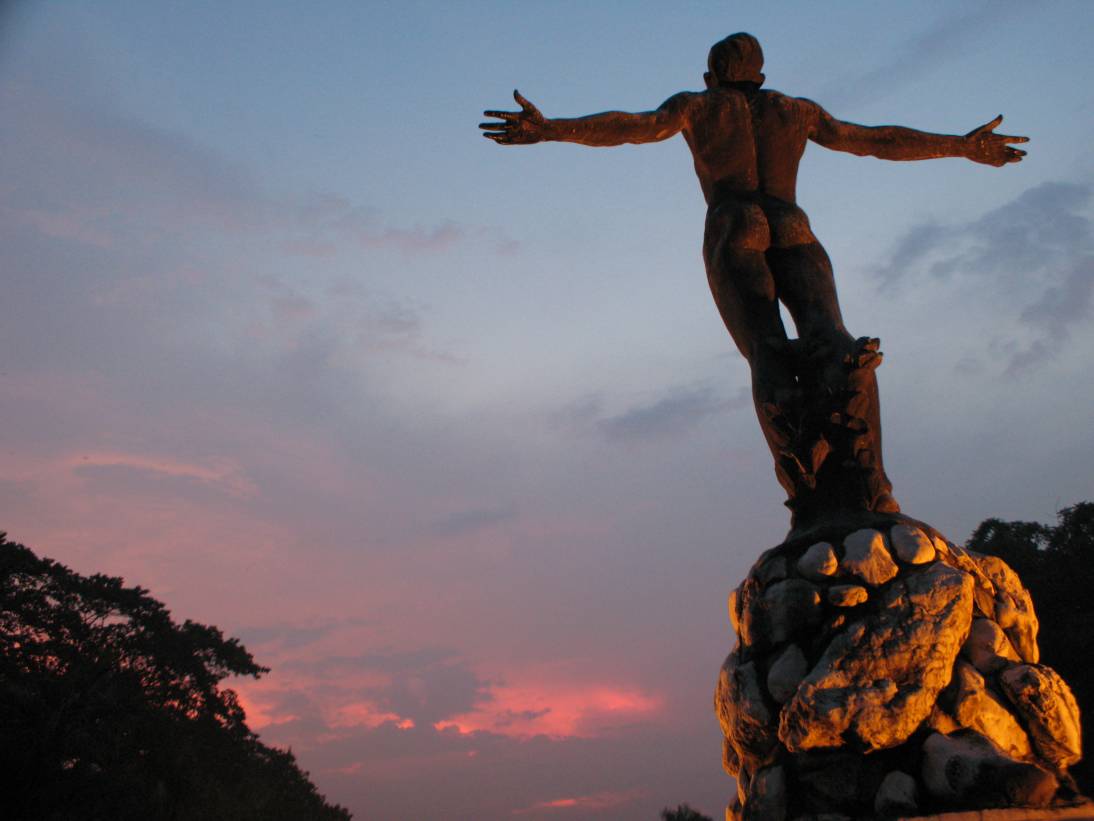
He wakes up two hours and thirty minutes earlier than the time for his first class. He bolts towards the shower for a quick bath, grabs his papers, intentionally forget the concept of breakfast, and rushes outside to flag a jeepney praying that he can still avoid the impending hell of the rush hour upon him. After the two-hour trip from Taguig to University of the Philippines, he enters his class, barely making the ten-minute window for the slowpokes. with eyes still sore from last night's cramming, he sits in his beloved university to submit a good-nights work and to learn (or endure) for the day To some UP students or even students in general, this scene maybe so familiar; the long trips to school, the sleepless nights, the photo-finishes in deadlines (and even in just getting in a class room), and to even add the barkadas, organizations, frats, and other extra-curricular activities, that make up the picture of what it is to be a student of this generation. This article can even go on generalizing the what-is and the what-is-not in being student of UP. But the challenge with this academic institution is that generalizations will not work. Being known as the microcosm of the Philippines, UP has been known to have its own being, its own biodiversity. It has it's own issues, politics, people, and culture that stems from the numerous kinds of cultures and people, from all walks of life, who is present in this melting pot in Diliman. To generalize here is to ignore the vast diversity and uniqueness of the university. So the challenge now is to find out the typical from the diverse, to single-out the identity from the mere stereotypes of the "what is" a UP student.
And with this he adds, "kaya ma-ere din tayo minsan, kasi magaling tayo sa ganyan, mga last-munite ginawa o nag-review pasado pa rin sa exams, minsan mataas pa." He says that the "ma-ere" characteristics probably comes from the ability to accomplish something under pressure and getting credit from it. When asked about being branded as "aktibista" he says,"Oo, naniniwala akong aktibista tayo". "Culture dito na ipraktis talaga yung freedom of speech", he adds. Though he confessess that he doesn't join rallies and demonstrations, he believes that activism isn't measured by just attending the said activities. "Mulat naman tayo sa mga issue sa loob at labas ng UP", he says. He adds that voicing your opinions in class, in papers, and even at home is already a form of activism. For me, though UP could be a very vast population of culturally and socially diverse students, one thing they share is that trait of open speech, to be able to voice out opinions and thoughts not only in rallies or demonstrations, but mostly in a personal note, in class, in papers, with friends and family. The typical UP student may be hard to pinpoint but a commonality is very visible, they are active members of their society and vocal observers not only within the walls of the university but also in the bigger picture of the country. |
Copyright 2009. All rights reserved