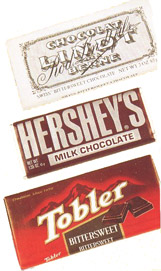
Unsweetened Chocolate
This is also known as bitter or baking chocolate. Bitter chocolate
contains no sugar; it may replace a proportion of the chocolate used in
some recipes for a stronger, slightly bitter flavor.
Bittersweet Chocolate
This is a slightly sweet chocolate that is widely used in baking, desserts
and candy. This is also sometimes called sweet chocolate. The
amount of sugar will depend on the brand.
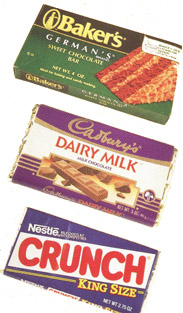
Sweet Cooking Chocolate
This is special blend of chocolate that includes sugar. It is
used most often for German Chocolate Cake. Sweet chocolate is made
without milk, but with more sugar. It contains about 15 percent chocolate
liquor.
Milk Chocolate
| Milk chocolate has a mild chocolate
flavour and is the type preferred by most Americans. In addition
to sugar, chocolate liquor, cocoa butter and flavorings, dried milk is |
 |
added during processing. Milk chocolate was invented in 1876 by Daniel
Peters of Switzerland. Henri Nestlé’s earlier development
of condensed milk contributed to the creation of milk chocolate.
The Swiss government requires that milk chocolate be at least 25 percent
chocolate liquor, 14 percent milk, and no more than 55 percent sugar.
In the United States, milk chocolate can have as little as 10 percent to
15 percent chocolate liquor.
Semisweet Chocolate
| Semisweet chocolate is chocolate
made without milk, but with a moderate amount of sugar. In the United
States, it usually contains about 35 percent chocolate liquor. |
 |
White Chocolate
| White chocolate is not legally chocolate
since it contains no chocolate liquor; but only cocoa butter. It
also contains sugar, flavorings and dried milk. White chocolate has
a |
|
higher sugar content than dark chocolate and is usually considered more
of a candy then a cooking chocolate.
Confectionery Coating
This is often called artificial chocolate or compound chocolate since
some or all of the cocoa butter has been replaced by other fats, such as
coconut oil or palm oil. Sometimes part of the chocolate liquor is
replaced by other flavoring agents. This chocolate is economical
and easy to use. It is suitable for dipping, cake frosting and chocolate
decorations.
Couverture Chocolate
Couverture chocolate is a richly flavored chocolate with a high proportion
of cocoa butter, giving it a glossy appearance and a smooth texture.
Some other variety of chocolates
Filling
- Nuts
- Nut-free
- Alcohol
- Alcohol-free
- Mocha/Coffee
- Mocha/Coffee-free
- Raisin
Type
- Truffles
- Bonbons
- Mixed
- Bars
- Square
- Baking/Cooking
- Discs
- Chocolate Covered
- Novelty
|
Many famous brand names
of chocolate commemorate people who made major contributions to chocolate
manufacturing. Most chocolate companies were started in the last
100 years.
James Baker
A Massachusetts physician who in the mid-1700s started the first chocolate
manufacturing company in America, along with the Irishman John Hannon.
Coenraad van Houten
A Dutch chemist who invented the process and the press to remove cocoa
butter from chocolate and produce cocoa powder. Also developed the
"Dutch processing” of cocoa to improve its colour.
John and Benjamin Cadbury
Started manufacturing chocolate in England in the mid-1800s, and along
which Joseph Fry made the first chocolate in the 1840s. When the
brothers, who were staunch Quakers, learned that the beans they purchased
were grown on plantations that used slave labor, they discontinued business
with them and supported cacao plantations that employed native people on
mainland Africa.
Henri Nestlé
A French Swiss who learned how to condense milk, an important step
in the manufacturing of milk chocolate, which was first successfully produced
by Daniel Peters.
Rodolphe Lindt
A German Swiss who invented the conching process to improve the texture
of refined chocolate.
Milton Hershey
An American who started the famous candy company in Pennsylvania
in 1894. A Mennonite, he opened a school for orphan boys in 1909
that was and continues to be supported by the profits of the company.
Jean Tobler
A Swiss citizen who started manufacturing chocolate in that country
in 1899. |
|
|