Oishii!
(delicious)
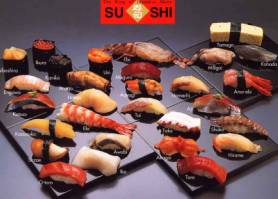 You
can see what is served in the restaurant by looking at food pictures signs in
front display restaurant windows. You
can also view plastic food examples of meals.
The plastic food looks so real!
You
can see what is served in the restaurant by looking at food pictures signs in
front display restaurant windows. You
can also view plastic food examples of meals.
The plastic food looks so real!
Sushi is
one of the most popular rice dishes in Japan.
It is fresh raw fish combined with vegetables and sweet vinegar.
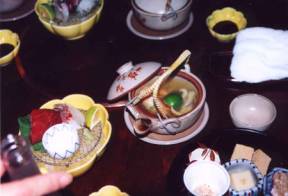
Notice. Most Japanese food is served in its own
special dish.
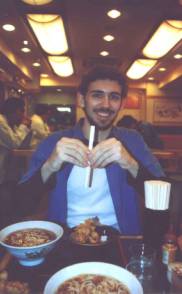
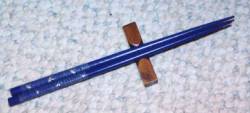
We ate with
hashi or chopsticks. One should always
turn chopsticks in a bowl upside down when taking food from a common bowl to
avoid spreading germs. In Japan when
people put chopsticks down they rest them on chopstick rests called hashioki so
the tips don’t touch the table. Never
spear food or push food around with chopsticks. Never pass food between chopsticks. Never stick chopsticks into a bowl of vice vertically so they are
pointing up and leave them there. This
means someone has died.
Green tea is the most popular drink. It is served without cream, lemon and sugar in a cup without
handles.
Many times
a hot wet towel called an oshibori is given to you when you go to a restaurant
to clean your hands before ordering.
Many
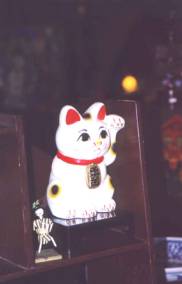
symbols of good luck are in Japan. Red
is the color of good luck. The Happy
Cat (Maneki-neko) is displayed in stores and restaurants.
In many
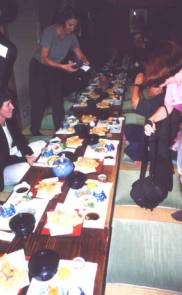
restaurants we ate sitting on pillows.
One day when we went out for lunch we first took our shoes off outside
the main room of the restaurant. We turned them toward the exit door and
stepped into slippers for a traditional meal.
We had tempura of fried seafood and vegetables, sashimi, (thin strips of
raw fish), miso soup, which is soup with soybean paste, maguro (tuna) and
mandarin oranges. Of course we had
white rice, the main food of the Japanese diet. There were seasonings of shoyu (soy sauce), wasabi (horseradish)
and toasted nori (seaweed). We drank
ocha, black tea, with the meal.
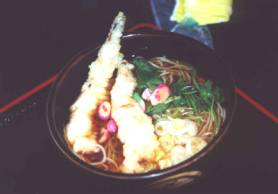 We ate soba noodles with tempura on a different day. This was a meal of buckwheat noodles served
in a deep bowl of hot stock, topped with fried lobster. In restaurants you do not need to tip for
the service. Japanese also hand back
your change for each meal in one lump sum.
If you count your change this infers you do not trust the merchant. The Japanese are very conscientious,
hardworking and trustworthy people.
We ate soba noodles with tempura on a different day. This was a meal of buckwheat noodles served
in a deep bowl of hot stock, topped with fried lobster. In restaurants you do not need to tip for
the service. Japanese also hand back
your change for each meal in one lump sum.
If you count your change this infers you do not trust the merchant. The Japanese are very conscientious,
hardworking and trustworthy people.
Fast food
restaurants like McDonalds are also found throughout Japan.
Okashi (Snacks)
The
Japanese love snacks. Snacks are called
okashi in Japanese. There are shelves
of snacks found in grocery stores as well as in small convenience stores.
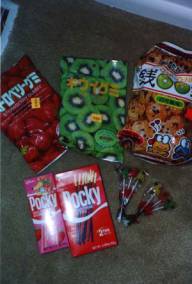
Pocky are
very popular snacks. These long sesame
sticks are dipped in flavors like chocolate, strawberry, green tea or custard.
Hard and
gummy candies are eaten too.