
Edinburgh


| Edinburgh Castle | |||||
| 15
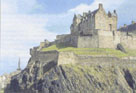
min bus journey from the Bond Edinburgh Castle is visited annually by approximately one million people - if we except the Tower of London that is more people than visit any other ancient monument in the United Kingdom. Every visitor - particularly those on a restricted itinerary - should visit the Castle, not only because of the historical interest of this remarkable fortress and former royal residence, but because it offers such splendid panoramic views of the city. It is from these battlements, for example, that the traveller immediately appreciates the dramatic topography of Edinburgh, situated between sea and hills. Within the confines
of the Castle, there is much to see. It was the seat (and regular
refuge) of Scottish Kings, and the historical apartments include
the Great Hall, which now houses an interesting collection of
weapons and armour.
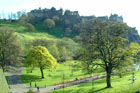
Situated just below the Castle. This public park is the most scenic location of any in the British Isles. One sees the castle, the old town the new town and many famous buildings. Appropriately, two straight walks form the basis of the design. The floral clock and the Victorian iron fountain are notable features
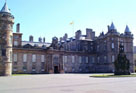
15 min bus journey from the Bond Adjacent to the palace stands the
ruin of Holyrood Abbey, whose history spans 800 years. A Monastery
of Holy Rood was founded here in 1128 by David I, in gratitude
for his miraculous escape from an enraged stag while hunting in
the Drumshelch Forest. This dense woodland at that time covered
a very large area to the south and west of Edinburgh. The incident
probably accounts for the fact that the coat-of-arms of the former
burgh of Canongate bears a stag's head with a holy cross between
the antlers.
15 min bus journey from the Bond Decorative and applied
art is also well represented, including costume, accessories,
ceramics, furniture, gold and silver, glass, jewellery and textiles:
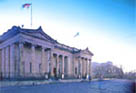
comprehensive collections from Scotland and the rest of the world. The Portrait Gallery is situated
in the heart of the New Town on Queen Street. It provides a unique
visual history of Scotland, told through portraits of the figures
who shaped it: royals and rebels, poets and philosophers, heroes
and villains. The Portrait Gallery was built in
the 1880s largely thanks to private generosity. It is an imposing
neo-Gothic building in red sandstone, designed by the architect
Sir Robert Rowand Anderson
30 min drive from
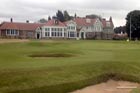
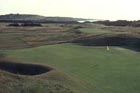
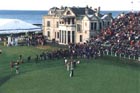
the Bond. Muirfield was the first course designed in two loops of nine holes, the first nine going round the perimeters of the property in a clockwise direction, the second nine contained inside the first, running anticlockwise, and since never more than three successive holes run in the same direction, any wind that blows afflicts the golfer from all points during a round. Muirfield is home to the Honourable Company of Edinburgh Golfers who held their first meeting on Leith Links in 1744. Leith was a small fishing village on the Firth of Forth, and became the main seaport for Edinburgh, the capital of Scotland. Leith Links were situated five miles from the centre of Edinburgh, and the ideal retreat for the professional gentlemen seeking fresh air and a game of golf. The Links at that time were also shared by the local citizens and military. The original Leith Links have long since been replaced by the docks. The Honourable Company of Edinburgh Golfers is recognized as the world's oldest golf club, although the Royal Burgess Golfing Society was formed in 1735, and also played over Leith Links, but has no documentation to substantiate this date due to the nature of the secrecy of the freemasons who founded the society. In 1744 the first 13 rules of golf were drafted by a committee, including John Rattray, the first captain of the Gentlemen Golfers of Edinburgh, subsequently to be known as the Honourable Company of Edinburgh Golfers. As the home of golf, Scotland is
blessed with some of the most spectacular courses in the world.
Details of all Scotland's courses can be found here.
|
© Copyrights Reserved 2001. Dunsy.com