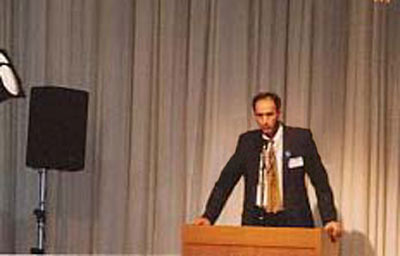
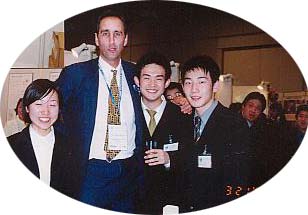
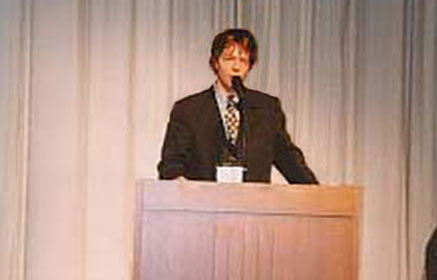
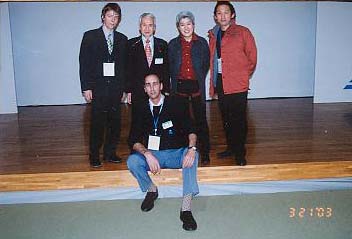
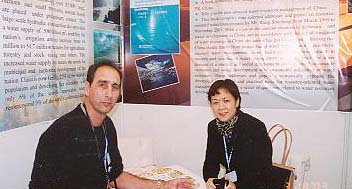
| KyotoThird World Water Forum Aquarius 21, David Simpson Planet in Focus, the Toronto International Environmental 
|
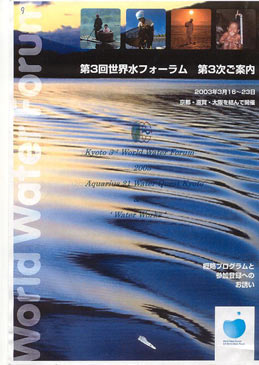 |
||||||
| “Water War” (India) Director Nutan Manmohan, Research/Reporting Aarti Kapoor
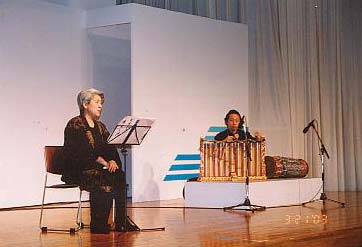
(11.07mins) The Indus Water Treaty between India and Pakistan that helps the two countries to share the waters of five rivers that flow from Kashmir, has become a point of major confrontation. Analysts warn that if water is used as a weapon in current tension between India and Pakistan, it could escalate into warfare. An estimated four million people in India and one million in Pakistan are directly affected by this water treaty “WWF Yangtzee River programme” (China). Profile of the work of Dr Lei Guangchu (8 mins) This short info doc reports on the work in progress persuading and assisting people living along the banks of the Yangtzee River to live with, and adapt, the annual floods instead of trying to fight them. A pilot village has been established on the river where residents have moved to higher ground and started different industries and agriculture. They are safe from annual flooding and economically the move has been a success. On the opposite bank, another village that decided to stay put but has been following the progress across stream and recently decided to follow suit. WWF is helping finance alternative industries for these villages and hopes to spread the scheme up and down the river.“WWF Niger River programme” (Nigeria). Profile of the work of Bawa Ousmane Goah (12 mins) The Floodplains of the Niger River are the lifeline of the Sahelpeople of West Africa. Millions depend on the region’s natural resources for fishing, grazing land, crops and building materials. Bawa Ousmane Goah is the local co-ordinator of the project PADEL (programme d’appui au delevelopment local) in Gaya, Niger. His mission, illustrated in this footage, is to help local communities manage these precious resources in the face of increasing human and environmental pressures. “Pani” (Nepal. Director Sushma Joshi (28mins. English subtitles) JAPANESE STORY TELLING Time: 12 :30 to 13: 00 In Japanese and English languageStory Teller : KAZUKO FURUYA Music by : KEI WADA Title : ‘ LAKE YASHA‘ (YASHAGAIKE ) by Kyota Izumi 3rd World Water Forum - March 16 - 23, 2003 Kyoto, Japan Aquarius 21, David Simpson & Martin Robertson (Ideas in Motion) With the war in Iraq superimposed over the whole event, more delegates
were watching Guest
speaker: Mr. . Eric Bisque ( AQ 21 ) Many West Africa delegates were delighted with the |
|||||||