 |
|
|
|
|
|
|
|
|
|
|
|
|
|
|
|
|
|
|
Education of Women in the Early Modern Period |
|
|
|
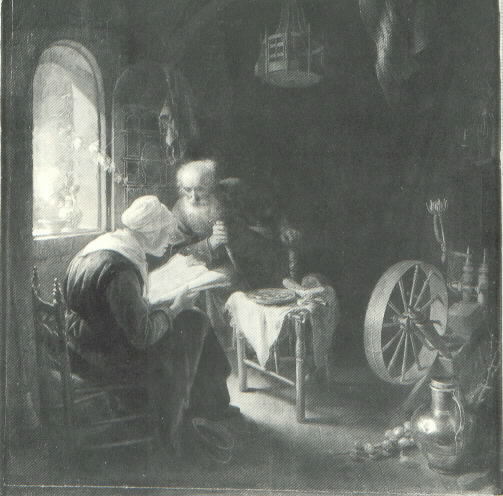
A reoccurring theme in regards to women�s education is that, put simply, a woman�s education was less valued than her male counterparts. She had a more important role to fulfill as mother due to high child mortality rates and other more subtle reasons, such as keeping a power hierarchy that favored men via knowledge. Women�s education, and in particular, literacy, were destined to rise over another power struggle within society, that of religion: �In the end girls were taught to read because reading was a way of reinforcing the lessons of religion, and that was as far as society�s requirement went.�1 After the Council of Trent (1545-1563) the race was on to educate anyone, in regards to gender at least, about the Catholic faith and a massive religious educational movement began: �The church launched a vast program of instruction�which required a minimum level of literacy.�2 |
|
|
|
 |
|
|
|
#10 |
|
|
|
|
|
Girls throughout urban and even rural areas began to receive an education, albeit a focused, biased, education, but the seeds of literacy were being planted. �School life was imbued with piety� as the girls learned to recite and read prayer, sacred texts and learn minimal amounts of domesticity.3
In all classes of society, �piety and household management� were the only forms of female literacy that were tolerated.4 Of course, the major force behind the religious movements and therefore women�s education (and on a macroscopic scale of knowledge in general) was �the evolution of a �print culture� assuming multiple forms, including [but not restricted to] newspapers, philosophical treatises and creative literature ranging from the trivial to the elevated.�5 Literacy rates increased for both genders, in all classes across society as the availability grew and the need, in regards to religious emphasis, increased. In no way however, were the increases in knowledge, and literacy in particular, considered to be equal and the end result at the close of the Early Modern period was not the advancement of women to a place that was similar to, or even closely aligned with that of men. Instead, limiting attitudes developed in regards to female literacy, with the encouragement to read (religious works) and expand in knowledge, yet not to surpass their �natural� theoretical location of inferior into the masculine realms of valued information and autonomy. |
|
|
|
Where did women learn? |
|
|
|
Obstacles and Solutions |
|
What's the deal with Latin? |
|
|
|
|
|
1 Natalie Zemon Davis, Arlette Farge. A History of Women in the West. Vol. 3. (London: Belknap Press, 1993). 130.
2 Zemon and Farge, 103.
3 Zemon and Farge, 125.
4 Nigel Wheale. Writing And Society. (London and New York: Routledge, 1999). 52.
5 Olwen Hufton. The Prospect Before Her. (New York: Alfred A. Knopf, 1995). 425. |
|