WE RECOMMEND YOU GROW YOUR OWN MUSHROOMS.OR RINCE WELL THE ONES YOU GET IN CHINA VILLAGE.
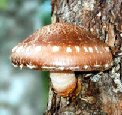 HOMESTEAD GROWN SHITAKE EXAMPLE.
THE MUSHROOM CULTIVATORS HANDBOOK IS AVAILABLE AT
HOMESTEAD GROWN SHITAKE EXAMPLE.
THE MUSHROOM CULTIVATORS HANDBOOK IS AVAILABLE AT
AGARICON PRESS,OLYMPIA,WASHINGTON.
MUSHROOMS HAVE BEEN DETECTED IN SPACE
(or at least spores!)
 Mushroom Interferon Production
Mushroom growing can assist your Interferon level.-FIGHTS HEP-C AND A VARIETY OF DISORDERS MISTAKENLY CALLED "OLD AGE" NOT "COULD-IMPROVE THE DIET-AND-THE SOUP"
What are Interferon Initiators? They are a unique combination of known interferon producers. Never have so many interferon producers, and unique and rare forms of them been brought together in one place at one time. Foremost among these is a new, special, and powerful 3% Uncaria tomentosa extract currently only offered by Higher Ideals.
A special Research and Developement team has been able to isolate the mitraphylline alkaloid with a minimum 3% total alkaloids content level. This would be powerful by itself, but in addition, we have enhanced it's powers with Astragalus, Pau d' Arco (Divine Tree), Pfaffia paniculata (Suma), Schizandra, and Licorice, all known interferon producers. These Interferon Initiators would be powerful enough by themselves, but we did one last and very important thing. We included Dioscorea (Wild Yam) that contains diosgenin and other precursors that serve to assist your body to produce it's own DHEA. DHEA is called the "Mother of Hormones," because is is used by our bodies to produce at least 50 other hormones. Imagine the importance of that! A Temple University study showed supplemental DHEA was able to prevent breast cancer in mice. The studies also indicated prevention of lung and bowel tumors, plus the extension of life span.
Besides being rich in amino acids, minerals, vitamins, and polysaccharides, it is anti-bacterial and anti-viral. If you have a cold (usually caused by bacteria) or a flu (caused by a virus) it is the anti-bacterial and anti-viral properties of the Reishi mushroom that prove to be so helpful. For this reason, the Reishi mushroom is also referred to as "Royal Reishi." The Shiitake mushroom has a long history of strengthening effects on the stomach, intestines, and of inhibiting tumor growth, It, like the Reishi mushroom, is high in amino acids, trace minerals, and vitamins. In addition to boosting the immune system, it also lowers cholesterol. These properties make it an essential member of this mushroom calcium, magnesium, potassium, and protein. It has been shown to lower blood pressure in hypertensives.(2) It has been shown to inhibit melanoma, up to 86% in mice. In general it can be seen as an important aid for immune deficiencies, solid tumors, hepatitis and diabetes. Two major institutes, the National Cancer Institute in the Untied States, and Japan's National Institute of Health confirmed that Maitake "may help prevent HIV's destruction of the bodiy's T-Cells." This is exciting because measuring T-cell count is a method used to trace the progression of HIV to fullblown AIDS. In addition, two doctors, Dr. David Hughes of San Bernardino, CA and Dr. Robert Murphy of Torrington, CT in separate studies have found that Maitake helps lesions become smaller or disappear. Dr. Hughes used Maitake extract mixed with DMSO and saw skin lesions disappear within several days. Other research groups report Maitake helpful in treating chronic fatigue syndrome and chronic hepatitis. Obviously, Maitake plays an invaluable role in making Extend work.
Suggested Usage:
As a dietary supplement, take one to two capsules daily, preferably after a meal, or as recommended by your health care professional.
Ingredients: Each capsule contains 340 mg of a special mushroom complex containing: Cordyceps, Maitake, Reishi, Shiitake, Hakumokujii mushrooms, in a base of Interferon Initiators, Astragalus, Uncaria tomentosa (Cat's Claw - wild grown); total alkaloids not less than 3%; polyphenols not less than 15%; Pau d' Arco (Divine Tree); Pfaffia paniculata (Suma); Schizandra; Wild Yam (Dioscorea); and Deglycyrrhizinated Licorice, with a special Directed Nutritional Activators (DNA) enzyme delivery system containing 1600 units Proteases (I 6%); 240 units Amylases (12%); 200 units Lipases (4%); 960 units Cellulases (48%); and CO-Factors (20%).
Extend� 30 VegiCaps, Order Product # 1010, $15 wholesale
Extend� 90 VegiCaps, Order Product # 1012, $26 wholesale
Mushrooms of all types photos=BERKLEY U.MUSHROOM PHOTOS http://cancerguide.org/maitake_cit.txtcIn: J Pharmacobiodyn (1989 Nov) 12(11):671-80 We have developed a method to control the effective time period of (1- ---3)-beta-D-glucan in vivo by using (1----3)-beta-D-glucanase and found that grifolan LE (GRN), a (1----3)-beta-D-glucan, administered intraperitoneally to the host required more than 2 d to exert antitumor activity. During these two days many immunological changes were induced, such as increasing the number of peritoneal exudated cells (PEC), augmentation of production of interleukin 1 (IL-1), acid phosphatase and phagocytic capacity of adherent cells in PEC. In addition, there was increased carbon clearance activity in vivo, augmentation of responsiveness of splenocytes to mitogens such as concanavalin A and lipopolysaccharide (LPS) and production of ceruloplasmin. When (1----3)-beta-D-glucanase was injected 1 d after GRN administration, IL-1 productivity and responsiveness to LPS were significantly reduced, but lysosomal enzyme activity and phagocytosis of macrophage and production of ceruloplasmin were similar to those not treated with glucanase. These facts indicate that the induction of the activities of the former group requires longer contact of host cells with the glucan, and the latter group requires a shorter period to achieve fully active stages.ANOTHER NATURES TEA!EASY LOAD OF HERBS
fax.phone.search.email.research.MORE HERBAL LINKS AND DATABASES!
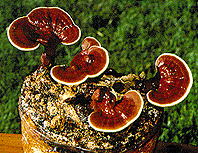
ALAN GINSBERG SAYS "EAT LING CHI MUSHROOMS OF IMMORTALITY FOR VITALITY"
 ( HERE IS A SHORT LIST ENVIED BY GROWERS AND BLENDERS)-TO PARTIALY BOILED TOBACCO LEAVES.(10-30 SECONDS ONLY) (BOIL WATER THEN ADD LEAVES)(SAVE THE WATER IN CASE YOU OVER DILUTED THE TOBACCO.DRY IN VERY LOW OVEN-JUST ABOVE BODY TEMPERATURE.)
ADD THE EXTRACT YOU BOIL OUT OF 5 POUNDS OF CHICORY,SALSIFRY,DANDELION,HOG THISTLE(A LETTUCE)(USE THE CLEANED WHOLE PLANTS INCLUDING ROOTS AND A STRIP OF KINIKINIK OR PUSSWILLOW BARK FOR EXTRA FLAVOR.)AN EXTRACT TO BE ADDED TO THE TOBACCO AFTER DRYING.) THIS PRODUCT MAKES A SMOOTH LOW TAR TABACCO YOU CAN GROW AND USE FOR $10/YEAR PLUS THE COST OF THE RICEPAPERS!
THIS RECEIPY ALSO WORKS FINE FOR HERBAL TOBACCO'S TRADITIONALY MADE FROM COLTSFOOT,MULLIN(VELVET DOCK)SWEETGRASS,DANDELION,CHICORY WITH A FEW LEAVES OF VIOLET,CRABAPPLE,AND A HANDFULL OF ARTEMISIAN-SAGE.
TOBACO GROWING TIPS
OLD TRADITION TOBACO GROWING!<\A> PATENT INFO TO COPY BY HAND!<\P>
CLICK HERE TO REACH SYCRONICITY CENTRAL DATABASING AND HERBOLOGY & LYNX!
data sys.4space applications - REAL SPACE STORIES!
space-applications - REAL SPACE STORIES!
web page buildingPAGEBUILDERS
HANDY FAST SEARCH.SYS - ITS
A SNAP-YOUR ANSWER
space view.SYS-ITS space ANSWERs
HANDY space SEARCH.SYS - ITS YOUR space ANSWER
WEB PHOTOS ART - PHOTOSDOWNLOAD
urantia book online
Sacred Plants
MARSH CATTAILS food wild eg: song of God!&LYNX
KNOW WHERE TO FIND OBSIDIAN-NATURAL GLASS? CALIFORNIA'S THE PLACE!
GOOGLE.COM SEARCH
CHEEP HERBS 4 your requirements - herbs
CHEEP HERBS 4 west coast - herb shipping
http://planetnatural--contents
Penguinbooks.comPenguin BOOKS
okdirecthttp://www.okdirect.com/Biz
dreamsDREAMLORE
Weeds Australia: National WeedsStrategyAUZI PLANTZ&WEEDZ+LINKS
The Art of Ancient Egyptian PerfumeryESSENTIAL OILS THE OLDEST HEALTH ATRACTION IN THE FIELD!
�$ SEEDS 365/YEAR
good seeds-OK!
KNOW HOW ENCYCLOPEDIA
Household_Cyclopedia_of_General_Information/ "MAEOOW"

FOR FOLKS WORKING, OR FIXING THEIR OWN TOBACCO
,
WHETHER FOR INSECTICIDE, OR A SMOKE THEY GREW AND BLEW TAKE NOTE OF THE ADDITIVES USED TO MAKE TABACO TASTE BETTER, OR WORK BETTER(OR WORSE).LOOK HERE!
Here are just some of the known ingredients added to tobacco in the manufacture of cigarettes by five major American cigarette companies. THINK TWICE BEFORE YOU SMOKE THEM!
Acetanisole, Acetic Acid, Acetoin, Acetophenone, 6-Acetoxydihydrotheaspirane, 2-Acetyl-3- Ethylpyrazine, 2-Acetyl-5-Methylfuran, Acetylpyrazine, 2-Acetylpyridine, 3-Acetylpyridine, 2-Acetylthiazole, Aconitic Acid, dl-Alanine, Alfalfa Extract, Allspice Extract, Oleoresin, And Oil, Allyl Hexanoate, Allyl Ionone, Almond Bitter Oil, Ambergris Tincture, Ammonia, Ammonium Bicarbonate, Ammonium Hydroxide, Ammonium Phosphate Dibasic, Ammonium Sulfide, Amyl Alcohol, Amyl Butyrate, Amyl Formate, Amyl Octanoate, alpha-Amylcinnamaldehyde, Amyris Oil, trans-Anethole, Angelica Root Extract, Oil and Seed Oil, Anise, Anise Star, Extract and Oils, Anisyl Acetate, Anisyl Alcohol, Anisyl Formate, Anisyl Phenylacetate, Apple Juice Concentrate, Extract, and Skins, Apricot Extract and Juice Concentrate, 1-Arginine, Asafetida Fluid Extract And Oil, Ascorbic Acid, 1-Asparagine Monohydrate, 1-Aspartic Acid, Balsam Peru and Oil, Basil Oil, Bay Leaf, Oil and Sweet Oil, Beeswax White, Beet Juice Concentrate, Benzaldehyde, Benzaldehyde Glyceryl Acetal, Benzoic Acid, Benzoin, Benzoin Resin, Benzophenone, Benzyl Alcohol, Benzyl Benzoate, Benzyl Butyrate, Benzyl Cinnamate, Benzyl Propionate, Benzyl Salicylate, Bergamot Oil, Bisabolene, Black Currant Buds Absolute, Borneol, Bornyl Acetate, Buchu Leaf Oil, 1,3-Butanediol, 2,3-Butanedione, 1-Butanol, 2-Butanone, 4(2-Butenylidene)-3,5,5-Trimethyl-2-Cyclohexen-1-One, Butter, Butter Esters, and Butter Oil, Butyl Acetate, Butyl Butyrate, Butyl Butyryl Lactate, Butyl Isovalerate, Butyl Phenylacetate, Butyl Undecylenate, 3-Butylidenephthalide, Butyric Acid, Cadinene, Caffeine, Calcium Carbonate, Camphene, Cananga Oil, Capsicum Oleoresin, Caramel Color, Caraway Oil, Carbon Dioxide, Cardamom Oleoresin, Extract, Seed Oil, and Powder, Carob Bean and Extract, beta-Carotene, Carrot Oil, Carvacrol, 4-Carvomenthenol, 1-Carvone, beta-Caryophyllene, beta-Caryophyllene Oxide, Cascarilla Oil and Bark Extract, Cassia Bark Oil, Cassie Absolute and Oil, Castoreum Extract, Tincture and Absolute, Cedar Leaf Oil, Cedarwood Oil Terpenes and Virginiana, Cedrol, Celery Seed Extract, Solid, Oil, And Oleoresin, Cellulose Fiber, Chamomile Flower Oil And Extract, Chicory Extract, Chocolate, Cinnamaldehyde, Cinnamic Acid, Cinnamon Leaf Oil, Bark Oil, and Extract, Cinnamyl Acetate, Cinnamyl Alcohol, Cinnamyl Cinnamate, Cinnamyl Isovalerate, Cinnamyl Propionate, Citral, Citric Acid, Citronella Oil, dl-Citronellol, Citronellyl Butyrate, Citronellyl Isobutyrate, Civet Absolute, Clary Oil, Clover Tops, Red Solid Extract, Cocoa, Cocoa Shells, Extract, Distillate And Powder, Coconut Oil, Coffee, Cognac White and Green Oil, Copaiba Oil, Coriander Extract and Oil, Corn Oil, Corn Silk, Costus Root Oil, Cubeb Oil, Cuminaldehyde, para-Cymene, 1-Cysteine, Dandelion Root Solid Extract, Davana Oil, 2-trans, 4-trans-Decadienal, delta-Decalactone, gamma-Decalactone, Decanal, Decanoic Acid, 1-Decanol, 2-Decenal, Dehydromenthofurolactone, Diethyl Malonate, Diethyl Sebacate, 2,3-Diethylpyrazine, Dihydro Anethole, 5,7-Dihydro-2-Methylthieno(3,4-D) Pyrimidine, Dill Seed Oil and Extract, meta-Dimethoxybenzene, para-Dimethoxybenzene, 2,6-Dimethoxyphenol, Dimethyl Succinate, 3,4-Dimethyl-1,2-Cyclopentanedione, 3,5- Dimethyl-1,2-Cyclopentanedione, 3,7-Dimethyl-1,3,6-Octatriene, 4,5-Dimethyl-3-Hydroxy-2,5-Dihydrofuran-2-One, 6,10-Dimethyl-5,9-Undecadien-2-One, 3,7-Dimethyl-6-Octenoic Acid, 2,4-Dimethylacetophenone, alpha,para-Dimethylbenzyl Alcohol, alpha,alpha-Dimethylphenethyl Acetate, alpha,alpha Dimethylphenethyl Butyrate, 2,3-Dimethylpyrazine,2,5-Dimethylpyrazine, 2,6-Dimethylpyrazine, Dimethyltetrahydrobenzofuranone, delta-Dodecalactone, gamma-Dodecalactone, para-Ethoxybenzaldehyde, Ethyl 10-Undecenoate, Ethyl 2-Methylbutyrate, Ethyl Acetate, Ethyl Acetoacetate, Ethyl Alcohol, Ethyl Benzoate, Ethyl Butyrate, Ethyl Cinnamate, Ethyl Decanoate, Ethyl Fenchol, Ethyl Furoate, Ethyl Heptanoate, Ethyl Hexanoate, Ethyl Isovalerate, Ethyl Lactate, Ethyl Laurate, Ethyl Levulinate, Ethyl Maltol, Ethyl Methyl Phenylglycidate, Ethyl Myristate, Ethyl Nonanoate, Ethyl Octadecanoate, Ethyl Octanoate, Ethyl Oleate, Ethyl Palmitate, Ethyl Phenylacetate, Ethyl Propionate, Ethyl Salicylate, Ethyl trans-2-Butenoate, Ethyl Valerate, Ethyl Vanillin, 2-Ethyl (or Methyl)-(3,5 and 6)-Methoxypyrazine, 2-Ethyl-1-Hexanol, 3-Ethyl -2 -Hydroxy-2-Cyclopenten-1-One, 2-Ethyl-3, (5 or 6)-Dimethylpyrazine, 5-Ethyl-3-Hydroxy-4-Methyl-2(5H)-Furanone, 2-Ethyl-3-Methylpyrazine, 4-Ethylbenzaldehyde, 4-Ethylguaiacol, para-Ethylphenol, 3-Ethylpyridine, Eucalyptol, Farnesol, D-Fenchone, Fennel Sweet Oil, Fenugreek, Extract, Resin, and Absolute, Fig Juice Concentrate, Food Starch Modified, Furfuryl Mercaptan, 4-(2-Furyl)-3-Buten-2-One, Galbanum Oil, Genet Absolute, Gentian Root Extract, Geraniol, Geranium Rose Oil, Geranyl Acetate, Geranyl Butyrate, Geranyl Formate, Geranyl Isovalerate, Geranyl Phenylacetate, Ginger Oil and Oleoresin, 1-Glutamic Acid, 1-Glutamine, Glycerol, Glycyrrhizin Ammoniated, Grape Juice Concentrate, Guaiac Wood Oil, Guaiacol, Guar Gum, 2,4-Heptadienal, gamma-Heptalactone, Heptanoic Acid, 2-Heptanone, 3-Hepten-2-One, 2-Hepten-4-One, 4-Heptenal, trans -2-Heptenal, Heptyl Acetate, omega-6-Hexadecenlactone, gamma-Hexalactone, Hexanal, Hexanoic Acid, 2-Hexen-1-Ol, 3-Hexen-1-Ol, cis-3-Hexen-1-Yl Acetate, 2-Hexenal, 3-Hexenoic Acid, trans-2-Hexenoic Acid, cis-3-Hexenyl Formate, Hexyl 2-Methylbutyrate, Hexyl Acetate, Hexyl Alcohol, Hexyl Phenylacetate, 1-Histidine, Honey, Hops Oil, Hydrolyzed Milk Solids, Hydrolyzed Plant Proteins, 5-Hydroxy-2,4-Decadienoic Acid delta- Lactone, 4-Hydroxy-2,5-Dimethyl-3(2H)-Furanone, 2-Hydroxy-3,5,5-Trimethyl-2-Cyclohexen-1-One, 4-Hydroxy -3-Pentenoic Acid Lactone, 2-Hydroxy-4-Methylbenzaldehyde, 4-Hydroxybutanoic Acid Lactone, Hydroxycitronellal, 6-Hydroxydihydrotheaspirane, 4-(para-Hydroxyphenyl)-2-Butanone, Hyssop Oil, Immortelle Absolute and Extract, alpha-Ionone, beta-Ionone, alpha-Irone, Isoamyl Acetate, Isoamyl Benzoate, Isoamyl Butyrate, Isoamyl Cinnamate, Isoamyl Formate, Isoamyl Hexanoate, Isoamyl Isovalerate, Isoamyl Octanoate, Isoamyl Phenylacetate, Isobornyl Acetate, Isobutyl Acetate, Isobutyl Alcohol, Isobutyl Cinnamate, Isobutyl Phenylacetate, Isobutyl Salicylate, 2-Isobutyl-3-Methoxypyrazine, alpha-Isobutylphenethyl Alcohol, Isobutyraldehyde, Isobutyric Acid, d,l-Isoleucine, alpha-Isomethylionone, 2-Isopropylphenol, Isovaleric Acid, Jasmine Absolute, Concrete and Oil, Kola Nut Extract, Labdanum Absolute and Oleoresin, Lactic Acid, Lauric Acid, Lauric Aldehyde, Lavandin Oil, Lavender Oil, Lemon Oil and Extract, Lemongrass Oil, 1-Leucine, Levulinic Acid, Licorice Root, Fluid, Extract and Powder, Lime Oil , Linalool, Linalool Oxide, Linalyl Acetate, Linden Flowers, Lovage Oil And Extract, 1-Lysine, Mace Powder, Extract and Oil , Magnesium Carbonate, Malic Acid, Malt and Malt Extract, Maltodextrin, Maltol, Maltyl Isobutyrate, Mandarin Oil, Maple Syrup and Concentrate, Mate Leaf, Absolute and Oil, para-Mentha-8-Thiol-3-One, Menthol, Menthone, Menthyl Acetate, dl-Methionine, Methoprene, 2-Methoxy-4-Methylphenol, 2-Methoxy-4-Vinylphenol, para-Methoxybenzaldehyde, 1-(para-Methoxyphenyl)-1-Penten-3-One, 4-(para-Methoxyphenyl)-2-Butanone, 1-(para-Methoxyphenyl)-2-Propanone, Methoxypyrazine, Methyl 2-Furoate, Methyl 2-Octynoate, Methyl 2-Pyrrolyl Ketone, Methyl Anisate, Methyl Anthranilate, Methyl Benzoate, Methyl Cinnamate, Methyl Dihydrojasmonate, Methyl Ester of Rosin, Partially Hydrogenated, Methyl Isovalerate, Methyl Linoleate (48%), Methyl Linolenate (52%) Mixture, Methyl Naphthyl Ketone, Methyl Nicotinate, Methyl Phenylacetate, Methyl Salicylate, Methyl Sulfide, 3-Methyl-1-Cyclopentadecanone, 4-Methyl-1-Phenyl-2-Pentanone, 5-Methyl-2-Phenyl-2-Hexenal, 5-Methyl-2-Thiophenecarboxaldehyde, 6-Methyl-3,-5-Heptadien-2-One, 2-Methyl-3-(para-Isopropylphenyl) Propionaldehyde, 5-Methyl-3-Hexen-2-One, 1-Methyl-3Methoxy-4-Isopropylbenzene, 4-Methyl-3-Pentene-2-One, 2-Methyl-4-Phenylbutyraldehyde, 6-Methyl-5-Hepten-2-One, 4-Methyl-5-Thiazoleethanol, 4-Methyl-5-Vinylthiazole, Methyl-alpha-Ionone, Methyl-trans-2-Butenoic Acid, 4-Methylacetophenone, para-Methylanisole, alpha-Methylbenzyl Acetate, alpha-Methylbenzyl Alcohol, 2-Methylbutyraldehyde, 3-Methylbutyraldehyde, 2-Methylbutyric Acid, alpha-Methylcinnamaldehyde, Methylcyclopentenolone, 2-Methylheptanoic Acid, 2-Methylhexanoic Acid, 3-Methylpentanoic Acid, 4-Methylpentanoic Acid, 2-Methylpyrazine, 5-Methylquinoxaline, 2-Methyltetrahydrofuran-3-One, (Methylthio)Methylpyrazine (Mixture Of Isomers), 3-Methylthiopropionaldehyde, Methyl 3-Methylthiopropionate, 2-Methylvaleric Acid, Mimosa Absolute and Extract, Molasses Extract and Tincture, Mountain Maple Solid Extract, Mullein Flowers, Myristaldehyde, Myristic Acid, Myrrh Oil, beta-Napthyl Ethyl Ether, Nerol, Neroli Bigarde Oil, Nerolidol, Nona-2-trans,6-cis-Dienal, 2,6-Nonadien-1-Ol, gamma-Nonalactone, Nonanal, Nonanoic Acid, Nonanone, trans-2-Nonen-1-Ol, 2-Nonenal, Nonyl Acetate, Nutmeg Powder and Oil, Oak Chips Extract and Oil, Oak Moss Absolute, 9,12-Octadecadienoic Acid (48%) And 9,12,15-Octadecatrienoic Acid (52%), delta-Octalactone, gamma-Octalactone, Octanal, Octanoic Acid, 1-Octanol, 2-Octanone, 3-Octen-2-One, 1-Octen-3-Ol, 1-Octen-3-Yl Acetate, 2-Octenal, Octyl Isobutyrate, Oleic Acid , Olibanum Oil, Opoponax Oil And Gum, Orange Blossoms Water, Absolute, and Leaf Absolute, Orange Oil and Extract, Origanum Oil, Orris Concrete Oil and Root Extract, Palmarosa Oil, Palmitic Acid, Parsley Seed Oil, Patchouli Oil, omega-Pentadecalactone, 2,3-Pentanedione, 2-Pentanone, 4-Pentenoic Acid, 2-Pentylpyridine, Pepper Oil, Black And White, Peppermint Oil, Peruvian (Bois De Rose) Oil, Petitgrain Absolute, Mandarin Oil and Terpeneless Oil, alpha-Phellandrene, 2-Phenenthyl Acetate, Phenenthyl Alcohol, Phenethyl Butyrate, Phenethyl Cinnamate, Phenethyl Isobutyrate, Phenethyl Isovalerate, Phenethyl Phenylacetate, Phenethyl Salicylate, 1-Phenyl-1-Propanol, 3-Phenyl-1-Propanol, 2-Phenyl-2-Butenal, 4-Phenyl-3-Buten-2-Ol, 4-Phenyl-3-Buten-2-One, Phenylacetaldehyde, Phenylacetic Acid, 1-Phenylalanine, 3-Phenylpropionaldehyde, 3-Phenylpropionic Acid, 3-Phenylpropyl Acetate, 3-Phenylpropyl Cinnamate, 2-(3-Phenylpropyl)Tetrahydrofuran, Phosphoric Acid, Pimenta Leaf Oil, Pine Needle Oil, Pine Oil, Scotch, Pineapple Juice Concentrate, alpha-Pinene, beta-Pinene, D-Piperitone, Piperonal, Pipsissewa Leaf Extract, Plum Juice, Potassium Sorbate, 1-Proline, Propenylguaethol, Propionic Acid, Propyl Acetate, Propyl para-Hydroxybenzoate, Propylene Glycol, 3-Propylidenephthalide, Prune Juice and Concentrate, Pyridine, Pyroligneous Acid And Extract, Pyrrole, Pyruvic Acid, Raisin Juice Concentrate, Rhodinol, Rose Absolute and Oil, Rosemary Oil, Rum, Rum Ether, Rye Extract, Sage, Sage Oil, and Sage Oleoresin, Salicylaldehyde, Sandalwood Oil, Yellow, Sclareolide, Skatole, Smoke Flavor, Snakeroot Oil, Sodium Acetate, Sodium Benzoate, Sodium Bicarbonate, 2,2,6-Trimethylcyclohexanone, 2,3,5-Trimethylpyrazine, 1-Tyrosine, delta-Undercalactone, gamma-Undecalactone, Undecanal, 2-Undecanone, 10-Undecenal, Urea, Valencene, Valeraldehyde, Valerian Root Extract, Oil and Powder, Valeric Acid, gamma-Valerolactone, Valine, Vanilla Extract And Oleoresin, Vanillin, Veratraldehyde, Vetiver Oil, Vinegar, Violet Leaf Absolute, Walnut Hull Extract, Water, Wheat Extract And Flour, Wild Cherry Bark Extract, Wine and Wine Sherry, Xanthan Gum, 3,4-Xylenol, Yeast....Have I missed one ?
A FEW MORE NOTEWORTHY LINKS
MINENEWS - rEAL
HARD ROCK!
PTIONS -multi-engine-search GREAT
 Blackberry
 STUDY TYME!
AUTOTAXI.COM-travel by car contactsTravel CONTACTS
STUDY TYME!
AUTOTAXI.COM-travel by car contactsTravel CONTACTSMULTIPLE INTERFRERONS IN 5O MUSHROOMS/DAY(SHITAKI LG. BAG!
DATA FROM ANSWERS .COM
-http://www.answers.com/topic/interferon-gamma?cat=technology (PAGE)
Interferon Gamma Products
www.InterferonSource.com
Interferon Research Tools
Antibodies, Proteins, ELISAs & more Many IFN Family Members & Receptors
www.RnDSystems.com
Home > Library > Science > Sci-Tech Dictionary interferon-gamma (′in�tər�fir′�n ′gam�ə)
(immunology) An interferon produced by T lymphocytes and large granular lymphocytes in response to foreign macromolecules.
-----Recombinant Interferons------
Cytokines Chemokines Growth Factors Fast worldwide Secured Shipping
www.prospec.co.il
Wikipedia Home > Library > Reference > Wikipedia interferon-gamma
Interferon gamma
Identifiers
Symbol IFNG
Entrez 3458
HUGO 5438
OMIM 147570
PDB 1FG9
RefSeq NM_000619
UniProt P01579
Other data
Locus Chr. 12 q24.1
Interferon-gamma (IFN-γ) is a dimerized soluble cytokine that is the only member of the type II class of interferons.[1] This interferon was originally called macrophage-activating factor.
Structure of IFN-γ
The IFN-γ monomer consists of a core of six α-helices and an extended unfolded sequence in the C-terminal region.[2][3] This is shown in the structural models below. The α-helices in the core of the structure are numbered 1 to 6.
The biologically active dimer is formed by anti-parallel inter-locking of the two monomers as shown below. In the cartoon model, one monomer is shown in red, the other in blue.
The structural models shown above (see protein data bank code 1FG9) are all shortened at their C-termini by 17 amino acids. Full length IFN-γ is 143 amino acids in length, the models are 126 amino acids in length. Affinity for the glycosaminoglycan heparan sulphate resides solely within the deleted sequence of 17 amino acids.[4]
Biological activity
In contrast to interferon-α and interferon-β which can be expressed by all cells, IFN-γ is secreted by T lymphocytes and NK cells only. Also known as immune interferon, IFN-γ is the only Type II interferon. It is serologically distinct from Type I interferons and it is acid-labile, while the type I variants are acid-stable.
IFN-γ has antiviral, immunoregulatory, and anti-tumour properties.[5] It alters transcription in up to 30 genes producing a variety of physiological and cellular responses. Activation by IFN-γ is achieved by its interaction with a heterodimeric receptor consisting of IFNGR1 & IFNGR2 (interferon gamma receptors). IFN-γ binding to the receptor activates the JAK-STAT pathway. In addition, IFN-γ activates APCs and promotes Th1 differentiation by upregulating the transcription factor T-bet.
IFN-γ is the hallmark cytokine of Th1 cells (Th2 cells produce IL-4). NK cells and [[CD8+ cytotoxic T cell]]s also produce IFN-γ. IFN-γ suppresses osteoclast formation by rapidly degrading the RANK adaptor protein TRAF6 in the RANK-RANKL signaling pathway, which otherwise stimulates the production of NFκB.
Therapeutic uses
Image:Interferon-gamma.png
Interferon-gamma
Systematic (IUPAC) name
Human interferon gamma-1b
Identifiers
CAS number 82115-62-6
98059-61-1
ATC code L03AB03
PubChem ?
DrugBank BTD00017
Chemical data
Formula C761H1206N214O225S6
Mol. mass 17145.6 g/mol
Pharmacokinetic data
Bioavailability ?
Metabolism ?
Half life ?
Excretion ?
Therapeutic considerations
Pregnancy cat. ?
Legal status
Routes ?
Interferons are used to treat infectious diseases, but can also precipitate autoimmunity (in up to 19% people treated with these cytokines).[citation needed]
References
^ Gray, P. W. and Goeddel, D. V. (1982). "Structure of the human immune interferon gene". Nature 298: 859-863.
^ Ealick, S. E., Cook, W. J. et al. (1991). "Three-dimensional structure of recombinant human interferon-gamma". Science 252: 698-702.
^ Thiel, D. J. et al. (2000). "Observation of an unexpected third receptor molecule in the crystal structure of human interferon-γ receptor complex". Structure 8 (9): 927-936.
^ Vanhaverbeke, C. Simorre, J-P. et al. (2004). "NMR characterization of the interaction between the C-terminal domain of interferon-γ and heparin-derived oligosaccharides" 384: 93-99.
^ Schroder et al. (2004). "Interferon-γ an overview of signals, mechanisms and functions". Journal of Leukocyte Biology 75: 163-189.
Cytokines: interferons
Interferon type I (Interferon beta-1a, Interferon beta-1b, Pegylated interferon alfa-2a, Pegylated interferon alfa-2b) - Interferon type II (Interferon-gamma) - Interferon type III: (Interleukin 28, Interleukin 29)
SAVE RINCE WATER TO PRE-SOAK CLOTHS,SHEETS AND A HALF A CUP FOR AN AFTER
SHOWER RUB! IT WORKS!) TI-FOR THE TILLUEL-MANCHEEP TEAS AND HERBS STUDY AND SOURCING!
 http.2020siteorg-assayASSAY TECH FROM 1800'S
http://www.2020site.org/trees/hornbeam.html
 http.2020org-SERIOUS HOW TO'ZASSAY TECH FROM 1800'S AND OTHER HOW TO'Z
2020site.org
 http.2020org-SERIOUS HOW TO'ZASSAY TECH FROM 1800'S AND OTHER HOW TO'Z
electronic_publications
 http://intranet.essinfosst.ess.nrcan.gc.ca/esic/electronic_publications_e.htmlELECTRONIC ROCK AND MINERALS GOVERNMENT DATABASES FOR PUBLIC USE.
Publicbookshelf.com-General_Information/
Read aboutPARASITE SELF DEFENSE!Trichinae informationHousehold_Cyclopedia_of_General_Information/
silver gold markets note this is good kambushi data from an expert on the subject visit his site to get more data.http://www.acupuncture.com/Herbology/Man.htm
The Fascination of Kombucha by Guenther W. Frank Homepage | Herbal Index
Nowadays we experience a return to healing measures that are close to nature; also remedies and foods of unnatural origin - away from industrial packaged products. This may be one of the reasons for the great attractiveness and fascination of the healthful beverage called Kombucha. Communalities of yeasts and bacteria have been used by people, and applied for their well-being, since ancient times in all the world for the creation of health-promoting fermented drinks and foodstuffs.
We read already in the Bible (Ruth 2:14) that the land-owner Boas invited the Moabite Ruth, who later became his wife, during her gleaning of grains: Come over here and eat some bread and dip your morsel into the vinegar-drink! And she sat down beside the reapers; and he reached her parched corn and she ate and was sufficed and left." This biblical report from around 1000 B.C. not only gives us a hint of their exemplary nutritional habits, although they were modest by our perspective, we see from it also that, even at that time, people prepared beverages with microorganisms of lactic acid and how they served the people for strength and refreshment during the hard work of harvesting.
An ancient, pure relative of these related symbioses of bacteria and yeasts is the tea-fungus called Kombucha. It comes from the area of East Asia and came to Germany via Russia, around the turn of the century. This ancient house-remedy Is used more and more also In other countries against all possible defects. The mushroom consists of a gelatinoid and tough mushroom-web membrane In the form of a flat disk. It lives in a nutrient solution of tea and sugar, in which it constantly multiplies through germinating. The fungal disc at first spreads over the entire surface of the tea and then thickens. When one treats the mushroom correctly, it thrives, germinates, and will accompany its owner for life.
During the fermentation and oxidation processes, the mushroom effects diverse complicated reactions In the tea-setting, either one after the other or side by side (these are assimilation-and dissimulation- processes). The tea-mushroom feeds on the sugar And, in exchange, produces other valuable substances which change into the drink: glucuron-acid, lactic acid, vitamins, amino acids, antibiotic substances, and other products. The tea-mushroom is, therefore, a real, tiny biochemical factory.
KOMBUCHA - REMEDY FOR EVERYTHING?
There is a treasure of extensive experience regarding the Kombucha mushroom. Besides its use as a refreshing drink, one can read in nearly all reports also of its usage as a remedy. In the reports of oldest and modern times, a large number of diseases are quoted, for which Kombucha- tea is used and praised. The palette reaches from the most harmless indisposition up to the most serious diseases.
Numerous doctors and scientists have concerned themselves with the effects of the Kombucha-beverage as a home remedy. Many scientific works are at hand concerning Kombucha. They speak of its therapeutic effectiveness abased on glucon-acid, glucuron-acid, lactic acid, acetic acid, as well as the life-supporting vitamins C and the B-group. As has been proven especially by Russian researchers, many of its components have antibiotic and detoxifying characteristics, and they playa decisive role for the biochemical processes in the body.
In contrast to the many pharmaca with unpleasant side effects, the active substances of the Kombucha address themselves to the whole body system; through its friendly metabolistic properties, it can reestablish a normal condition in the cellular membranes without any side-effects and thus promote one swell-being. Let us use these natural powers for maintaining our vitality, activity, as well as our mental and physical capacities!
AN EXTENSIVE WORLD-LITERATURE
Already Bacinskaja (1914) noted that the drink is effective for the stomach-intestinal activity. The authoress recommended that one drink a small glass of it before every meal and to increase the portions gradually.
Professor S. Bazarewski brought forth a report in the "Correspondence for the Association of Nature Researchers in Riga, 1915, that among the Latvian population of the Baltic Russian Provinces of Livland and Kurland, they had a folk-remedy by name of "Brinum-Ssene" Verbally translated, it means "Wonder-mushroom". The Latvian population ascribed to this mushroom "a wonderful healing power for many diseases", according to Bazarewski. Some people asked by Bazarewski insisted that it helps fore head aches, but others assured him that "this mushroom is useful for all diseases.
GOOD FOR CONSTIPATION
Prof. B. Lindner(1917-1918) reported that the remedy is mostly used as regulator of the intestinal activities. Also Hemorrhoids were cured.
Privy Councilor Prof. Dr. Rudolf Kobert(1917-18) recollects that an "unfailing remedy against joint rheumatism" was made with this mushroom.
Also Prof. Dr. Wilhelm Henneberg(1926) reports that a drink made with tea- mushroom was prepared, called "Teakwass" in Russia, being used in all those areas as a "remedy against all sorts of diseases, especially against constipation. "
According to Dr. Madaus in the "Biologic Healing Arts" (1927), the mushroom, and its metabolic products, has excellent influence on the regeneration of the cellular walls and is, therefore, an excellent remedy for arteriosclerosis.
GENERAL IMPROVEMENT OF ONE'S OVERALL CONDITION
H. Waldeck (1927) tells of a chemist he met during W.W.I in Russia-Poland, 1915, with whom he had his quarters, and who cooked for him a "Wonderdrink" against his severe constipation. The chemist entrusted to Waldeck that he always keeps this "Russian secret home remedy" at hand, it being "said that it is good for all kinds of ailments" and "because of its naturally formed acid, it successfully counters aging problems, thus, contributing to life extension."
Prof. Br. Lakowitz (1928) confirms Waldeck's statement that digestive disturbances are quickly removed by the mushroom-tea. Strong headaches and nervous disturbances also are removed experientially. Lakowitz comes to the conclusion: "An extensive spreading of the mushroom-tea for the production of such Tee-Kwasses, as a remedy against digestive disturbances is desirable for all types of people."
In the "White Flag" (1928) is reported: 'The refreshing taste of this tea-beverage is generally pleasing, and its effect is ... a very good one. The taste of the fermented tea is very pleasant, being reminiscent of light, sparkling wine or sweet Most (pear juice).The effect of the tea usually shows up very fast. Most of all, it works blood-cleansing and detoxifying and is said ... to give excellent services for facial skin rashes. Further, according to doctor's orders and evaluations, it is very effective for constant headaches, pain in the limbs, gout, rheumatism, and other aging problems. The general effect of the mushroom-tea shows already in a few weeks through an improved general condition and in one's raised performance capacity, which may be connected with the mushroom's high vitamin and hormone effect, which are also emphasized by doctors.
Further, the mushroom stimulates the metabolism ... excellently and, thereby, helps in clearing out the body, i.e. the elimination of all types of disease toxins.
FAVORABLE EFFECT IN ARTERIOCLEROSIS
Dr. Maxim Bing (1928) recommends the Kombucha mushroom as a "very effective remedy for Arteriosclerosis, gout, and intestinal deficiency." "A favorable effect in the sense of lowering blood pressure, cessation of anxiety, of irritability and pains, headaches, dizziness, etc. in arteriosclerosis" occurs from the use of fresh, good cultures. "Intestinal sluggishness and its accompanying effects also can be quickly removed. It gives especially favorable results in calcification of the kidneys and the capillaries of the brain."
Dr. Siegwart Hermann (1929) describes experiments with cats who had been poisoned with Vigantol (an anti-rickets Vitamin B-preparation). He noted a positive influence in their cholesterol level when the animals received Kombucha extracts. This is interesting because in cases of human arteriosclerosis there is also a raised cholesterol level. Hermann's resume based on these experiments is: "The observations by doctors at the sickbed, as also the animal experiments, showed that folk-wisdom quoted effects have been observed in general."
THE GLURURONIC ACID
In my opinion, there are factors speaking for the good effects of the mushroom for gout, rheum, arthritis, etc. as being explainable by the accumulated toxins of the body being made water-soluble and kidney- manageable through their conjugation with the Glucuronic acid in the beverage, and thus being eliminated through the urine. This conjugation is a form of bio-transformation; by it, both endogenic and body-foreign substances become bound with Glucuronic acid into Glucuronoids, also named "paired Glucuronic acid."
In 1961, Dr. med. Valentin Koehler stimulated a discussion on the therapeutic usage of Glucuronic acid through his article titled, "Glucuronic Acid Gives Courage to Cancer-Patients in the periodical "Medical Practice". Glucuronic acid is one of the products that are produced during the fermentation process in the Kombucha-tea. Dr. Koehler reported at that time about encouraging results in treating cancer patients with Glucuronic acid. The maximally long effect of Glucuronic acid is able to bring about an increase in the body's own defenses and, possibly, also of the Interferon-production.
The detoxifying function of Glucuronic acid goes hand-in-hand with an improvement in the general condition and in the oxidative metabolism.
Dr. Koehler also noted surprising successes in the treatment of sick trees. Various Institutions were doing scientific tests for resolving the problem of dying trees. By combining nutritious substances, trace- elements, and heavy metals ions a building process was activated or accelerated. The capacity of the Glucuronic acid to enter into combination with both foreign and endogenic toxic substances, effects protection for the plant cell. Over 200 substances can be made harmless by this way, including those which are contained in acidic and radioactive rain, as well as sulfur dioxide, nitrites, ozone.
According to Dr. Koehler's research, the protective activity connected with Glucuronic acid preserves also the genetics of the plant from growth disturbances or promotes their restoration in the further course of its growth. The insights arising from Dr. Koehler's examinations can be transferred onto all human cells. When the processes of growth and decomposition in the human metabolism are maintained on an optimal level through adding small dosages of Glucuronic acid, as contained in the Kombucha beverage, it presents a combination of scientific data and a product of nature which is currently still much preferred by the laity. Here is a possible aid for a humanity that is more and more threatened through toxic environmental substances. By Glucronic acid, the "disturbance products in the human body are disintegrated into end- products, eliminated and, thereby, made harmless. This detoxifying function of Glucuronic acid benefits the variety of cellular functions.
This shows up as increased endogenic capacity towards the toxic and environmental stresses batting us from many sides, as a revival. of damaged bodycells, and a restoration and firming upon our well-being. When many peoples say that they use Kombucha not to necessarily heal a particular disease, but they drink it as a beverage for supporting their well-being, we have in this a contact point where scientific insights and folk-wisdom can go hand in hand.
THE NORMALIZATION OF INTESTINAL FUNCTIONS
Dr. L. Mollenda (1928) reports that the Kombucha beverage is especially effective for disturbances of the digestive organs, by practically normalizing their functions. Moreover, the drink has proven itself as helpful for gout, rheumatism, and diverse stages of arteriosclerosis. About additional areas of application he writes: "In the case of angina, especially when there is a coating of the tonsils, the drink should not merely be used for gargling but for drinking, and that, for the destruction of bacteria which reach the stomach through food and drink. Such gargling in angina brings fast recovery, and in pains of gout and arteriosclerosis, surprising successes are reached even in serious cases. ... Even though the beverage is acidic, it does not cause any acidic condition in the stomach; it facilitates and noticeably promotes the digestion even of difficult to digest foods. Equially favorable successes after taking Kombucha beverage have also been reached for gouty eczema and for stones in kidneys, urine, and gall."
Dr. E. Arauner (1929) reports of diverse medical reports and evaluations and reaches the following conclusion:" In summary, one can say that the Kombucha mushroom or its extract, has proven itself as excellently prophylactic against diabetes, but especially against aging problems, such as arteriosclerosis, high blood pressure with its consequences such as dizziness, gout, hemorrhoids; for the very least it is a pleasant laxative." Dr. Arauner reports that in his home-country the tea- mushroom has been in usage for centuries by Asian people because of its surprising healing successes, being a most effective, natural home-remedy for tiredness, fatigue, nervousness, beginning aging problems, arteriosclerosis, intestinal lassitude, gout and rheumatism, hemorrhoids, and diabetes.
Arauner adds to this, that not only professors, doctors and biologists have confirmed the surprising healing successes but also those who have imbibed the mushroom-tea report about "entirely excellent effects on the general body functions.'
RECOMMENDED FOR MENTAL STRESS
Hans Irion, who was then the Director of the State-recognized Academy for Chemists in Braunschweig says in his "Course for Druggist Specialty Schools"(1944, Vol. 2, pg. 405): "By the intake of the drink described as Teakwass, there happens a remarkable invigoration of the body's entire glandular system and a promotion of the metabolisms. Teakwass is recommended as an excellent prophylactic for gout and rheumatism, furunkulosis, arteriosclerosis, high blood pressure, nervousness, intestinal lassitude, and aging problems. It is also very highly recommended for sports-people and those who do strenuous mental work. Through the promotion of the metabolism, undue fat deposits in the body are avoided or removed. With the drink, also microorganisms reach the body which transform damaging deposits, such as uric acid, cholesterol, etc. into easily soluble forms, thus removing them. Foul intestinal bacteria are suppressed."
"DETOXIFYING IN EVERY REGARD...."
The first description having mushroom-tea as it's theme in bookform appeared in 1954. This booklet of 54 pages is written in the Russian language and carries the title "The Tea-Mushroom and Its Therapeutic Properties". The author, G.F.Barbancik refers in his introduction to the first application of the mushroom-tea decoction (in 1949) as a healing remedy at the therapeutic clinic of the Omsker Hospital for water laborers. He reports of successful therapy for tonsillitis, diverse internal diseases, especially those of inflammatory nature, stomach catarrh due to deficient acid production, intestinal inflammations, dysentery, arteriosclerosis, high blood-pressure, scleroses, etc.
The med. doctor, Dr. Rudolf Sklenar of Lich, Oberhessen, reported in 1964 in the periodical "Experiential Healing Science" about his methods of diagnosis and therapy successes: "An outstanding natural remedy is the mushroom beverage named Combucha, which acts detoxifying in every regard and which dissolves microorganisms as well as cholesterol." Dr. Sklenar had developed a biologic cancer therapy in which Combucha, as well as other biologic remedies such as Coli-preparations, held an important place for the sanitization of the intestinal flora.
In a small publication of 8 pages, titled "Cancer Diagnosis Based on Blood and the Treatment of Cancer, Pre-cancerous Conditions, and other Metabolic Diseases with Kombucha and Coli-Preparations", Dr. Sklenar reports that vitamins, lactic acids and glucuronic acid are (viruses, bacteria, fungi)and to the dissolution of waste matter and toxic deposits (uric acid, cholesterol, etc.)". Kombucha effects "an outstanding detoxification of the organism". Through enjoying this beverage there is, additionally, a "noticeable invigoration of the entire glandular system and enhancement of the metabolism."
Dr. Sklenar reports that he was able to treat successfully with the mushroom-tea: gout, rheum, arteriosclerosis, arthritis, dysbacteria, constipation, impotence, nonspecific draining, obesity, furunculosis, kidney stones, cholesterol, cancer and especially its early stages, etc.
CANCER KILLER?
Dr. Veronika Carstens (1987), wife of the former German President, recommends Kombucha in a series titled, "Help from Nature-My Remedies Against Cancer", with the words: "Kombucha detoxifies the organism and enhances the metabolism; this improves the defense capacity."
The Natural Healing specialist A.J.Lodewijkx of Ermelo, Netherlands, writes about Kombucha in his very recommendable book "Life Without Cancer" (obtainable in the Dutch and German languages): "The Kombucha mushroom has strongly antiseptic properties. The tea purifies the glandular system and promotes elimination; uric acid is neutralized and eliminated through Kombucha tea. Therefore, this tea is an excellent remedy against gout, rheum, arthritis, kidney stones, intestinal dysbacteria, but especially cancer and its early stages because the Kombucha mushroom exerts a mighty influence on the disease-causing endobionts. As we have seen, it is these endobionts which eliminate the red corpuscles when the pH changes unfavorably. In all metabolic diseases and cancer, Kombucha is a unique beverage for the detoxification of the body. Kombucha removes the metabolic dross and normalizes thereby the blood pH."
Gottfried Mueller, founder of the world-wide "Salem Children's and Youth Villages" praises the Kombucha tea-mushroom this way: "A gift from heaven, especially for health emergencies" (in "Salem-Help" 15, Nr. 3, August 1987, page 2).
JUDGING FOR ONSELF
In both the literary reports and also in the many personal experiences reported during my focusing on Kombucha, the broad palette of complaints relieved by it is conspicuous. This Is explainable on the basis that Kombucha does not target a specific body organ but, rather, it influences the entire organism positively by effecting a stabilization of the metabolic situation and through its detoxifying effect of its glucuronic acid. This leads in many people to a heightened endogenic defense capacity against those toxic influences and environmental stresses which inundate us from many sides, resulting in the Invigoration of a damaged cellular metabolism, and the restoration and firming tip of one's well-being.
Some of the health-promoting properties ascribed to Kombucha-tea require further research. However, other active mechanisms are entirely proven both by scientific testings and experientially, such as: regulation of the intestinal flora, cellular strengthening, detoxification and dross elimination, metabolic harmonization, antibiotic effect, facilitating pH- balance.
MAKE IT YOURSELF! NO PROBLEM IF YOU KNOW HOW!
The Kombucha beverage can be made in one's home for just pennies. Because the mushroom constantly grows, one can begin with a piece of a mushroom- tea membrane and allow a health-promoting source of drink to bubble tip. The preparation is no problem if one knows how. From ancient days, one prepares the Kombucha beverage right at home and passes the tea-mushroom from family to family as a sign of friendship and mutual helpfulness. Tea- mushroom has high vitality and a great capacity for regeneration. If it did not have this high biologic energy, it would not have survived the long timespan from its reported discovery in the Chinese Empire more than 2000 years ago until now.
Nowadays, there are occasional warnings - mostly coming from ignorance or economic interests - not to make the Kombucha beverage by oneself. Such a warning is justified in so far as the know-how about the precise method, wherewith, and why, etc. had often been lost and people wrongly experimented instead of abiding with proven recipes.
However, when one works clean and abides by proven directions, then there is no hesitation in making the Kombucha drink, as in many generations past. Whoever has the necessary knowledge can deal successfully with the tea-mushroom - just as one deals with other "open" foodstuffs in one's household. When abiding by proven instructions, one can produce an impeccable, tasty, wholesome and effective Kombucha beverage. The mushroom will increase and accompany its owner lifelong and serve him or her well.
THE KOMBUCHA MUSHROOM PROTECTS ITSELF
Whoever treats his mushroom culture according to proven rules with thought and carefulness, need not expect disturbances. In the Russian reports it is even mentioned that no special precautionary measures are needed because the mushroom protects itself against impurities. It has a number of protective features: the organic acids, the low alcoholic content, carbonic acid, the antibiotic products all these jointly block the development of all foreign microorganisms not belonging to the tea- mushroom organism.
The Russian researcher I.N. Konovalow mentions in his report of 1959, that the intensive growth of the tea-mushroom leven and bacteria distinctly suppresses the spreading of other yeast and bacterial varieties.
Also the Russian Professor G.F. Barbancik(1958) reports In his book about the tea-mushroom based on laboratory tests which showed that the tea- mushroom bacteria drive out all other microbes energetically (antagonism).
In contrast to other reports. this mushroom is easy to multiply and part. Because It grows cheerfully and is parted willingly, all friends and acquaintances can soon benefit. It is a good custom to pass on the Kombucha mushroom to other people as a sign of friendship and mutual helpfulness.
Source: Guenther W. Frank, "Kombucha, Healthy beverage and Natural Remedy from Far East" Publishing House W. Ennsthaler, Steyr, Austria, 9th revised edition 1995
How to make Kombucha - at a glance
INGREDIENTS
- The Kombucha culture (the ferment)
- Approximately 70 - 100 g (2 1/2 - 3 oz ) of refined white ...sugar per litre (about one quart) of water
- 2 teaspoons black or green tea per litre (about one quart) of water
UTENSILS AND MATERIALS
- One 2 - 4 litres (2 - 4 quarts) pot to boil water
- One 2 - 4 litres (2 - 4 quarts) glass or porcelain jar
- A linen/cotton handkerchief or a paper tissue
- Bottles
PROCEDURE FOR THE PREPARATION of Kombucha
It's best if you begin first with two litres (2 quarts). When your Kombucha culture has grown big enough and has reproduced itself, you can produce larger quantities of the beverage.
1.- Make tea in the ordinary way. Per litre (quart ) of water, infuse 2 teaspoonfuls (about 5 g = 0.2 oz) of black or green tea in freshly boiled water. You may also use tea bags. Let the tea leaves "soak" for 15 minutes. Green tea comes from the same plant as black tea and is distinguished from it principally by the way it is processed: it is not fermented. Japanese doctors found out that green tea prevents cancer growth. I would suggest to use green tea for the Kombucha beverage. If you don't want to use black or green tea you can also use herbal teas.
2 - Strain off the tea leaves through a sieve, or remove the tea bags from the water, as the case may be.
3 - Add about 70 - 100 g (2+ - 3 oz) of white sugar per litre (quart) of water into the filtered infusion before it has cooled. Stir the tea so that the sugar dissolves totally. 1 tablespoon of sugar is about 20 g (0.7 oz).
4 - Let the sugared tea cool down to a temperature not higher than 20 - 25 degrees Centigrade = about 68 - 77 degrees Fahrenheit (lukewarm). The culture dies when it has been placed in a hot nutrient solution.
5 - When the tea has cooled to room temperature, pour the solution into a glass, china, glazed earthenware or stainless steel container. Glass is best. Metal containers of other types than stainless steel are unsatisfactory and should never be used because the acids formed may react with the metal. You could also use a high-grade synthetic material of the polylefine group, e.g. polyethylene (PE) or polypropylene. Wine or cider is also kept in containers made of this food-grade material. However, you should avoid containers made of polyvinylchloride (PVC) or polystyrene.
6 - If you prepare your first Kombucha drink, add the liquid that you got with the culture. On all later batches, always keep enough Kombucha drink to add about one tenth (10%) of the quantity to your new batch as a "starter liquid".
7 - Place the live Kombucha culture in the liquid.
8 - Cover the mouth of the fermentation container with a cheesecloth, a tea towel, paper towel or similar light cloth to keep out fruit flies, dust, plant spores and other pollutants. Tie it down with a large rubber band to ensure that fruit flies can't get in. The cloth must be porous enough to allow air to circulate so the culture can breathe, but not so porous that tiny fruit flies can get in to lay their eggs.
9 - The fermentation should proceed for 8 - 12 days, depending on the temperature. The higher the room temperature, the faster the fermentation. The period of 8 - 12 days is given merely as a guide. The Kombucha culture needs a warm and quiet place and should on no account be moved. The temperature of the tea should not fall below 68 degrees F (= 20 degrees Centigrade) and not rise above 86 degrees F (=30 degrees Centigrade). The ideal temperature is about 74 to - 80 degrees F (=23 - 27 degrees C). Light is not necessary. The culture also works in darkness. The culture may be damaged by exposure to bright sunlight. Half shade is better. During the process of fermentation the sugar is broken down by the yeast and converted into a gas (CO2) and various organic acids and other compounds. It is the combination of these processes which gives the Kombucha beverage its characteristic flavor. The infusion is at first sweet but this sweetness disappears as the sugar is broken down. At the same time an acid flavor begins to develop as a result of the activities of the bacterium, so there is a transition from sweetness to sourness. If a slightly sweet drink is preferred, the fermentation has to be stopped earlier. For a dry or slightly acid flavor it has to be continued longer.
10 - When the tea has attained the right acid degree (pH 2,7 - 3,2), depending on individual taste, remove the culture with clean hands. Clean the culture under cold or lukewarm water. Fill new tea into the jar and add the culture immediately. Respect the right temperature of the tea. Pour the beverage into bottles, which should be filled to the brim. Keep about one tenth (10%) as starter for the next batch. Stopper the bottles securely. I don't think it necessary to strain the fermented beverage through a cloth. A certain amount of sediment is normal. It is due to the growth of yeasts, which produced the gas which aerates the beverage. The yeasts are said to have some desirable positive effects on the human organism.
11 - To find ultimate satisfaction in this drink it should be allowed to mature for a few days (at least 5 days), after having been bottled. The activity of the bacterium is stopped because the bottling excludes the air, while the yeast continues to work. If the bottles are securely stoppered, the gas produced by the yeast's activities, is unable to escape. Thus an effervescent drink is produced. For this a few days in the bottles is usually sufficient; the Kombucha beverage, however, will keep well for months. Do not worry: The yeast will stop the gas production at a certain point. It is advisable to keep the beverage in a cool place.
12 - The drink has an agreeable taste. It is sparkling, slightly sour and refreshing. One normally drinks three glasses a day, one glass (4 to 6 ounces or more) on an empty stomach in the morning, the second glass after a meal in the course of the day, and the last glass a short time before going to bed.
13 - When you start a new fermentation process, never forget to add to the new tea at least 10 % of the liquid from a cultivation which has already fermented.
IMPORTANT POINT TO BE NOTED
Sometimes the culture floats on the surface, sometimes it sinks to the bottom of the liquid. Both is OK. When the culture sinks to the bottom a new culture (a baby-culture) will begin to grow on the surface of the tea. For more details see page 33 of this book. The Kombucha culture needs some time to reproduce itself. It begins with a thin and filmy layer. The longer you leave it in peace, the thicker the new culture will grow. Because the growing of a new culture needs more time you should separate it from the preparation of the beverage that you want to drink. Please allow the new culture on the surface of the liquid 3 to 5 weeks to grow.
The Kombucha culture grows and covers the surface of the tea completely. While growing on the surface of the tea the culture thickens considerably. The thickened culture will be composed of easily separable superimposed layers. The layers can be peeled off one from another and each can be used as independent units for the production of Kombucha beverage.
If the culture should sink to the bottom of the vessel, a new culture will form on the surface of the tea. In this way each culture will continue to propagate itself until it gradually begins to turn a dark brown color. When it is dark and dirty brown discard it and replace it with one of its offspring. Thus this unique culture can provide you and your family with an ongoing supply of Kombucha tea at very low cost.
I would appreciate any exchange of information, experience and research results.
Guenther W. Frank
75217 Birkenfeld, Germany Fax (+49) 7231-485046
E-MAIL: [email protected]
Where to get the book: "Kombucha - Healthy Beverage and Natural Remedy from the Far East" see http://www.kombu.de/where.htm
The Publisher: Verlag Ennsthaler, Stadtplatz 26, A-4402 Steyr-Austria,
Tel. (+43) 7252-52053-52, Fax (+43) 7252-52053-55,
e-mail: [email protected],
http://www.ennsthaler.at
� Acupuncture.com 2004, All Rights Reserved
(or%20search%20and%20buy%20on%20line)</FONT>%20<P><B><A%20HREF=)