
DUICK DEWICK ANCESTRY
Ancestry chart and historical background for researching
the origin of surnames like Duick and Dewick.
|
DUICK DEWICK ANCESTRY Ancestry chart and historical background for researching the origin of surnames like Duick and Dewick. |
| Home |
Despite overwhelming evidence to the contrary, many English speaking people maintain that their name is a corruption of a Gaelic name -- either Scottish or Irish -- and this belief is particularly held by Catholics who desire a more romantic ancestry than the one the records give them. Unfortunately, few ancestor searches lead to one of the great Irish or Scottish clans and Dewick and Duick most certainly do not! Scotland, like Ireland and Britain, was colonized by the Anglo-Saxons, Vikings and Normans and when England became well-established the English moved into Scotland and Ireland in droves and took their names with them -- many of which became Gallicized but are, essentially, English names. The first of the Scottish surnames that sound remotely like Dewick or Duick is DOIG. The name first appears in Scotland with the birth of JAMES DOIG in 1584 at Kilmadock, Perth. With a thick Scottish accent, the "K" could very easily be changed to "G", but since the Duicks were already in Leicester in 1526 it's unlikely that they are related. Same goes with the birth in 1641 of AGNES DOCK at Kirkmichael, Ayr -- the surname Dock first appearing in England a century before in 1564. The birth in 1625 of MARGARET DOIK at Edinburgh, Midlothian indicates a misspelling of DOCK. The birth in 1663 of ROLLAND DOAG at Liberton, Midlothian, sounds like a misspelling of DOIG. Then there's the birth in 1693 of JOHN DOAK at Galson, Ayr and the birth in 1684 of JOHN DOAK in Ulster Ireland. The DOAK surname originated from the 1572 DOKEs and DOAKEs of Devon. The birth in 1703 of HUGO DEUCK at Tannadice, Angus is interesting because a PETRUS DEUCK was born in 1700 at Erp, Rhineland, Preussen. Was Hugo the child of German immigrants or was it just another spelling error? Let's face it: there are no historical records for Scotland establishing it as the originator of any Duick-Dowick like surname other than DOIG. There is no continuous record of births and marriages for any the "new" names appearing in Scotland, and the same goes for Ireland which historically was settled by English migrants since Norman times and particularly after the 1690 Battle the Boyne when soldiers were granted land around Ulster. By the late 1700s, most of the Duick-like family names had generations of records establishing them as deriving from areas other than Scotland, and even America preceded Scotland in the first recording of most of these names! The sporadic appearance and disappearance of these names suggests that the fathers of children born in Scotland came from elsewhere and didn't stay around long enough to create permanent records for themselves. Unlike other nationals, the true Scots appear to be happy to stay where they were born for generation after generation, and -- as a rule of thumb -- if the family name does not have Mac or Mc preceding it, it is unlikely to be a Scottish clansname. Similarly, if the family name does not have O' preceding it, it is unlikely to be an Irish clansname. Despite evidence to the contrary, the belief in Gaelic Scotland, or Ireland, being the originator of English surnames is so entrenched that it cannot all be wishful thinking. There has to be a connection. History gives us a clue as to how these myths came about. 1. Scotland became a place where European plotters and intriguers met to discuss the Catholic cause, and the extremists among them were responsible for the Gunpowder Plot 1605 which, if successful, would have blown parliament and much London to bits. The Protestants, both Scottish and English, were hopelessly divided in every conceivable respect, but sanity prevailed at least in the fledgling American colonies when Jamestown was founded in 1607 along non-sectarian lines. The point to be made is that Scotland in the 17th century -- and the 18th century -- was attracting Catholic hot-heads from all over Europe, maybe one our ancestors, who may have lived on in folk-lore if not actual progeny. The same scenario goes for Ireland which continued to attract Catholic hot-heads antagonistic towards Protestant Britain until recent times. 2. 3. With the establishment of this regal link between Germany and Scotland, many Germans would have traveled to Scotland to look at the local talent and a young man with a surname that sounds like Dewick may have been among them. He may have stayed, or emigrated with his bride to the New World, or taken her back to Germany and she, like all expatriates, would have told her children wonderful stories about Scotland that they, quite naturally, would have passed on to their sons who, in turn, might also have gone to Scotland to find a bride. Over the generations, particularly among emigrant families without links to Germany -- and especially among families headed by widows, as many were -- the Scottish or even Irish myth may have taken root. The folklore of a long-ago bride from Scotland took precedence over the ancestry of the actual patriarchal name. 4. 5. 6. |
| Home |
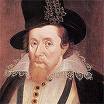 In 1603, following the death Elizabeth I, Scotland loomed large in European affairs when the Catholic
James VI Scotland became James I of England and an uneasy union took place between the two nations in terms of ethnic, political and religious divisions. The Catholics, both British and Scottish -- and elsewhere in
the Holy Roman Empire -- were united in wanting James to rule
in accordance with the dictates the Pope in Rome -- and the Emperor in Austria -- not the British parliament.
In 1603, following the death Elizabeth I, Scotland loomed large in European affairs when the Catholic
James VI Scotland became James I of England and an uneasy union took place between the two nations in terms of ethnic, political and religious divisions. The Catholics, both British and Scottish -- and elsewhere in
the Holy Roman Empire -- were united in wanting James to rule
in accordance with the dictates the Pope in Rome -- and the Emperor in Austria -- not the British parliament.
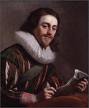 The Protestant hot-heads had their turn when James I was succeeded in 1625 by his son Charles I who, in 1637, tried to impose a new prayer book on Scotland, provoking protest from the Calvinists. They retaliated by drawing up the National Covenant asserting the inviolability of the Scottish church.
As a result, Civil War broke out in England in 1642. Charles I surrendered to the Scots army and was executed in 1649. The new king, Charles II, had to wait until Oliver Cromwell's protector-ship of England ended in 1660 before commencing his reign which was also followed by another
spectacular event -- the Great Fire London in 1666 -- possibly another Catholic act of retribution. Whether Catholic or Protestant, Scotland
gives a spectacular history from which one can draw one's roots -- whether they exist it not!
The Protestant hot-heads had their turn when James I was succeeded in 1625 by his son Charles I who, in 1637, tried to impose a new prayer book on Scotland, provoking protest from the Calvinists. They retaliated by drawing up the National Covenant asserting the inviolability of the Scottish church.
As a result, Civil War broke out in England in 1642. Charles I surrendered to the Scots army and was executed in 1649. The new king, Charles II, had to wait until Oliver Cromwell's protector-ship of England ended in 1660 before commencing his reign which was also followed by another
spectacular event -- the Great Fire London in 1666 -- possibly another Catholic act of retribution. Whether Catholic or Protestant, Scotland
gives a spectacular history from which one can draw one's roots -- whether they exist it not! On a more romantic note, the catholic Houses Stuart and Lorraine were united in 1613 when Fredrick of the German Palatinate married Elizabeth Stuart, daughter of James I. The old Palatinate area was an area from which huge migrations took place, and it is conceivable that Frederick was not the only
German who found Scottish women attractive. Bearing in mind that Germany was becoming increasingly Protestant, it must have been difficult for Catholic boys to find Catholic wives in their own area to whom they were unrelated.
On a more romantic note, the catholic Houses Stuart and Lorraine were united in 1613 when Fredrick of the German Palatinate married Elizabeth Stuart, daughter of James I. The old Palatinate area was an area from which huge migrations took place, and it is conceivable that Frederick was not the only
German who found Scottish women attractive. Bearing in mind that Germany was becoming increasingly Protestant, it must have been difficult for Catholic boys to find Catholic wives in their own area to whom they were unrelated.  The romance of Scotland and the incredible adventures of Bonnie Prince Charlie continued to grow over the generations -- among both
Protestants and Catholics -- to the extent that in 1819 George IV raised a monument in Frascati Cathedral to the Stuart exiles. For the descendants of Catholics with a surname that sounds like Dewick especially those who
escaped forcible conversion to Protestantism, either in Germany or elsewhere, claiming a Scottish heritage allied to Bonnie Prince Charlie -- or an Irish heritage allied to some other Catholic cause -- is far more romantic than accepting the fact that their ancestors may have been just common Anglo-Norman-Saxons.
The romance of Scotland and the incredible adventures of Bonnie Prince Charlie continued to grow over the generations -- among both
Protestants and Catholics -- to the extent that in 1819 George IV raised a monument in Frascati Cathedral to the Stuart exiles. For the descendants of Catholics with a surname that sounds like Dewick especially those who
escaped forcible conversion to Protestantism, either in Germany or elsewhere, claiming a Scottish heritage allied to Bonnie Prince Charlie -- or an Irish heritage allied to some other Catholic cause -- is far more romantic than accepting the fact that their ancestors may have been just common Anglo-Norman-Saxons. By the 20th century -- when Germany was twice at war with England and America -- being of German extraction attracted so much hatred that even the
British royal family had to change its name from the House of Hanover to the House of Windsor. It thus became a matter of survival -- just like changing your religion, as many our ancestors were forced to do over the generations -- to change your name if not your ancestry. Undoubtedly it was a time when anyone with a name sounding even vaguely German in
England and America wanted to make sure that nobody suspected they had German roots. Some may have changed their name to something less obviously Germanic,
but others would have changed their ancestry by drawing heavily upon any mythical Scottish or Irish connections.
By the 20th century -- when Germany was twice at war with England and America -- being of German extraction attracted so much hatred that even the
British royal family had to change its name from the House of Hanover to the House of Windsor. It thus became a matter of survival -- just like changing your religion, as many our ancestors were forced to do over the generations -- to change your name if not your ancestry. Undoubtedly it was a time when anyone with a name sounding even vaguely German in
England and America wanted to make sure that nobody suspected they had German roots. Some may have changed their name to something less obviously Germanic,
but others would have changed their ancestry by drawing heavily upon any mythical Scottish or Irish connections. Finally, and most obviously, the Scots with a surname that sounds like Duick or Dewick -- like thousands of others from all over
England, Ireland and Wales -- were forced by horrific unemployment in the late 19th century to migrate to the great steel mill cities of Northumberland in England. The descendants of these Scots could rightfully claim that their ancestors came from Scotland, but their name and ethnic roots were never truly Scottish to begin with. After the union of England and Scotland in 1603 -- as with Ireland -- English settlers moved in and diluted the local culture to such an extent that Gaelic ceased to be spoken. And, as all the genealogy books will tell you, the new settlers became more Scottish or Irish than their Celtic hosts.
Finally, and most obviously, the Scots with a surname that sounds like Duick or Dewick -- like thousands of others from all over
England, Ireland and Wales -- were forced by horrific unemployment in the late 19th century to migrate to the great steel mill cities of Northumberland in England. The descendants of these Scots could rightfully claim that their ancestors came from Scotland, but their name and ethnic roots were never truly Scottish to begin with. After the union of England and Scotland in 1603 -- as with Ireland -- English settlers moved in and diluted the local culture to such an extent that Gaelic ceased to be spoken. And, as all the genealogy books will tell you, the new settlers became more Scottish or Irish than their Celtic hosts.