
DUICK DEWICK ANCESTRY
Ancestry chart and historical background for researching
the origin of surnames like Duick and Dewick.
|
DUICK DEWICK ANCESTRY Ancestry chart and historical background for researching the origin of surnames like Duick and Dewick. |
| Home |
It's difficult to imagine England being in the throes of revolution, but 400 years ago it was one of the most dangerous places on earth and not even a king was safe. Considering outbreaks of plague, the Scottish Union, civil war under Oliver Cromwell, the Great Fire of London, the 'glorious revolution' of William and Mary and uprisings in Ireland, it's little wonder that parish records are so patchy.
Scotland became a place where European plotters and intriguers met to discuss the Catholic cause, and the extremists among them were responsible for the Gunpowder Plot of 1605 which, if successful, would have blown parliament and much of London to bits. At this time, the fledgling colonies of Virginia and Cape Cod gave refuge to many wanting to escape the sectarian violence and persecution at home.
The Civil War between the King's Cavaliers and Cromwell's Roundheads was exacerbated by Catholic uprisings in Ireland and Scotland and various wars with France and Holland. Charles I eventually surrendered and was executed in 1649.
During all of this time, foreign mercenary armies were on the march throughout England, Scotland and Ireland, not to mention the colonies where Bombay was acquired in 1661 and New York in 1664. There were outbreaks of deadly diseases everywhere, and the Great Fire of London in 1666 -- whether deliberately lit or otherwise -- encapsulated how terrifying the times were.
The French king then stirred up Catholic support in Ireland and Scotland, and bouyed with false hope James II landed in Ireland in 1689. He met William of Orange's army of British, Dutch, Huguenot and German regiments at the disastrous Battle of the Boyne in 1690 and again fled back to France leaving his troops leaderless. In England in 1688 -- around Salisbury -- and in Ireland two years later in 1690 -- around Kilkenny -- there were thousands of young Catholic soldiers from all over Europe roaming wounded, starving, penniless, desperate and leaderless over the countryside having been deserted by James II. Many of these young men would have stayed where they fought their last battle, marrying local girls and accepting whatever change was made to their foreign names. So, from 1603 to 1688 England was in turmoil and it is hardly suprising that so many records are missing from that period. Also, the scenario of the wandering soldiers was typical of what happened in wars from time immemorial. When a strange name suddenly appears in the records with the birth year and birthplace of the father unknown, among the possibilities that must be taken into account is the 'wandering soldier'. |
| Home |
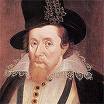 In 1603, the Catholic James VI of Scotland became James I of England and an uneasy Union took place between the two nations in terms of ethnic, political and religious divisions. The Catholics, both British and Scottish -- and elsewhere in the Holy Roman Empire -- were united in wanting James to rule as a 'divine' ruler in accordance with the dictates of the Pope in Rome, and they had no respect whatsoever for the English parliament.
 When James I was succeeded in 1625 by his son Charles I the situation became inflamed, but this time it was the turn of the Scottish Protestants to revolt. In 1637 Charles I tried
to impose a new prayer book on Scotland and the Scottish Calvinists retaliated by drawing up the National Covenant asserting the inviolability of the Scottish church. In England, too, there was dislike of Charles I's absolutism, and Civil War broke out in 1642 under the leadership of Oliver Cromwell.
When James I was succeeded in 1625 by his son Charles I the situation became inflamed, but this time it was the turn of the Scottish Protestants to revolt. In 1637 Charles I tried
to impose a new prayer book on Scotland and the Scottish Calvinists retaliated by drawing up the National Covenant asserting the inviolability of the Scottish church. In England, too, there was dislike of Charles I's absolutism, and Civil War broke out in 1642 under the leadership of Oliver Cromwell. The new king, Charles II, struck a deal with the Scots but had to wait until Oliver Cromwell's protectorship of England ended in 1660 before commencing his reign.
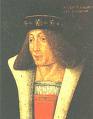 In 1685 Charles II died and all hell broke loose when his brother, the openly Catholic and French supported James II, succeeded him. Members of parliament implored the Protestant
William of Orange -- husband of the king's daughter, Mary -- to rescue England. William of Orange landed with his troops, met James II at Salisbury Plain and the king fled to France -- leaving his troops to fend for themselves. James II was deposed in 1688 and replaced the next year by Mary
and William of Orange.
In 1685 Charles II died and all hell broke loose when his brother, the openly Catholic and French supported James II, succeeded him. Members of parliament implored the Protestant
William of Orange -- husband of the king's daughter, Mary -- to rescue England. William of Orange landed with his troops, met James II at Salisbury Plain and the king fled to France -- leaving his troops to fend for themselves. James II was deposed in 1688 and replaced the next year by Mary
and William of Orange.