I pointed earlier to the obvious fact that the deep digging of peat permanently destroys valuable and productive fen land. We can still see the results after eight hundred years. Burning land, or selling it for somebody else to burn, made no sense in the aftermath of the Black Death, so they stopped doing it (although the penny took a little longer to drop in some places than others). They put their valuable fen to more profitable use, like the production of Marsh Hay for winter fodder; and they kept it intact to bequeath to their children.
The much reduced population still needed peat for fuel. They confined themselves to dredging up the remaining walls in the existing basins without extending their bounds any further; they also dug up reed peat from the surface. Although its quality isn't as good, the effects of the shallow digging are only temporary. Useful vegetation starts to grow within a year or two, and eventually the diggings fill in and disappear. The land is preserved for the future.
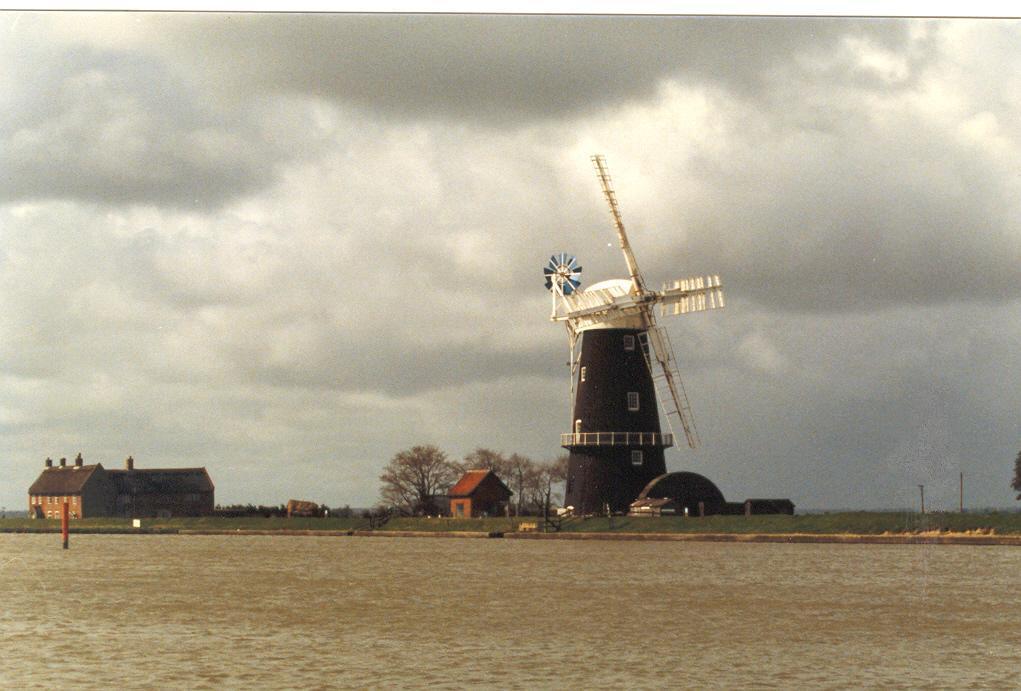
The peat fens in the river valleys of east Norfolk and north-east Suffolk have always been a valuable resource. Changing demographic, economic and technical factors have prompted many changes to the ways in which this resource has been exploited, conserved and improved. The two features for which the region is most celebrated, the broads and the drainage windmills, stand in equal and silent testimony to these changes. |