.
.
2:219 INTOXICANTS
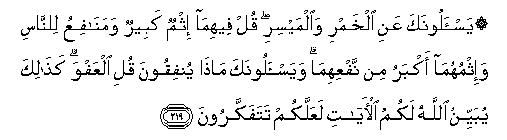
2:219 “ They ask you (Holy Prophet) about Al-Khamr (i.e. intoxicants like alcoholic drink, opium, morphine, heroin and other unlawful drugs). Say: ‘In them is a great sin (or disadvantage), and a few (business) benefits for the people; but their sins (or disadvantages) are greater than their disadvantages. And they also ask you (Holy Prophet) what to spend (i.e. its upper limit as in Jihad). Say: ‘ Spend what ever is left over (after meeting your needs).’ In this way, Allah clarifies the Verses for you so that you may think deeply.”
.................................
A) Prohibition of intoxicants:
As sated in Zia-ul-Quran under 2:219, the intoxicants were gradually prohibited in three stages as below:
a) The believers were discouraged to use intoxicants because of their demerits, as mentioned in the above Verse 2:219.
b) The believers were then commanded in Verse No. 4:43 not to draw near the prayers, when they were intoxicated.
c) The use of intoxicants was then totally declared unlawful in 5:90,91.
B) The use of intoxicants against ‘Iman’ (faith):
In Islam, the intoxicants have been bracketed with adultery, theft and robbery. The Holy Prophet
warned:
a) An adulterer does not commit adultery in a state of faith (or, a person is not a believer, when he commits adultery).
b) A drunkard does not drink (or does not take any intoxicant) in a state of faith.
c) A thief does not steal in a state of faith.
d) A robber does not rob in a state of faith. (Bukhari:5256)
C) Punishment:
a) The punishment for adultery is beating with 100 lashes(24:2), or 100 lashes and stoning to death if the act is committed by a married person. (Muslim-Mishkat:3401)
b) The punishment for theft is cutting of hand. (5:38)