.
.
2:217, 218 FIGHTING IN THE SACRED MONTHS*
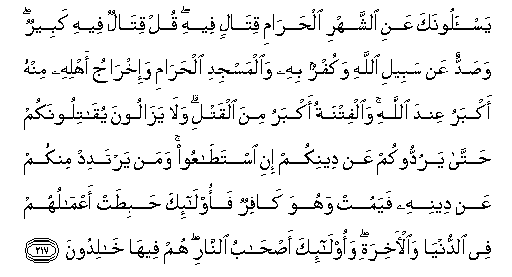
2:217 “ They ask you (Holy Prophet) about fighting in the sacred months (i.e. Muharram, rajab, Zi-Qad & Zil-Hajj). Say: “ Fighting in such months is, of course, a great sin, but a far more greater sin than this before Allah is to prevent the people from the Way of Allah, to disbelieve in him, to prevent them from Masjid Haram (in Mecca) and to expel its inhabitants from there. And Al-Fitnah (i.e. to torture the believers in order to revert them from Islam or to prevent the people from accepting Islam) is worse than killing.’ (Note that) they will never cease fighting you unless they revert you from your Religion (of Islam), if ever they find an opportunity. And (note again that) whosoever amongst you reverts from his Religion (of Islam) and dies in a state of disbelief, then they are the people whose (good) deeds are destroyed in this world and in the Hereafter. And they are the people of Fire, where they will live for ever.”
(See also 2:191;3;149;5:54;8:73;9:36)
2:218 “ Indeed, those who believed and emigrated (to Madina on the orders of the Holy Prophet) as well as conducted Jihad in the Way of Allah, they are the people who hope for Allah’s Mercy. And Allah is Most Forgiving, Most Merciful.”
(See also 3:195;4:89,97,100;8:20,72,74;22:58;16:110;60:10)
......................................
* [As reported by Ibn Hashsham, the Holy Prophet sent Abdullah bin Jahsh with a small Company (before the Battle of Badr) to Nakhla (lying between Ta’if & Mecca) for watching the activities of Quraish. At Nakhla, they were compelled to fight the trading caravan of Quraish with the result that one of the non-believers was killed and two of them were made captives. They brought to Madina the captives as well as the war booty. The Holy Prophet
refused to accept any thing from the war booty by saying: “ I did not order you to fight in the sacred month.” Abdullah bin Jahsh and his fellows then repented greatly over such an incident. It may be noted that this incident took place actually on the first day of Rajb, whereas Abdullah bin Jahsh and his fellows thought that to be the 30th (i.e. the last) day of Shaban.