


Because viruses are designed to reproduce and spread themselves to other computers, protecting your computer from viruses is essential both for the sake of your own computer's health, and for the sake of others who might be infected by your computer, especially those in your email address book, who may be sent a virus or have their email addresses used to send a virus if you are infected.
Email spoofing. Who really sent that email? spywareinfo.com
Viruses are just one example of malware, an abbreviation of the term "malicious software".
The Antivirus Defense-in-depth Guide microsoft.com
Malicious programs descriptions viruslist.com
List of Malware Categories Spyware Guide
Online Computer Dictionary Webopedia
An anti-virus program can scan your computer from viruses and other malware like worms and Trojans which may be present, and also protect from infection in the first place.
Where can I get a free anti-virus program?
AVG: Perhaps the best known of the free AV's, AVG has had a good reputation for many years. "In terms of virus detecting, we can't fault AVG. It picked up every nasty file we sent it, and the email scanner was unobtrusive." Computer Shopper, 2005. "Looks aren't as important as effectiveness in the anti-virus world, and AVG is still delivering the goods." Computer Shopper, April 2006.
AVG Free anti-virus Version 8.0 has been updated to include spyware and rootkit detection. The paid version includes a web page scanner that detects malicious scripts.
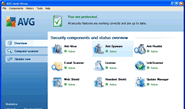
Grisoft's AVG
avast!: The free version of avast! has many useful features like internet and peer-to-peer scanning, which can detect malware even before it arrives on you computer. A review in 2005 in Computer Shopper magazine liked its virus detection but criticised the lack of seamless email integration. The April 2006 review in the same magazine praised integrated email scanning added since the first review but criticised detection abilities:Computer Shopper. Other reviews have found avast! to be better at detecting some forms of malware: about.com. avast!'s detection rate as measured by av-comparitives.org is only a little over one percentage point less than that of AVG. The free version of avast detects adware and spyware, in contrast to the other two free programs. The free version of avast! does not include the script blocker present in the Pro version. (For those concerned about script viruses, Microsoft's AntiSpyware program includes such a script blocker.)
avast! anti-virus Version 4.8 has been updated to include a rootkit scanner and self-protection.
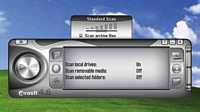
Awil's avast!
AntiVir PersonalEdition Classic: Antivir Personal edition classic has recently added new feature such as virus quarantine, yet it still lacks email scanning which the other programs have. Despite the recent improvement to the update process to allow cumulative updates, the process remains very slow except in the middle of the night, (European time). Antivir's detection rate for viruses and other malware as measured by av-comparitives.org is impressive: 96.16% (February 2006). The free version of Antivir does not detect adware and spyware.
AntiVir anti-virus has been updated to include rootkit detection.
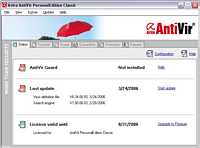
AntiVir's PersonalEdition Classic.
(Two other free anti-virus programs, BitDefender Free and ClamWin are not mentioned here because they do not have on-access scanning- they do not check files for malicious content when they are opened- and so I can't recommend them as a primary anti-virus program. But they are mentioned on the next page as a possible secondary defence.)
Which one is best? How do they compare to programs you have to pay for?
As the review quoted above shows, the protection offered by a free anti-virus program can in fact exceed that offered by an expensive paid program. The detection rate of an anti-virus program certainly plays a part in determining its value, but figures for detection rate vary according to the source and in fact no anti-virus program can offer 100% protection against malware. Different users may prefer the features of different products. I have used all three free anti-virus programs over the years without a problem. It's probably fair to say that all three of the free anti-virus programs will offer a good level of protection, but perhaps not equal to the best of the paid anti-virus programs. The final choice must be down to the user.
For comparisons of free anti-virus programs, see this PCWorld Magazine article or this review from about.com.
For comparison of AV detection rates, see av-comparitives.org.
For independent reviews of the performance of anti-virus programs: Virus Bulletin
Don't forget to look for and install any updates before your first scan.
For more information, try these pages:
Freebyte's Guide to Free Anti-Virus Software freebyte.com
Anti-Virus Guide firewallguide.com
What should I do if I find an infection?
Don't Panic Spyware-Guide.com
I'm infected! So what comes next? transceiver.co.uk
Kill worms dead! transceiver.co.uk
What to do if your computer is infected viruslist.com
General virus and Trojan removal instructions wilderssecurity.com
Malware Removal and Prevention castlecops.com
How to clean an infected computer forum.grisoft.cz
Spyware/AdWare/Malware FAQ and Removal Guide Christian Wagner