 |
 |
 |
| Kivas |
 |
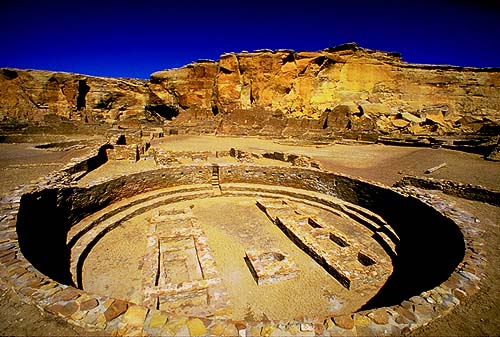
| The Great Kiva at Pueblo Bonito. There are burn marks where the roof was destroyed. |
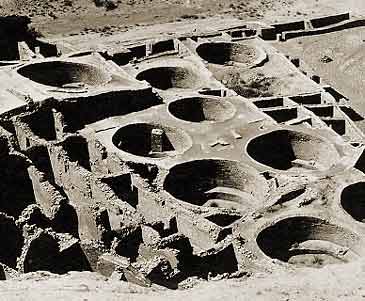
| These Kivas are so close together that it makes me wonder if there was a practical reason, or if it was a dramatic exercise? Or, was it an alternative place to dry and store corn? With a hearth and ventilation, it would have been an easy matter to protect corn from mold. It could be that Kivas were created as worship centers, but used to dry and store corn if needed. |
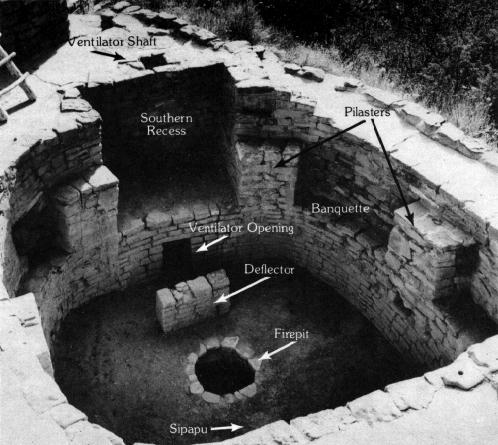
| A Kiva is a round subterranean room used for religious purposes. An intact Kiva discovered at Square Tower House showed that Kivas were entered through a hole in the roof. A stone bench (banquette) circles the inside wall, sometimes interrupted by pilasters (columns) that support the roof. There is usually a hole or indentation in the floor, called a sipapu. The sipapu symbolizes a ceremonial birth place, maybe representing where the Anasazi emerged from the lower world. Near the center of the Kiva is a fire pit. A ventilation shaft provides air for the fire. |