
The Indonesian Education for Social Reconstruction, Peace and Justice |
My Curriculum Life History |
|
|
It was in 1998 when I began my work as a teacher at St.Peter Canisius Minor Seminary, Magelang, Central Java, Indonesia. It was my first experience working in an educational institution. Before it, I worked as journalist in a Catholic Weekly Magazine. But actually, my teaching activity was begun years ago when I taught Religion in an elementary school in the 5 th grade. It seems to me that my curriculum ideology, either when I taught in the elementary school or in minor seminary, is closer the scholastic academic ideology. |
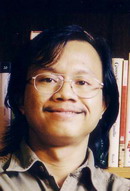
When I taught Religion, for example, we used the formal curriculum prescribed by the government. My main task is the delivery of the materials to the students. The material is selected for them, regardless of the fact that they are interested or not in that lesson, they should learn from the same material. The same thing happened to the teacher. We just taught what was in the text book. I felt at that time that learning activities became meaningless. When I taught in minor seminary, my curriculum ideology was almost the same. It was the scholastic academic ideology. At that time, I taught Latin. In this case, we made our own curriculum. Further, for seminarians, Latin is a required course. So, whether they like it or not, they should learn it. My main purpose in teaching is the delivery of materials, so that they could understand its grammar, vocabulary, and able to translate the Latin sentence in Indonesian. Almost most of learning and teaching activities were aimed at academic understanding. Some times I changed my methods of teaching creatively to keep their attention and interest in studying this old language. And it succeeded. By so doing, my curriculum ideology was a bit closer to the student learner centered. In short, the major curriculum ideology at this time is scholastic academic approach. In the year 2000, I moved to another school, De Britto High School, Jogjakarta , to teach Religion. I was glad that what I taught was not the prescribed formal curriculum. In that school, I could make my own curriculum, and my main purpose on teaching them was to facilitate their growing as moral and religious persons. So, I entitled my course Ignatian Discernment. My ideology changed. It was not scholastic ideology, but more social efficiency. It was the skills to make a discernment that they learned during the course. Of, course, there was some part of understanding, but the main purpose of learning was that student could take more mature decision as moral and religious persons. The shift from academic to a more social efficiency happened because of the change in the nature of my subject. When it was not requisite or obligatory, learning activities became more meaningful and useful for students' life. So, teaching religion for them was not only a delivery of the material, more over, it facilitated them cultivate their moral character as moral and religious persons. My course on Ignatian Discernment could open a kind of intereligious dialogue. In the year 2005 I studied pedagogy in Pontifical Salesian University . My curriculum ideology was enriched. During my study, my understanding on curriculum ideology was student learned centered, who put the creativity and dynamic in the students capacity to learn. Student learner centered mixed with the scholastic academic was my ideal vision on curriculum. I believed that good schooling meant that student was happy and enjoy in their learning, at the same time, they could achieve the purpose of that learning as prescribed in the materials. In learning activities meant that student could find interest, meaning, in their learning, but also they can achieve and comprehend the material they learned so that knowledge became their personal construct of knowledge. The Salesian University is outstanding in the Psychology of education. I felt that the change on my curriculum ideology was supported by the school ideology on learning and teaching. In 2006, I was back in Indonesia and working as school administrator. My curriculum ideology was still the same. I meant that I tried to socialize my curriculum ideology in the school. I invited teacher to improver their methods of teaching. I also taught English Writing for the senior students. But, my attempt to promote my ideology seems failing. To implement the mixture or student learner center and scholastic academic ideology was not as easy as it was imagined. The difficulties could come from many sides. First, the structure or our educational system was closer to the scholastic academic approach. It means that there are some subjects more learned by students because the state forced its educational policy in high stake standardized test. This system in turn bring all the learning activities to this purpose at the expense of the others subject. Second, the system also became the guide for teacher to do their jobs. Their job was to deliver the material in a way that students could remember it and by so doing they could pass the state exams. So, even if I had my own vision on curriculum, in practice it was difficult to change school culture to that ideology. My school environment did not support my curriculum idea. In 2007, I am studying Curriculum and Instruction at Boston College . This course gave me another understanding on curriculum. In this school for the first time I heard the idea of the social reconstruction ideology. I find that my vision on curriculum is enriched through this course. I begin to think about the social reconstruction ideology in my mind. Looking back to my teaching experience, now I could understand clearly that teaching activities are very complex activities. In every curriculum, there are various approaches of ideology. So, the various approach of ideology would be relevance depending on the kind of culture, system, and level of school. In the elementary level, for example, the student learner center would be more relevance. I am working in the high school level. That is why social efficiency, academic, and social reconstruction ideology are also relevance for them. In short, during my studies at BC, I begin to include this social reconstruction dimension in my understanding of curriculum. In the future, I would like to project my curriculum on a more social reconstruction ideology, because I think it is more relevance for Indonesian context. I hope that I could integrate the various ideologies (scholastic academic, student learner center and social efficiency) as part of my concern to create a new better society. |
|
| All right reserved - Last Update 5 March 2008 | I Site Map I Contact I My Profile I |