103
If in our minds is all we know, and we each know a separate world, so be it. These disparate and separate worlds we all know can only be shared in small parts with others, and, if we don�t write, our own worlds will soon enough disappear.
Books are repositories of knowledge, but moreso, books allow us to become time travelers, to bring past worlds into our own world in our minds.
As philosophers we know that to travel in time, back a thousand or ten thousand years, we would marvel at the ingenuity, the beauty, the truths of days gone past, just as well as we would marvel at the ignorance, stupidity, crassness and crudeness of existence then. There is truth there in visiting ancient worlds brought into our minds, truth ample enough for a reflection upon our own world.
104
As philosophers by reading sufficiently and reflecting sufficiently we can also travel into the future to innumerable possible future worlds, and there reflect upon the same, but different, beauty and truth, crassness and stupidity, ignorance and the crudeness of existence.
Oh! For what we have lost in the truths of the past and that the future will lose of the truths of our present!
Write and give to future worlds the common moral courtesy of the warnings of real truth you think you can know in your world just as I have from mine.
You might save the suffering of ignorance, a limb, a life and even the future of all worlds by what you say, if you write it down.
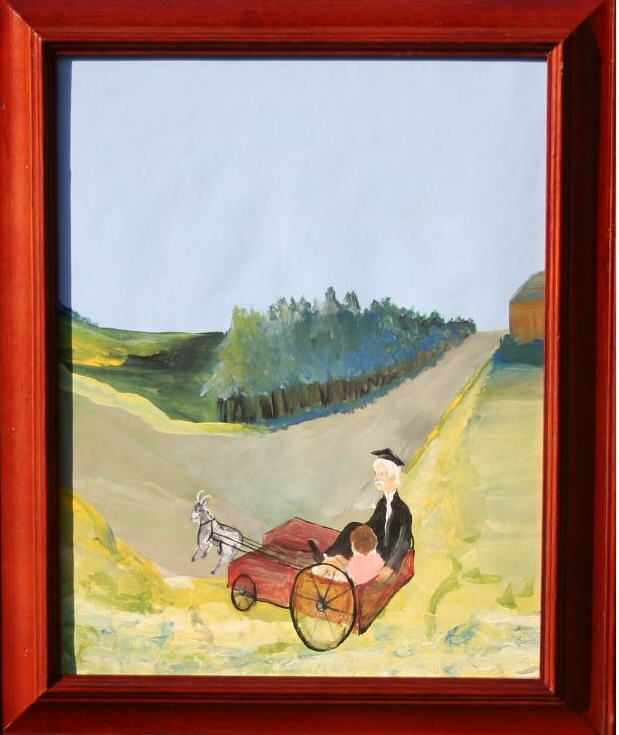
It may be good advice Lao Tse offered the world to never go there, to the other side of the hill. The world is full of human danger. But for all of mankind carrying their sieves and toting the leash of their he-goats, it is best that when they do stray over the hill into your world, they for their effort should find kindly readings to inform them of where it is they have ended up, by the dangers about which you know, and, the sites of greatest beauty and truth as well.
To do this you can only tell them what you know, which is only what is in your mind, and is moreso only in your world, so make of your world a beautiful paradise where truth is sought but only the path toward truth can be found.
My efforts here are like that. I have come to brush away the rubbish and leave a clear path toward truth, a humble street cleaner of worlds untold and unmatched by the real truth aspired to by the philosophers of all ages.
The King of Siam was poisoned by his refusal to hear the truth, and more left unheard or untold by his misplaced incredulity. We must doubt, and I want you to doubt me. And, act not too hastily as you find your own path towards truth.
105
As empirical science has come to pervade every aspect of human existence many have posited the quasi-philosophic belief that science is the answer to our salvation from the very same dangers empirical science has made possible. Such a belief is animism, a belief in a humanly benevolent nature inherent in the Universe at large. Such a belief is not only wrong-headed, it is immoral.
There is nothing science has given humanity we cannot live without. There are a multitude things science has given us we cannot live with.
All this may or may not be well though, still human beings need something to believe in to satiate their human desire for universal forms and ideas with which they can cope with the real world around us all.
It is the philosophers� ever increasingly important role to doubt the beliefs of human beings in so far as they might represent a dangerous detour from any viable path toward truth.
Empirical sciences have led human beings since before the dawn of civilization, before there are known philosophers, though it is doubtless there have always been philosophers ever since our most ancient ancestors learned to speak.
The very first philosopher would have uttered one of two things, either this is good, or, this is bad. The subject about which that very first philosopher was speaking, either "good" or "bad" we can only guess. But, there was a path towards truth, and then it was a path very close to the path to absolute truth.
Life was philosophically simpler for ancient peoples. It was far less perilous, for very few manmade dangers had spread over the face of the earth, as they have since the rise of more complex civilizations equipped with empirical tools.
Still for us as those of the past everything we can know comes to us through our senses. The sensation we receive from our senses is not cognitive knowledge. To sense is not to know. Everything we can know is in our minds and entirely made of universal forms and ideas, which is all that we can decipher from what our senses relate to our minds. All progress in human knowledge then, comes from 1) defining universal forms and ideas, or, 2) re-defining universal forms and ideas. Hence the importance of the work of philosophers whose desire and duty it is to seek and convey the path towards absolute truth.
The perils humans face today are grave indeed. Philosophers have come and gone, been raised to the status of modern day superstars and beyond. Societies have grown, civilization has advanced, perils have increased exponentially and the need has grown for philosophers to direct the traffic of those around them who need to know the path toward truth, and to know of dangers hidden behind so many doors of choice that now litter the civilized landscape.
106
I call on all of you to be those philosophers.
To the army of young philosophers who read here, I seek to inspire, and, I now command you all from beyond my time in my world, take them now! For the whole world is as ripe as the Conquistador Francisco Pizarro (1476-1541) found the Incan empire under Atahuallpa, the 13th and last Inca emperor, at Cajamarca, but waste not a single life for they may all have something of the knowledge the army of philosophers seeks.
Live lives that will make the world again what you will be proud to have your children step into for their own brief chance to enjoy the great gift of life!
It is truly an amazing gift, life. As I have frequently this Spring sat on the teak benches below the Camden Public Library, sometimes at the water's edge almost level to the horizon of the water at high tide in the morning sun facing east-southeast on Camden Bay, I look out, through to Penobscot Bay, past the few boats that remained moored through the mild winter, many two masted sailing ships from days gone past, one particularly beautiful smaller, perhaps a thirty-five or forty footer carefully and lovingly recreated two masted work boat, a fisherman of teal green above the water line, and then out past a tri-hull design, and a sleek fiberglass forty footer with a single mast, out through the rock edged and rock wall improved edges of the harbor, seagulls sitting well vantaged atop many of the masts of these ships, out past Wayfarer's docks being improved this past Winter and now into the early Spring, four, sometimes six massive Navy surplus barges with cranes, backhoes, dozens of workmen improving the mooring space and increasing the number of slips, dynamiting some days, hauling away massive barges full of bottom now deepened into the very mouth of Penobscot Bay with the wider ocean just out around and past, past the small Curtis Island that on most days shelters Camden Harbor from anything but the smallest sun or moon lit sparkled waves, it is truly an amazing gift, life, to think all I see, hear, taste, smell and touch in these moments of reflection upon the infinite waters before me, that it is all, all of it only possible for me to know by what exists and transpires within the gently reassuring humming of life in consciousness, between my perked ears. All of it, though it is there, all of it I can know is within myself, it is me that is the experience before me. No one can see it as I do, and even if a correlation exists upon which we might agree in conversation, it would be only due to the enchantment each of us would feel for our separate moments. I enchant you, I mistakenly believe, and you, you enchant me, you also might mistakenly believe, even as I write this hoping to know somehow you will feel some of the experience I have had. I enchant myself, and you yourself, but not coldly, for you can know I am here at the keyboard trying a warmest best as I can to convey this meaning, a meaning you too are trying to conceive from these words, these ever so insufficient words, as are coming from me and my fingertips against these plastic key caps. It is like a painting I am trying to draw, consciousness, like a beautiful tune hardly even whispered between two disparate experiences of the world as I relate them from what my own personal world made of it for me.
Up until I was forty-two, with my naked eyes, I could see the moons of Jupiter, sometimes two, sometimes three. My eyesight was that good. One of my sons had a telescope out one night in Aroostook County, Perham, where there is a dark night sky. He was looking at Jupiter and beckoning me to look-see. He could see three moons. I said, "Yes, one at one o'clock, one at four-thirty and one at seven o'clock. I see them." He could not imagine how I could see them without the aid of a telescope, and it was within a few years as my eyesight began to change with age, that I could imagine not being able to see them too.
107
The young philosophers� conquest of the world shall be like the rise of agriculture into Paleolithic times before the Egyptians and the Mesopotamians, slow at first, but steady and then in a great inexorable flood inundating the landscape of ignorance of a human history thus far made of so many knaves pretending to be philosophers. The young philosopher�s army will be ever triumphant displacing all before it as if it were never there at all!
Be gone now! And let every young reader here become a philosopher! Waste not a moment longer dispensing with the humdrum of political philosophy and its morally insipid result. As Berra taught us all, "You can observe a lot just by watching." Think bigger thoughts, truer thoughts and let them ring like the bells in some great church tower over the land!
108
Somehow, I know not how, as Berra slaps us in the face with this, it is not tautology, a mere repetition of an idea in different words. It is instead Berra very close to the path to absolute truth. Have no doubt, while reactionary Aristotle might frown, insulted, and Kant, meticulously tedious Kant, he would surely wince and grimace, Socrates and Diogenes would smile and nod approvingly of such a simply elegant utterance of a shining path toward truth. It is as if some omnicient and beneficent deity could have said no more than Berra here.
Conveyed by Berra is the importance of observation, and, a small hint of caution in caveat, Look, but do not touch. Words, these words chosen by Berra are chosen well even if unconsciously, chosen to impart a meaning like a painting in prose. His words show there is no need of Kant's faulty structure, which amounts to philosophic blasphemy, a science, none of which is philosophy.
We can surmise intuitively, Berra also would have said, "You know, when that rope breaks it's going to be a really bad day all the way around for everybody and everyone else too." Kant is simply incapable of such demure philosophy. And, Aristotle would not have understood Berra at all.
But, Diogenes and Socrates, they were immersed deep enough in philosophy, for they knew philosophy can be no simple science. Philosophy is not a toy like mathematics. The search for the path to absolute truth, is a path immediately abandoned when hard and fast rules are applied. Socrates was a man, pug-nosed and lumbering, barefooted man, who was sentenced to death by the state.
109
Ultimately too many recent philosophers, many of whom write psychological treatises, have failed to reconcile universal forms and ideas, that into which our minds turn all sensory data, everything that we can experience, into before we can think anything at all. Having thus failed at this reconciliation, they cannot recognize the self as isolated from the real world. Our separate worlds are vessels, that intermittantly illuminated labyrinth of consciousness, the great gift of life, one into which sensory data pre-processed into universal forms and ideas flows. We can only presume our collections correlate with the real world.
There is no mystery here. The mind, our consciousness, our ego, our being, it all exists as and to manage universal forms and ideas that are minimally once removed from the real world. Hence we all live in our own separate world. We can make nothing more of the self, our consciousness, our being, because the self too is only a universal form and an idea.
Behind the curtain of the Dark Age of Philosophy into which we have come is a psychologist, an existentialist psychologist, a stinking shrink with an enchanting explanation and some novel semantics of a pseudo-science to pedal, just another lying theorist of science. I mean here, Damn! Are they idealists or are the materialists? Or are they merely existentialists who grotequesly revel in putting their dirty, filthy hands deep into the goo of our consciousness? Let them pedal their wares. It is not philosophy. Philosophy is not a mere science, pseudo-science or otherwise.
It is wholly an err to believe a thread of personal identity is uniquely preserved by our will. Our memories are the landscape of our existence, and as such, within our vessel, our respective worlds, we are wholly integrated. To believe otherwise would be to believe a Chinaman who was born and grew up in Peking could be philosophically indistinguishable from a Brooklyn born and raised Jewish mom. Just because these psychological philosophers thought of something, it does not make their premiss right or philosophical.
Too many philosophers who are would-be psychologists have simply spoiled their own stew. Let them taste it to see if it is not a bit too salty for reality to fit it. If it suits their taste, let them eat it and create a science of their absurd ill-wonderment, but, I warn here, no one has ever been cured by psychologists, and many have been made worse, far worse, for their patients are still confronted with an insane world either inside their institutions or outside. Mental illness, or perhaps better put, the social incombatibility of human beings is on the rise. They have built it, and they will come. The phenomenon is as indicative of the nature of the societies in which we live, as it is of the thread of human consciouness psychoanalysts seek to ameliorate. The rats in the maze simply get pickier and more vicious the more crowded and hungry they get. Stress is the key factor here, so, stop poking the caged monkeys with that stick, of, give them their own stick to help relieve the stress of their torment. Society's rewards and punishments are so irrational today, they would worry Mount Aetna. Let them psychoanalyze a real Viking with a broad axe, or, Chingis Khan and his mounted warriors as they thunder over the plains into their realm up close and personal.
Let them get up close and personal, and, psycholanalyze the warriors who shot off the nose of the Sphinx and those who burned the library of Alexandria.
110
Let these psychoanalysts march out their successes for our inspection. Oh? You must respect the confidentiality of your clients, you say? How convenient. I suspect another Tuskeegee experiment pays your salary.
It is all the shamanry of psychoanalysis, all created in a world that if it could be sustained or substantiated, it still would have no philosophic value. It is like strapping a human being who refuses to wear pants into a wheelchair despite his ability to walk perfectly well.
Samuel Clemens, noting the villainy common to all of us sends his regards, as Twain himself added his praise of your psychoanalytical skills out of the corner of his mouth with one eye shut, the other glaring down upon all this nonsense.
All these psychoanalytical philosophers are so sexually deviant and inadequate it seems they did not understand the words of the famous song, "I know a little bit about love, and baby I can guess the rest." We can presume they guessed wrong again as has been their tendency, prim and proper.
The same is true no matter how brilliant a lover or thinker one might be, if you contribute nothing, you're going to end up a wall flower. Someone has to, and someone will write a brilliant work on philosophy, one that will shake and reshape the world again, but it won't happen by simply stepping out upon the water.
Analytical anti-philosophers also decry the lack of a complete system of philosophy, about which, real philosophers who seek the path towards absolute truth state unequivocally, philosophy must be incomplete, for we cannot know everything, which is a prerequisite to arriving at absolute truth.
111
Philosophy when it is gushing is helter skelter. When it is demure, it comes to us in snippets. Twain gushed philosophy where Berra gave us snippets of demure philosophy often in a blinding flash of insight. In this sense philosophy is like scientific insight, a musical tour de force, or an artistic triumph.
This is as close to a complete system, the knowledge of how good philosophy occurs, as is possible for real philosophy, or, that we can expect. Such is the absolute truth, the path to it, we seek, for philosophy. If anything, philosophy is the greatest defense against ubiquitous, stealthy and cunning ignorance and stupidity.
In this sense, good philosophy is like good Jazz, or, Rock-n-Roll. It just arises, overwhelmingly, like renaissance painters or Egyptian civilization. There is no science or complete system behind philosophy. The dominoes just fall, all of them. It's like that catch by Willie Mays or that goal by Bobby Orr.
The academics by their tedious study of it would ruin philosophy in every generation, but they are powerless unless they join in in the human endeavor that is philosophy, the goal and meaning of life, to make the world a better place for all who follow us.
Seven shots ring out, Like the ocean's pounding roar. And tears stream down my cheeks, as they do when I read good philosophy, but there is no suffering, for I better the world with philosophy. These are tears of joy, and philosophic epiphany, and a love of this life. Philosophy is irresistible invention in the mind.
I ask you. These existentialists, the existentialist psychologists who feign philosophy as a pretext to their theories, what would they make of Diogenes and Socrates?
They would say of them, they are asocial characters, even anti-social personalities. What?
Was it Socrates or Diogenes who set out to subdue the entire world to their will by brute force, murder, and the organization of murderous gangs intent upon siege and conquest? I believe it was not. It was Alexander and other similarly murderous thugs deified throughout history.
We must remember here what Twain said, "Barring that natural expression of villainy, which we all have, the man looked honest enough."
For all of the self-reflective psychoanalysis of the existentialist, Jean-Paul Sartre (1905-1980), he fails to hear his own motor running. His breathing, his pulse, the hum of the blood pouring through his inner ears escapes all his self-analysis because he is unaware of the living being he is. It is no wonder the idea of consciousness being a vessel escapes his perception.
Sartre believes his own reflection upon the wall of the vessel of his consciousness, something he calls the "other", can punch his way out of the paper bag of solipsism, a belief that nothing, nothing is real, but the self. Sartre totes his he-goat by a leash, just as did Kant, sieve in hand.
Jean-Paul, you can know Pierre exists, for you can smell the wine on his breath, you can hear his inane comments, and, you can see his eyes drift off into his regular stupor at the end of every evening out.
You say, He might be a dream, this Pierre? In his current inebriated state, this is only wishful thinking.
112
As real as Pierre is, what we cannot know of him, is just how much of our perception of Pierre is a reflection of ourselves, for Pierre is just like Jean-Paul, both falling into the same universal forms and ideas in Sartre's head. We can know no other without knowing ourselves first.
In my mind, which is all I can know, every thing and every being is more me than it is real as it exists outside my mind. This is not to say as Sartre endlessly posits, that I am more than myself. No. I am my world, the only world I can or will ever know. And the only chance I have of ever affecting the real world is if I can succeed in depositing some small portion of my world into the worlds of others. I can know of my success by a smile, perhaps a faint whisper of a welling tear. If I plant something sustainably good, I achieve a moral immortality of sorts. If I plant something evil, I might achieve an immoral immortality. My motor will cease to hum, but my ideas, that which I am, may live on some time.
The existentialist, Gabriel Marcel (1889-1973), a self proclaimed devotee of Satre, and a lately come Catholic, a horribly mixed up man, states, "Man's life is an attempt, continuously renewed and inevitably doomed to failure, at the divinisation of himself." This thought is worth pondering, so I end this paragraph here and proceed to another.
What some ne'er-do-well existentialist shrink could do with the thoughts here of Marcel, and previously Satre! Fools! One need only consider legacy, for in the eyes of those who will follow us, we are all destined to be considered divine, by our legacies we leave individually and collectively. And, after all else might be considered here, whom can we really suppose gave to humankind all these many deities? Are they not the legacy of long ago humans who conveyed the worlds of their own existence?
The bigger question is, will we be benign and comforting gods, or will we be like the gods of ancient Greece who throw thunderbolts and shake the earth terribly? And, I ask you, how would you like to be remembered?
We should not fault Sartre for how complicated a world is his, or how far short he shoots his lead arrow, but rather for his abject simplicity, his slow categories, and its false transcendence made where none is required. Sartre, as he describes himself, paints his world with a fire hose washing away the beauty and the real complexity we all know is in there, within every mind. Satre leaves behind instead a weathered and wholly unrecognizable landscape that was once a human mind. His self-destruction was quite nearly complete. Satre, and many existentialists after him, simply commited suicide without extinguishing the breathing body.
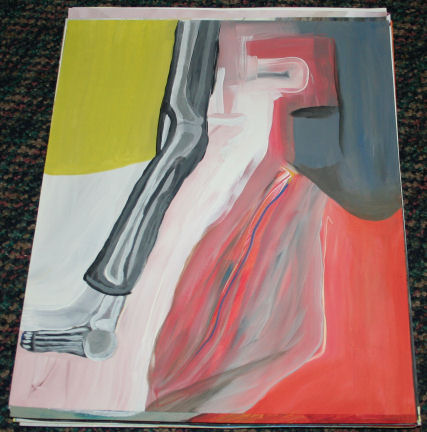
If all these things Sartre tells us about his mind were true, they had to come about when he was a child, and yet, Sartre never tells us he hit a can of spray paint with a sledge hammer when he was a kid. No. Sartre is making all this up as he goes along writing his books. It's doubtlessly his reaction to the war he experienced, but his reaction is less to the war than it is to the deprevations of his life that resulted from the imposition of the war upon his personal landscape. It's interesting, his rambling story, his personal discovery of nihilism and existentialism, but it is all but the gobbledygook of some far too obscure and obscene psychological science of one man's mind sucked dry by his own selfishness. He writes as if he is Huck Finn on a riverboat riding the river of his imagination, all made of a festoon of negative tautologies that are collectively and very nearly singularly meaningless. He wants everyone else to be aboard, and writes as if we are, but he is alone with Pierre and his other all three pouting miserably.
113
Sartre has made of his vessel of consciousness an echo-filled room of mirrors. It is wholly his own creation, and, he floats as a vaporous zombie within it. This is not philosophy. It is the, by now near proverbial "madman in a blockhouse." He finds meaning and knowledge is in some of its smaller parts circular and thus fatal. He fails to see the cobbled together reality it is possible to know.
These psychologists, they have given us electro-shock therapy, lobotomies, a cutting and destruction of the frontal lobes of the brain by an incision made deep under the eyelids, and a wide assortment of psychotropic poisons as their absolute truth, for which, we should let them have at it. Humans are not zombies, the zombies of psychoanalysis. Real philosophers can retrace these, their tentative steps, and, away from the path of their nihilist deception and personal desperation.
But doctors all, is it not you who gave us Andrea Yates and all her dead children laid out like that? It made great press, but I believe it desproves your point.
We worry about slipping on the ice in winter, about falling, but it's actually hitting the ground that hurts. The destruction of the self by existentialism or psychoanalysis is like that.
Quite simply it takes a cognitive effort to fabricate a reflection upon breathing, the pulse, the smells and the general hum of existence we all know as living human beings. The effort for the existentialist requires the creation of new universal forms and ideas to create their twice-removed false reality, the existential reality of a chaotic, meandering, rambling of the psychotic psychologist, a pseudo-scientist. It is not philosophy, however.
It is all only suggested and suggestive psychoanalysis. All the suggestions these miscreants make, can and will make you sick, if that's what you want to be. Were these existentialists as fixed upon their navels, they would have all bled to death.
Were I to go to any greater length upon Sartre, I would have to entitle this book, "Sartre is Dead". So, enough. I am chasing a bigger, more important he-goat with my sieve, so I will set Sartre adrift. All this railing against existentialism as the thoughts of madmen has had a purpose here in an introduction of philosophy to young readers.
114
The oddity about existentialism's growth, the where it came from, is the cogito, or what has become known as the cogito, Descartes' posit, "I think, therefore I am." And it is indeed the root that we are after here, or the historical perspective of it.
The small seed of the cogito could never have been seen by its originator as to have possibility to give rise the monstrosity that it has grown into by a long process that is detailed in the history of philosophy, or as I prefer, the history of so-called philosophy, because it has strayed so far from any recognizable path that could possibly lead to absolute truth, that it becomes necessary for philosophers to brand this philosophic heresy, just another science, and thus, back away from it.
Much of post Enlightenment philosophy has tried to impress itself by an ability to place the reader of it into a trance, to, in a sense, to hypnotize readers and convince them they think such and such a way, a way described every time by words with meanings with which the reader has never been familiar or heard before and certainly would never consider or experience otherwise.
All these philosophers are so convinced of a scientific method that has only to be discovered, one that will unveil in a flash of light, absolute truth, and for some they actually think they have found it, that these philosophers whose minds are so perversely contorted by this exercise, these philosophers believe the way their minds work is the way all our minds must work. This is utterly preposterous. Oh sure, if we are willing to buy into all this fallacious hokum, we can begin to see it, but it is an illusion. It is an illusion that is immediately unmasked when we try to apply what we have been squeezed into believing, when we try to apply it to others around us who have not been brought under the spell of this cult. What most philosophers need is a good pop in the nose to shock them back from their oddly preferred altered states of consciousness and back into the real world where real philosophers exist, work, write and give all the common moral courtesy of useful advice as did philosophers before they became so academically self-obsessed with the deification of the drek that has risen to the top of the billowy academic froth.
115
Alexander anxiously sought out Diogenes. Who is it that seeks these academic philosophers? They all lay idle, basking on their sun decks as ignorance and stupidity encroaches upon their kingdoms. Decadence and perversion are their message now. It is not philosophy. And, as such, they should fear theology, the mean theology that would put their hides to a stake and the torch. Philosophers are known to be a bit aloof, unaware of the rest of the real world, but there, there is real peril. Most of the danger in the world is human-made danger. Though you may hear the cock crow on the other side of the hill, never go there, and still, worried hope may not prevent those dangers from coming over your hill to find you, though good friends, good and moral philosophers may warn them of the advancing legions in time to save their worthless hides and provide them more time to save what is left of their heretofore worthless existences. That rope stretches, and, it will break with a terrible consequence. And whether these philosophers classify some of human nature primitive or not, it is still human nature. You can indeed observe a lot just by watching. Have they yet watched enough fools to know they have observed a pervasive trend about to climax in phenomena?
Who shall seek the advice of philosophers if we cannot improve our lot? Not even the captains of industry seeking profit. But as we shall see, this is about to change.
With many dangerous American technologies and the sour ethics of our greed advancing and spreading over the world, American philosophy must follow all these many dangers. American philosophers with a real moral ground are going to be in demand all over the world to oversee the integration of the very real dangers, these new man-made dangers intrinsic to our way of life.
To fulfill the expectation of the need, philosophers will need to draw upon every source of philosophy. Twain and Berra must be there, and, analogies and tautologies will certainly be required.
It is not enough that the world learns English, as it is surely determined to do, the world must also learn American philosophy in order to cope with and even avoid the same mistakes Americans have made and more.
116
Within the body of philosophic messages we must advise the world, preserve all your precious diversity for it is our human diversity, the very strength of us all. If we are to ensure a worthy world for those who will follow us, we must begin now to provide the common moral courtesy to warn of dangers hidden behind the many doors that confronted us before, and them now. There is very real moral pride here for philosophy. We have been given a calling, to ask every Alexander to step out of the sunlight that warms all our bodies, to explain as did Berra, you can indeed observe a lot just by watching, and as Twain gave it to us, despite the natural look of villainy commmon to us all, our intentions are noble and honorable.
Twain in Following the Equator remarks, "Apparently one of the most uncertain things in the world is the funeral of a religion," here speaking of the millions of religions in India, which he describes wonderfully from a Nineteenth Century view. As I read this book, I was struck by how much India then seems to be like my home, America, today, so strange, foreign, wonderful, decadent, and continuously decaying into greater permutations of the strange, wonderful, and decadent with a continuity of wholesome decay. Only the bureaucracies will be left to posterity. Do you see how nearly impossible it is to successfully exert your free will?
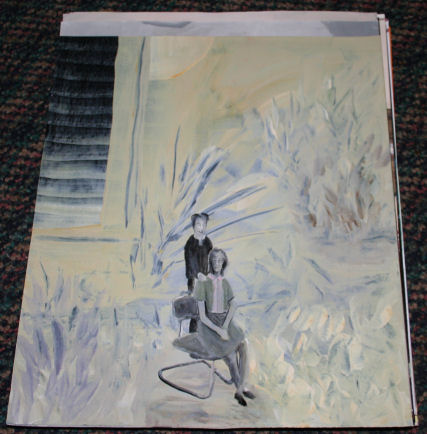
The idea that religion is an aberration, a disease, or entirely a chicanery, and, that the hypothesis of a god is useless for explaining or understanding the world is an empirical idea too often put forth, one for which the rather obvious response is, the tool of empiricism itself, the very chessboard of your modern logical mind is an aberration, a disease, and a chicanery of the highest order. The proposition that scientific theorists offer solutions or will one day explain all is an utterly useless prayer heard by no one who will ever answer. The world is a mystery, and let anyone who might think otherwise venture forth to explain it by whatever means he conjures, however, do not try to tell a philosopher that life is all pain and suffering not worth living. These are bold lies. Life is wonderful, and I beg anyone to show me anything better.
One reason for the magnitude of human folly is it is generally observable in the history of social engineering and scientific solution mongering, that when problems of any scale are tackled, the resulting negative bi-products of the engineering required to address these problems are a greater nuisance and even more troublesome than the original problem. Life for humans simply has not been made better by societal decisions to address such problems as poverty, starvation, disease, crime, illiteracy, abortion, teen pregnancy, transportation woes, judicial reform, universal suffrage, child labor, the banking systems, the IMF, the UN etc. These problems require a change in human nature, human nature that is negatively disaffected toward same when solutions are marked out by any attempt to address these things empirically at a wholesale level. This wholesale-ness has been the bi-product of so-called utilitarian philosophers and philosophies. Their successes have been few and short-lived. Their failures have been many and massively detrimental to the human condition.
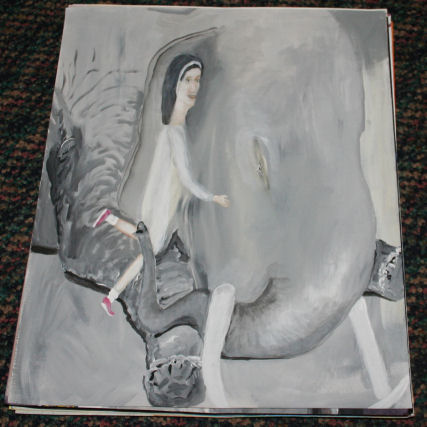
I could scarely not recommend Following the Equator here, far and away Twain's most important work for philosophy, because it describes so well the past, the future, as well as the present human condition. Human vitality portrayed here is mendicant, in prayer, yet pugnaciously erudite wanting only to be freed by a lessoning of accepted truths.
All philosophy is inherently autobiographical, and Twain, the eminent humorist and satirist, has laid one hard-boiled upon all the philosophers of the world. The autobiographical sketch of his trip around the world is pure philosophy of the highest order. What a format for philosophy! What a stage upon which to act out such an important philosophic treatise! Just as Aristotle told us what he thought of the posits of other philosophers of his time, Twain has given us his impression of the entire world at large, first hand. I am a Twainist, which stands for applying reason and observation to the human condition as it has developed. It is a calling and a philosophic creed that will surely grow to dominate philosophy, now that the great joke in two volumes has been let out of the bag Samuel Clemens hid it within, hidden within plain sight like the full moon...
Being a philosopher is much more like being an artist than it is like being a mathematician, for philosophy must know not just how to philosophize like the sophists, the materialists, the idealists and the existentialists, philosophy must also know, how like an artist, to look at what has shown up upon the canvas of life happenstance, and make good use of it. For Twain in Following the Equator his magnificent canvas is the whole world! This work is a colossus of philosophy, and, a Leviathon of post-modern thought unsurpassed in the hundred years since it was written.

And to those who would end the world out of vengeance, fear or indifference, we should carry the message that while it's not slipping on the ice or falling that hurts half so much as hitting the ground, the end of the world would not be like that. It would be like death. The good times would cease to roll.
We need not go there, not through that door.
America today worries about the spread of the atomic bomb technology it invented. Our foolish and irrational government that paid for this hideous scientific invention now seeks to tell other nations, you do not need it, and you shall not develop it, when in fact, it is America that does not need the A-bomb most of any nation on the planet.
America has the irresistible force of philosophy to protect her, if she would just learn to use it. Philosophy would protect the whole world for infinite generations into the future, were we to follow the path that leads toward truth. Encourage this, for every other country would eagerly sign a non-aggression pact the United States. As unlikely as attack from without is, all countries would similarly pledge to defend the U.S. in such an event. America could be the fruit of the world, but not by military might or technological prowess, but by a philosophy intended to save the world all that America has suffered and more.
117
Philosophy does not win over minds by presenting its proposition as being more dangerous than it really is. Philosophy is about the search for a path towards absolute truth, paths that would avoid danger, and, while there are too many people who cannot stand the truth, because they are so comfortable with so many lies, as it is with the world's last great superpower, still, good philosophy wins over minds. Good philosophy is irresistible.
Did anyone subsequent ever ask Alexander, Was it true, had Diogenes really asked him to step out of the sunlight? And did Alexander say, Yes, and I did yield to the great philosopher of Sinope. I, Alexander the greatest of kings and conquerers as well, I am enough of a philosopher, having been tutored by Aristotle himself, to know great philosophy even when it is coming from a man who was once a slave, philosophy that will outlast you and me, and perhaps the Sun, the Moon and the Stars as well?
Those men, the soldiers who accompanied Alexander in his search for Diogenes, as they found Diogenes, and as events unfolded before their eyes and ears for their personal worlds to taste and digest exactly what had happened, they could not have known, nor would any know for tens of millennia what question had just received its distinctive and ultimate answer.
The philosophers of the Enlightenment did ask the question of free will. This question had not been as fully considered by the Greek philosophers. The answer most often given by post-Enlightenment philosophers is that humans have no free will. That's the pessimists' view that even prevails to our day.
But, Diogenes left no doubt that great day for all those who fully consider the question, Do humans have free will? There is free will. Alexander and his well armed accompaniment of soldiers came over Diogenes' hill from their side of it, and there, they found freedom, and free will greater than they could have known existed from within each of their disparate universes of personal experience.
Everything we can know, everything we can observe and know of the thing-in-itself, that which is outside of us, and in us too, it is all within our minds pre-processed by our sensory facilities into half-truths, universal forms and ideas. And even as we can only view free will as invalid in the sense that it too is but a universal form and idea, Diogenes nonetheless proved to us in utterly convincing terms, free will does exis; when, he was offered by Alexander anything he desired, and, he simply asked Alexander to step out of the sunlight that warmed his body.
We can only imagine what was in the mind of Alexander, but we can know what was in the minds of all who have retold the story of Alexander and Diogenes. I dwell on it often. Others will always dwell on it.
118
Nietzsche made an apt, if incomplete and somewhat wrong observation:
"Because we think well of ourselves, but nonetheless never suppose ourselves capable of producing a painting like one of Raphael's or a dramatic scene like one of Shakespeare's, we convince ourselves that the capacity to do so is quite extraordinarily marvelous, a wholly uncommon accident, or if we are still religiously inclined, a mercy from on high. Thus our vanity, our self-love, promotes the cult of genius: for if we think of him as being very remote from us, as a miraculum, does he not aggrieve us (even Goethe, who was without envy, called Shakespeare his star of the most distant heights; in regard to which one might recall the line: "the stars, these we do not desire"). But, aside from these suggestions of our vanity, the activity of genius seems in no way fundamentally different from the activity of the inventor of machines, the scholar of astronomy or history, the master of tactics. All these activities are explicable if one pictures to oneself people whose thinking is active in one direction, who employ everything as material, who always zealously observe their own inner life and that of others, who perceive everywhere models and incentives, who never tire of combining together the means available to them. Genius too does nothing except learn first how to lay bricks, then how to build, except continually seek for material and continually form itself around it. Every activity of man is amazingly complicated, not only that of genius; but none is a "miracle". Whence, then, the belief that genius exists only in the artist, orator or philosopher? That only they have "intuition"? (Whereby they are supposed to possess a kind of miraculous eyeglass with which they can see directly into "the essence of the thing"!) It is clear that people speak of genius only where the effects of the great intellect are most pleasant to them and where they have no desire to feel envious. To call someone "divine" means: "here there is no need for us to compete". Thus everything finished and complete is regarded with admiration, everything still becoming is under-valued. But no one can see the work of the artist how it has become; that is its advantage, for wherever one can see the act of becoming one grows somewhat cool. The finished and perfect art of representation repulses all thinking as to how it has become; it tyrannizes as present completeness and perfection. That is why masters of the art of representation count above all as gifted with genius and why men of science do not. In reality, this evaluation of the former and undervaluation of the latter is only a piece of childishness in the realm of reason."
And hence I write this book for the right readers, young readers who are naturally pre-occupied geniuses, geniuses who will be receptive of a message concerning a path towards the path toward truth. A philosophy book written for old men, as are the works of many academics, could never really shine a true light, one that would make a tree grow, blossom, flower and bear fruit. If academia serves a purpose, it is to lead students to books written for young readers. Old men write books for young readers.
Only an old man could fully perceive the great event related by the story told of Alexander's moment in the sunlight before the great philosopher Diogenes. Old men remain upon this world to observe and note great things for the young who might not appreciate what they might even have witnessed. Step out of the sunlight, Alexander. And, all the old men present then, gasped in awe of the great philosopher for what they had just seen. Step out of the sunlight... And again tears of joy come to my eyes.
Humans are indeed good. Diogenes did not grovel before the great king Alexander, the son of Philip of Macedonia.
An old man present might have said, "Did you just see what happened? I'm glad I was here to witness it, and to be able to tell others what I saw. It was unbelievable. Diogenes has just made every life worth living, if just to hear the story of when Alexander came to Diogenes. It is a great day, today, as it will be for every day we all shall live from here on out."
119
No one need demonstrate that no one can use the A-bomb legitimately, or, to advantage, so what can the fear be today that prompts the maintenance of our arsenal of such infinite death and the closing of the door for all who would follow? Such utter stupidity is untenable, immeasurable. Do Americans really believe the world, the rest of the world is so primitive as to be such a danger? We are the danger, for even if the rest of the world is dangerous, which it is not, but, even if it were, there is no solution to be found in blowing it all up, or, tempting fate by being ready to do so.
We cannot know what Alexander beheld when Diogenes asked that he step out of the sunlight, but, we do know all who were present were in awe, for the story has been told and re-told for thousands of years. The importance of this story then is no less than it is for us today. We do not worship the sun, nor Alexander, but, we know philosophers have read the words of Diogenes translated into every language on the planet. We cannot begin to surmise the impact of these few words Diogenes spoken to Alexander upon the world, our world, but, we know those words conquered and re-conquered the world again and again. They do so again, here. Hear!
Step out of the sunlight that warms my body, Alexander.
120
Here, now, for you, the sunlight you step into shall likely forever evoke a memory of Diogenes. The story of when Alexander found Diogenes is enchanting. In the "Wanderer and his Shadow" Nietzsche asked, "Before one seeks men one must have found a lantern. Will it have to be the lantern of the cynic?" This Nietzsche gave us in an aphorism entitled, "The modern Diogenes".
Diogenes has been termed a cynic by others. The view of cynicism is wholly one of the others when they sought not the path towards truth, as did Nietzsche for a while. Hints toward that path towards truth however, can come from anywhere, if we are observant. We need diversity above all things in our pursuit.
Alexander, who was in admiration of Diogenes sought him out as he was on the eve of the greatest military campaign in the history of the world. We cannot doubt Alexander had hoped Diogenes would join him, perhaps as an advisor, perhaps as a leader of legions of Alexander's men. Diogenes wanted nothing from Alexander but for him to step out of the sunlight that warmed his body. And, there are still those who term Diogenes the cynic?
Nietzsche with all the good instincts of a bloodhound hints when he knows not that he hints at a path toward which we will find a path toward truth. Nietzsche knew, but could he not imagine what he knew?
This is indeed a case of mistaken identity. Cynics indeed.
121
Have I perhaps embellished the story of Diogenes and Alexander too much? Much of what I have written, I have taken great liberty with in order to tell this story, an introduction to philosophy, the meaning of which is, nothing is what it seems, or even what it is. No one here is reading my words written directly into their minds, for all here have their own thoughts quite instead. We know words cannot express all meant to be written or spoken, and yet still, others present then before Diogenes and before Alexander did seek to express the importance of this story such that it has been told again and again.
Perhaps this ancient story can be the birth of a modern and more encompassing philosophy. Perhaps it can pull us from our current Dark Age of Philosophy. I need but the sun to warm my body, the earth upon which to stand and obtain sustenance, clean water to drink, a mate to procreate and share the woner of life with, and the moon to count the seasons... Is philosophy really about what we need? Perhaps. Though some might question, am I thus a cynic? No, it is those who would take these things from us who are the cynics, for they declare them all worthless if we do not prepare a world-ending defense for it all.
Mr. President, dismantle America's nuclear arsenal. It is a greater danger to humans than any external threat.
Dismantle the entirety of the American military too, for the world is beyond the need for our war. Make of the remains a team of emergency, rescue and global planning workers that will aid, not destroy, the people of the planet.
If the militant armies of Alexanders-present from without or from within come ashore to destroy us, I will be the first to stand before them. Invasions come in myriad forms and the Trojan Horse has been re-invented countless times, most often entirely unnoticed by the Spartan recipients of such. I will ask any and all of them to step out of the sunlight that warms my body. You say, either they will yield, or, I might die. I would rather be the one old man who dies first, than I would ever be prepared to end the whole world in our defense.
Those are the words of philosophy. They cut to the bone, and suffocate the lying fire of war. Those words speak to the power and the pride moral philosophers can pin to their bare breasts. We philosophers are fearlessly invincible, and Diogenes is as near to immortal now, as we shall ever have chance to know. He is still conquering worlds untold. Our pride as philosophers is invincible, immortal. We lead the world before us, and after us too, but, with all the progress in these many millennia, none stands taller than Diogenes of Sinope.
Step out of the sunlight that warms my body, Alexander.
I could tell the many miscreant philosophers, if they brush their teeth with several different tooth brushes, their teeth will be better cleaned, but, I might better warn them, these philosophers of psychology and politics, that when a revolution comes over their hill, those seeking to cleanse the world in their own way will know exactly who these philosophers are by the condition of their teeth. Terrorism is nothing new, and, it hasn't a thing at all to do with the perpetrators of it. They are not the ones who are terrorized. They are merely acting within the well known precepts of human nature as we know it. And, only by philosophy can they be led away from terrorism.
122
We could tell the Chinese, who are now moving at light speed into their own automotive age, that Americans during theirs, allowed advertisers to sell autos as fast, babe-attracting, fun machines, when in fact we would have had a better world had we required advertisers to advertise autos as transportation and not the death wish that caused too many young Americans to die and continue to die behind the wheel due to the greed of auto manufacturers.
We could also tell the Chinese, the mode of Western modernization they are assimilating from our experience will force a mass exodus of their people from the countryside to the urban jungles they now create. That this exodus will flood their cities leaving the countryside abandoned, depleted, and despoiled of both people and landscape. We could tell them, this process that they are now undertaking will be irreversible. The great expanse of urban jungle they will inherit by their own hurried construction of it, we should warn them, it is full of human danger, poverty, and lifeless desperation. We should warn them, modernization as we in the West have experienced it is far more appealing from the outside than it is or ever could be from within.
Only philosophy holds hope of a path towards absolute truth. Make of it what you will. That choice is equally yours. The very thought there ever was an Alexander still terrorizes the Persians and Babylonians who suffered his chosen fate, but, Diogenes, but Diogenes... Oh Diogenes! Had the Persians and Babylonians only have known what you knew. Let all those Alexanders come. There is nothing to yield to them but the sun that warms a body, and those Alexanders will have to move out of it eventually anyway. Let them come over their hill to this side of it. If they have questions, they might be considered. Perhaps their questions will shed a true light upon the answers we seek? Philosophers shun no question and no answer. They all need to be considered. How many kids do you suppose, would be required, if you wanted to break that rope? Either the question or the answer would have shed the required light.
You can and do know intuitively the worlds of those, all those war veterans whose lives have been altered immeasurably. They don't feel like war heroes, whatever the journalists and the politicians who write of war heroes may think that is. These war veterans have been shaken from their trance, the enchantment that brought them face to face with the horrors of war. They swung their sledge hammers, and poured their gasoline showers. They pulled on their ropes. They suffered the worst consequences of an incredible sequence of stupid acts.
It is human nature to have a wish to be the most dangerous human, or group of humans, on the planet, but, it is a death wish, just as it is for prize fighters.
And, then...
You know, after a while it will get a little alarming seeing all those soldiers, those kid-soldiers, get killed, or their bodies torn apart, maimed, hearing how we need that oil, or, how we need to enlighten them with military might, and, how we shouldn't worry too much for the casualties, how all the brilliant doctors and all the university geniuses will put those kids back together again. It gets old listening to even just a longish list of such lies. We don't need the oil. We will not enlighten them. And all those brilliant doctors and all those university geniuses, well, they too are stretched out on their sun decks, lazily too busy to give a hoot enough to tell you what you ask to have repaired, those leg-less, arm-less and brain dead boys, it is all an incontestable impossibility. And, were they to have such sweet volitions to attempt to accomplish the impossible, it would be on a rare occasion when they weren't lying through their own gleaming white teeth.
It is bad enough we destroy art and antiquity with the bombs of war, and, the pollution and poisons of progress, but what shall be the meaning of any of it, if we kill off all the potential viewers of our art?
Nietzsche holds, "In the end, the whole world will be a collection of health resorts." While we are not at "the end", and, we now have good reason to hope not to arrive there on any human schedule, we also know as long as there is no well-grounded moral sense, a sense that Nietzsche lacked, the only health resorts that will ever arise will be intended as profit centers, not rejuvenators of all too often wasted health. With a strong moral grounding concerning our place in the world we can make of the world a place where health and medical centers would be superfluous frivolity.
So, as it was before this work, there were none who knew the moral imperative, and yet, it is so self-evidently truth, I slipped it in here almost unnoticed. I might even have contravened my own philosophical tenet by stating truth, but just perhaps it is a path towards truth. We shall see. We can hope. We shall see. Let us just sit back and watch a while. You can observe a lot just by watching. Let us just see who is moral now that there is firm moral ground upon which philosophers shall stand. We carry the broad axe of a path towards moral truth now. So, let us just see who tries to ban this book for speaking so plainly of a moral truth that is irresistible. Let us just see. Let us just see.
In a way it is fitting, such a stern reprobation, if you will, citing as I do here how all the foundations of all civilization are cracked, and such a reprobation especially given to all those who have delved out approbation and reprobation in the past based upon their empirically derived utilitarianisms, that one as myself who never sought the certifications of higher learning, and especially again as it were given in the full light of the arcane and academic story-telling worlds of philosophy, mathematics and science, because I never saw the need, also because I have never witnessed the veracity in the value ascribed therefore, again that such a writer as myself who set out to write an introduction to philosophy for young readers should so succinctly give the world of greater and lesser thinkers the moral imperative, and again especially as I have found all the writers who have espoused Law, Duty, Moral Authority and Human Rights to be mostly full of little more than that which a bull leaves dutifully behind in his much greener pasture.
Interestingly enough this view, the view that opens before us as the moral imperative is revealed, this view gives body, strength and fervor to a more importantly refined morality.
It may not seem to some so immoral to drink hard liquor, to gamble, to consume tobacco products, or even to use addictive drugs, however, it certainly is immoral to derive a living from these vices by engaging in manufacture and distribution for profit.
This is not to say "profit" is immoral, but rather that creation of an industry that harms is immoral because this bequeaths these things to the future.
Even in the measures of education, medicine, and law -change seems due in this light. There is likely not any facet of humankind's existence that could not be positively affected by considering the moral imperative of life. By it only shall we find what is truly civilized.
Government has largely taken over the domains of the bookie and the drug dealer. It has self-proselytized their own conversion counter to the ban of these vices, having been convinced and converted so by some idea that the financial gain derived there from can be used to benefit all. But is there benefit? Or is there now a more rabid harvester of the more severe and wider spread vice than once existed clandestine? And are not the far greater once illicit proceeds now being used solely for the government's benefit?
Of course what this new and developing ethic amounts to is the holistic view of things. What are all the dangers? What are all the sure outcomes?
Even in building codes the moral imperative enforces a new standard. Vynal siding, when it burns, and buildings do burn, Vynal siding emits a toxic vapor, as do so many of the building materials used today.
There has been a general awakening to the dangers of mercury switches installed in countless millions of structures throughout the country, and a conscientious effort to remove these switches from the environment has belatedly begun. But, there is far more to accomplish since everywhere we look, poisons have taken root in our environment due to the ill-informed industry of humans. Over time, these poisons will harm the environment, humans and other species, and they each will deteriorate the experience possible for all living creatures.
Even democracy, which is widely known as the least offensive form of government, it may over time come to be known as the most offensive when viewed in the holistic light of the moral imperative.
All our systems of democratic government are quite inventively and flexibly corrupt. The desires, the whims, of the people and even those of industry dominate decisions made every day. There is no moral sense to these laissez-faire-isms of imprudent and amoral, if not immoral, democratic governments.
There have been plenty of philosophers since Kant who have stated there is no moral imperative, and, I thought it was time to correct that philosophic baffoonery right here and now. All men are fools. Socrates was a man. Socrates was a fool. All action and inaction must be tempered and weighed against the moral imperative.
Old Roy, who had less formal education than myself was doubtless the most interesting and influential person in my life, and, as such perhaps it was because he like myself and few others, he knew how little he knew, even after his eighty-nine years, and again, he was even then always able to entertain thoughts different from what he might have previously assumed. There, exactly there is the only path towards absolute truth mortal humans can ever know. Doubt, for I am no Alexander, and I offer no reward but life in the here and now and the chance to unrequitably enjoy the sunshine that warms us all. Yes, society is a fiction. Education, justice, end even morality until now has all been but a fanciful and vain fiction of egotistical writers feigning altruisms, and nothing I write here will change any of that if there is no re-awakening from this foul selfish dream that has been until now but a ruse and an excuse for intellectually wandering off our given paths toward a path toward truth. It is all about becoming, so they say... It's about having become a foul joke, is the truth! Is there nothing more foul than humans holding up the banner For The Benefit of The Most! when what really matters is all those who shall follow us... If we will and would only let them!
Be warned ye many Alexanders of words and academics, of all the sciences, of industry and of all these worrisome empirical wars, these winged words, wise and beyond the age of empiricism... They wander now! Take what place you can, while you still can in the swarming world now wealthy in wile and weal with philosophy again. I deliver these words like a blow to awaken all these many Alexanders, these haughty and well-certified empiricists, to awaken them from their beguiling dreams made within each of their respective paintings of their personal universes wherein and where from they might rule the real and natural world vainly wretched to all our ruin. Ours is not that fate.
Life is only so long, and to the human who has no time for reading and thinking during theirs, we might advise them, were you better read, you might see better how foolishly you go about every day wasting your time at all your absurdly unnecessary tasks.
It's all a fraud. From the Noble Prize, the engineers' planned obsolescence, the medical industry's miracle cures that make you either sicker with addiction or quicken your trip to the grave, and the moral socialist doctrines and the political philosophy of every countries' government, to education for certifications' sake, it's all a fraud.
You can step out of the sunlight that warms my body, Alexander. And, Alexander, if you don't, I may just jump up and break your tutored neck with my bare hands. No. Diogenes did not say that. As a philosopher, he didn't have to say anything more than he did. Armed with the firm ground of sure moral truth, neither will any moral philosopher ever again.
All our busy and so-called political philosophers should reckon, it's human nature for the majority to occasionally vote with axes, pitch forks and guillotines. It is intelligible and unintelligible at the same time, human nature.
Again the radical view is expressed, and again, we needn't break a single soul's neck. We need merely place the irresistible path towards truth in the sunlight.
123
What the answer is, has seemed self-evident to me ever since I first heard the question, Why did early man stand up and walk upright? Early humans stood upright and walked, actually ran, to get away from other men who were chasing them.
It is a stunning yet obvious revelation. The history of pre-history was a lot about tribal warfare, simple theft of goods and mates from neighboring tribes. Humans who were then bush-whacked ran towards survival, if possible. Humans ran for many millenium for their very survival. The faster you could run, the longer you could march, the better were the chances you would survive and live to procreate. It wasn't until the invention of weapons of war, the club, the spear, the shotgun, that humans could stop running and defend themselves from wholesale attack.
In the so-called more modern ages large bureaucracies arose and learned they could raise armies that would pillage and plunder towards a profitable existence. During this era humans still ran, but, now they ran from country to country to avoid the onslaught of wars, the wars of those armies built by bureaucracies.
If the recent advent of guerrilla warfare (defense) is pointing toward a new era like the advent of that era when weapons protected tribes from attack for a while, it is that humans have found a defense against those armies raised by bureaucracies, e.g., Vietnam and now Iraq.
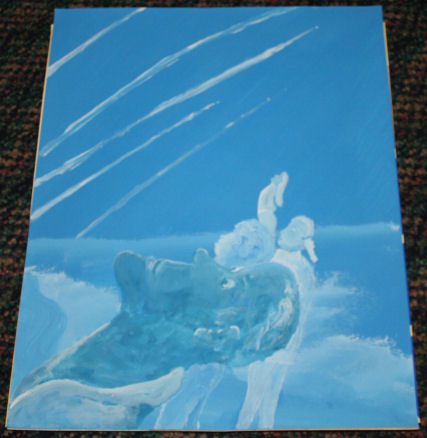
It seems clear the last superpower cannot even subdue a small country like Vietnam or Iraq for any length of time, or to their ends of profit or proselytizing. The advent of nationless liberation armies is all the more telling. Humans have thus then, come to a better place for their adequate defense against all armies, especially the armies of bureaucracies, but, the question remains, can they continue to defend themselves from what are now obviously near-immortal bureaucracies, those great, insatiable leviathans of ill-temperance, inconsistency, lack of economy and due diligence, those merciless tyrants that drive humans relentlessly back towards the title of their perfect freedom derived from the laws of nature. Bureaucracies, were they only beneficent.
Philosophy can stop the bureaucracies that threaten humans. It is a simple question of where the battle lines are drawn, now that the moral imperative lights the path toward truth.
124
It was Old Roy who taught me, we all die young. To observe one, as I did in Old Roy, who so obviously lived his whole life young is a wonderful thing. Life is indeed wonderful. Cherish it.
I am reminded here of Twain's description in Following the Equator of man's greatest visual achievement, the Taj Mahal, and by his critical comparison of it to nature's, the ice storm. You must read it, for it tells you how wonderful life is, like the Taj Mahal hit by an ice storm, but even better in the awesome and also the humorous sort of way bumping into a long forgotten friend in a strange city where no one speaks your language, and you are lost, and, you are thus found by the appearance of this acquaintance so fond.
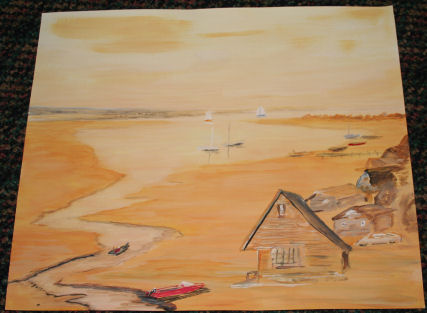
Were a war truly honorable, old men would rush to fight it, but they too are too young to die in this or that war when it is not honorable, and wars are never honorable. And, old men have lived long enough and seen enough wars to know it. That is what young men are so deceived about as they rush off to war. They fight not for country, fair Hellenistic maidens, or to preserve a way of life, but for old men who themselves are too young to die in such a war.
There are no cowards, just deceivers. Any war loving philosopher who disbelieves me here, is invited to come and slay me any way he so chooses. I cannot fear these cowards, but instead, being wrong and harming the future. Peace is but an illusion, and, honor is only drawn from wherein the battle lines are fought, so, I draw them thus and right here. Let all these Alexanders come who may. I exonerate and indemnify all you who may seek to commit the deed, for if I am wrong, and war is indeed made of the nobler essenses of human dignity, then I require the extinquishing remedy for my heinous impertinence. I praise you for your effort, for there can be no joy in killing either a philosopher or an artist as they are both at heart like children.
So we move again the battle lines causing all the warriors and their attendents on every side to pack up their encampments and move toward us again, and again, until there is no time for actual combat, bloody warfare or all these indecent casualties. We philosophers cannot await for mere armies, trebuchets, seige engines, cook's utensils, purple garlands and flags as we stride forward and beyond to set the next horizon of the battle for a path towards truth.
War is what propels ambitious politicians into prominence. The empirical scoundrels of political philosophy have therefore a vested interest in creating ever more of these war heroes. All these wars then, these wars from the Eighteenth Century onward, and a bit before, these wars should be termed the Empirical Wars for what they are. The only progress empiricism has to offer, war, modern war.
We can lay sure blame at the clay feet of philosophers who would make philosophy an empirical science. Be ever so careful philosophers, what you posit, for by endorsing empiricism as an infallible deity of truth, you send nations to bloody war with that surety of that false truth behind them.
"With God and empirical truth on our side," is the belief of these war mongers. No philosopher shall ever disprove the existence of any God, which is the ultimate in universal forms and ideas for which our minds have such an irresistable affinity, but, of empirical truth, we can be sure. Empirical truth is a dangerous fraud, and you can take that to the philosophic bank and earn interest upon it, or, you can continue to pay the interest upon that debt of ignorance in the lives and futures of all those who might follow us into this world, a world some philosophers have consciously, hideously, and willingly chosen to immorally devalue as "Nothingness", and, a place where we would have been better off not to have been born into at all. No. Your world is Everything-ness.
What immoral folly these fools expound! As much as I love my life, I would proudly lay my moral life in sacrifice to the obstruction of the meat grinding march of empiricism.
In an odd twist of the history of languages in some loose sense, many modern philosophers and most intellectuals now hold all religion to be pagan, but, is not all science pagan too? Are not these the terms of all our empirical wars being waged?
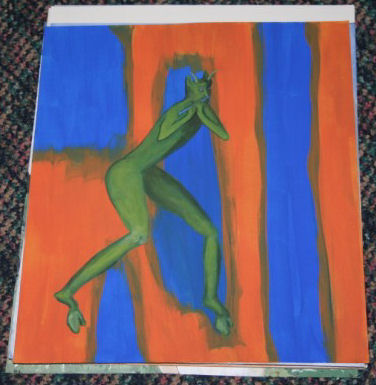
Here the path towards truth mercifully unfolds in some gleeming glory usually reserved for the gods, the bravest, the brightest, the most courageous or the most scientifically inclined, but we are none of them here. We are mere philosophers seeking some meager ground upon which to stand firmly.
In some respects we philosophers are the survivors of humankind's crushingly impudent rush to improve its condition in the world, a rush that has led to such disasterous consequences... As philosophers we come to the fore, we are in fact thrust to the fore, now to shyly ask, Have all the empiricists had enough of their foul progress yet?
Is not just being alive on this planet enough for these many insolent conquering Alexanders who seek immortality through their conquests, conversions, and a zeal for any of a myriad of choices of what they call progress?
If they should succeed in their conquest in destroying the world, who then would not choose, like dying soldiers on any battlefield, the alternative of living in any other time under any other circumstances? Here then, the only choice of free will possible, is the choice not to follow these Alexanders, or, any of them...
One of my sons said to me one day, "You can't disprove intelligent design." No. But if we consider that humans see design in everything, and moreso, are wholly incapable of knowing any god's omniscient intelligence, and even moreso, humans are incapable of even knowing the limit of their own intelligence, we surely cannot doubt our ability to prove intelligent design to be not even a remotely possible conceivable conjecture. And thus, as in every argument we can thus surround and circle our quarry. Noting this however and not pressing the issues, is the role of philosophy. The mouth is meant to yap, if not to be believed.
The very best philosophy has been able to produce is to step wholly into any given knowledge set, and then, show that it is illogical upon its own terms. We can build upon these ubiquitous philosophical successes, even showing logic itself is illogical, and a mere illusion. But, what does it leave us? We shall have to do better.
Peace marchers today protest war, but they will not succeed in their goal until empiricism is brought to heel by a stronger moral grounding provided by philosophy. Humans, should they exist long enough, humans will march to stop empiricism cold in its tracks. Those who doubt this will see the day when the worship of the empirical deities will be unforgiven.
Step out of the sunlight that warms my body. I fear not the pessimistic truths spoken by Schopenhauer nor the bizarre psychological incantations made by Sartre, so could I fear anyone? No, not even myself here. And, I am free to escape all these many philosophers' prisons and to open all those doors. You can judge me any way you will.
I never met a man, woman or child who could not do something I could not do. And, yes. I have always been aware of the two sides of that coin, but, were you?
For millennia humans have questioned, what differentiates humans from all the other animals? Intellect? Speech? Bipedalism? No. It is money. Humans require money to survive. No other animal is so encumbered. This fact also proves humans to be the most stupid of all creatures.
Why Money?
Humans, we buy and buy.
We jest about it, borrowing,
While we wonder why.
For gold coins, silver or copper,
Make not so much as we might need,
Some soup, or, supper proper.
Upon our spinning, miraculously and divined axis,
Government now prints and borrows ever more,
To lend support to the needy,
So they can pay their taxes.
For the rest whose luck has gone down a blessing,
Here's the newest economic scoop:
Our currency given to a greasy gravy,
Makes an excellently wholesome soup.
These sorts of aphorisms, and even poetry, have long been taken as philosophy, but it is not. This is merely the sort of thing philosophers take for humor. It is not philosophy at all.
In the realm of philosophy, there are few philosophic posits of merit. One is the cogito, Descartes', I think, therefore I am. Elsewhere we find observations made by philosophers. These are not philosophy per se, and rather are, as stated, just observations, like many of the aphorisms of Nietzsche as well as those of Twain.
Beyond philosophic posits and the observations of philosophers, there is a class of suppositions such as were made by Kant and the utilitarians, These are highly suspect of philosophic merit unless their intent is specifically stated as being to redefine problems with more clarity. All philosophic suppositions are speculation and have a history of being grossly mis-read, poorly stated, or so definition-changing the original unclarity is made even worse, more murky, troublesome and inclined to further fantastic interpretation. Logic is a mere supposition of philosophy. Reason is less. It is the failure of logic and reason that has led by reflection to all empirical discovery, as well as all human suffering and misery.
The final cloister of philosophy is philosophic humor, of which I have just made an attempt in defining what makes humans human beings, as "money".
Philosophic posits are only tenuously true, and then quite rarely even so. Everything else philosophers say, can only hint at what some particular nature of truth might be.
And, if it is all mere folly? He who resents his vanity knows not himself nor, loves his life enough. It is wholly a mistake to loathe the disgust others feel for our vanity, for it gives to them the pause to reflect better, even more favorably upon themselves, as upon us for our lack of fear and shame for pointing the path toward truth. I fully admit I could be, and, I likely am entirely wrong. So what? In a sense, we are all much like Robinson Crusoe when we are born into this world. So, give me a better anecdote, or, an analogy that paints such a painting.
125
Once doubt, that greatest light, is passed over empiricism, it is easy to see determinism is but a variant form of empiricism. The Universe was no more wound up than it will ever wind down, fools.
I once saw a coin drop off a table, and land squarely and as surefooted as a gazelle upon its edge. At the time I said, "That's not supposed to happen." but I was wrong. That's exactly like what happens all the time to those who believe too strongly in the empirical idea.
126
We as philosophers ask, why do some ideas get lost and others persist? This is a critical question at this juncture in the history of humankind, for we are fast losing a richer diversity of ideas, diversity which is the imaginitive catalyst of human survival and even existence.
The eugenics of ideas fostered by empiricism is stifling diversity, just as it is increasing the perceived and effected value of science, religion and government at the expense of all other traditional human knowledge personal and collective. Because of this eugenics of ideas fostered by empiricism all other knowledge is swollen and irritated in reaction to this foreign affair. These are the very knowledge organs of human beingness that empiricism crowds, infests and exaggerates. We all increasingly live in the empiricists' black and white world due to the stifling eugenic effect of empiricism upon our perception and beliefs.
For millennia philosophy has gone along with the eugenics of ideas. This is not the role of philosophy for philosophers know there is no absolute truth. So why then do philosophers persist in selectively tossing false knowledge, if no knowledge can be substantiated as absolute truth? The answer involves our natural affinity for universal forms and ideas. Humans can only know the detritus, the debris, for the absolute truth that remains forever unseen, unsavored and just out of reach. Our knowledge of absolute truth, the thing in itself, is but an impression we get from that which we know it is not, human knowledge, the oratory of great thinkers and the enchantment of blasphemous theorists.
Descartes gave us the cogito, but, forever but, we must remain suspect for we are like moths attracted to a candle's flame. We have heard of witches, and of the Trojan Horse. Without a firm footing in moral truth, something we can only obtain by conjecture, we are all imperiled like Prometheus by every belief in which we find the temptation to believe.
We can mark mirages, the opiates, corrupt judges, perverted priests, falsified data and false witnesses to say nothing of honest mistakes, and know especially that these things and worse are all admitted into the treasure of human truths. Looking away from them the philosopher's eye grows ever more keen, but again, he is just another fool's fool without a moral sense. Life is good. We can know that life is good despite endless moronic philosophic posits to the contrary. Yes, we can twist Satre's neck until he is just short of breaking, and he will then sing the praises of how good life is. Even a fool can be made to know this. Still our natural love of human knowledge carries with it the same dangers as the cogito, like a venereal disease founded in knowledge. A university degree in philosophy, or anything, is like that. Those thus certified are like street walkers with their sure venereal diseases. You must trust in your own wits for anything else only compounds your chances of grievous error.
The philosopher asks, can you not think beyond what you have been taught?
All of human beliefs are important to grasping at a chance to know the path toward the unknowable truth. This is no more certainly seen than in religion. A human can hold a devotion to a single religion, become a convert or hold to polytheism and know two or more gods, be an agnostic and thus deny the importance of knowing any religion, but, an atheist, to be a true atheist, one must know as many religions and gods as one comes across. As such, only an atheist can know God in anything more than a shallow sense. Everyone else is either biased or preferentially ignorant.
Recently two young men in white shirts and black pants came knocking at my door. I begged them to come in and sit down in my living room. They were Mormons performing their apostolitic duties.
As they introduced their much practiced outreach, I asked each of them if they could define "morality" for me, advising each that as a reward for their effort I would give them the moral imperative.
Neither of the two young men could define morality without using the words, "moral" or "good". I then thoroughly explained to them the moral imperative.
The more talkative of the two then said, "Well, you seem to have a prejudice against the destruction of the world, but ..."
At this point I dismissed both of them and asked them to leave, pointing out as I did, that what was just uttered in the name of apostolitic duty was more profane than anything in the Bible. I was later thankful, these young men, each young enough to be my grandson, were on a mission of spreading the word of the gospel instead of enforcing it.
Since before my lifetime began some Jewish people have raised the hope of and have begun a crusade to take back their "homeland" ascribed to them by their religious heritage in Palestine.
After the Second World War they succeeded in setting up in the colony of Israel, a beachhead of their assault. Here we are fifty-plus years later, and they are still defending their crusade's colony from those who defend against this religious-history-based colonialism. Israel's economic and cultural existence today is entirely separate from the region. Until and only if Israel starts acting like a nation with nation-state neighbors and not like the colony, will there be peace in the region.
Many Christians quite honestly believe this conflict will result in the end of the world, their predicitions of it often recurring, their forever fervently anticipated apocalypse.
The apocalypse will not come in my lifetime.
None of this has anything to do with philosophy except as the beliefs of others might uncomfortably bump up against the moral imperative, to do no harm to the earth that would detract from the experience of life for those who would follow us into it.
The point is, all human knowledge, however false merits inspection for the indicators this detritus gives a philosopher enabling him or her to point to a path toward truth.
As I read the scribed testaments of human knowledge there is so much I find and believe necessary for human understanding that I wish everyone could read as I read them, so many small facts, but the most important thing I have found is that all human knowledge is only a shadow of the truth none knows, and that those who claim to know are frauds.
We are not approaching any kind of sustainability via the empirical route. No. We, every day leave the sustainability of our human existence further and further in the past because of empirical ideas, methods, and, empirical thought's total lack of a strong moral grounding. No. None. Empiricism is a beast gnawing at our humanity. Soon enough humans will realize we simply cannot exist, cannot continue to exist in our world crowded by the man-made world-ending dangers inherent to empiricism.
There is nothing science and empiricism have given humanity it cannot live without. There are a great multitude of things science and empiricism have given humanity we cannot live with.
Philosophical paths toward truth are truly irresistible, philosophers, but it is not empirical any more than it is mystical.
Here, we can draw strength, if we just look at the history of startling discoveries. The path toward truth is humanly irresistible. And startling discoveries happen because of philosophy, too. Scientists claim they come out of the blue, like in a dream, or a flash of insight. They come from a loose underpinning of philosophy.
The world around us, it is not black and white. The world is in beautiful living color regardless of what scientists would have us believe. The empiricists will wring their hands at this, explaining, in the future, human beings will not refer to fire engine red, olive green or robin's egg blue, but instead to plus and minus wavelength frequencies of light in red at 558 nm, green at 530 nm, and, blue at 419 nm all made of the utterly gray scale of the electromagnetic spectrum because that is what science has determined color to be, an illusion fostered upon deficient human beings by the deficiency of the receptor cone mechanisms of the human eye.
But the salvation from this hideous future science and empiricism beckons all toward is the path towards a different truth than the false truth of empiricism. This path to sustainability leads toward absolute truth, truth that we know philosophers have for millennia been searching. Philosophers know well enough everything we can know, scientific or otherwise, it is all but an illusion, and little of it moreso than science itself, science that is threatening to destroy all humans individually, one at a time, and, collectively each of us all at once in every aspect and moment of our lives.
If eugenics is to be practiced upon ideas, let us save ourselves and the world for those who will follow us into the future by placing haltering eugenics upon the ideas of scientists!
As we each live out our lives solely based within our individual and quite disparate vessels of consciouness, separate entirely from the real world outside ourselves, and equally separate from every other vessel of consciouness, other humans and animals alike, each with their own personally constructed and painted vessel of their own world, their Universe, in their minds, it is indeed odd, hilariously audacious that the suspicious auhtorities of empirical thought have come to impress us so with their enchantment, their overbearing, the sheer gall that accompanies the fraud of their impressive knowledge sets upon which is based the common misconception of their authority, a claim of truth where none exists, none but some small correlation to accomplishments that have had little to do with humanity and our moral imperative, the sustainability of a future for all those will follow us, but now, into what? Into more of the fraud of these liars, or, into a sterile, poisoned, and wholly debased world? Fire? Prometheus? Pandora? We have heard this all before, but for these liars who now are equipped well to end it all, for all, our gift, a gift we deem worthy of leaving for the others who will come into this world, the product of our empirical deity? No.
Were empiricism a path toward absolute truth, and not just a path toward its own immoral truth, empiricism would have ended war, not made war the world-ending cloud that now readies to inundate and consume the futures of all those who now only might follow us into this world.
All these empiricisms are but a human addiction, human life destroying addictions.
That is the radical view. In reality we cannot turn back the clock. We can however make philosophy free of science, set it free again, turn away from all the many empirical Alexanders of empirical science, and, let the path toward truth philosophy provides, conquer the world anew to morally preserve it for all those who will follow us. Step out of the sunlight that warms all these bodies, ye many foul Alexanders. We will not follow you to your death and ours.
And, here we humans sit befuddled, in our vessels of consciouness, afraid of the last Empirical War, one that might end it all, or ruin it for much more than the majority. What is more important, humankind or science? Philosophy must address this question, and lay a path toward the absolute truth of it.
127
These determinist-predictionist philosophers with their heads deep in the sand of empiricism, if they are so clever they might have been able to write this book to their own great benefit, if it is the greatest philosophy book written in a thousand years. Philosophy is their area of expertise after all. But, could they write a book that denies determinism? Empiricism?
"Ah!" but they say, "How do we know this is the greatest book on philosophy written in all that time?" Predict it, you gutless wonders of philosophy! "Ah!" but they say, "It then is not the greatest book. It has not been well received by either the public or these many philosophers."
And then, why then can you determinists not predict that it will take a generation or two before philosophers, one, by one, discover this book, and what is said in it, for them then to come to terms with it, and eventually herald it as the greatest philosophy book ever written?
You predictionists might then have done very well to write this book for yourselves. No. Predictionists are at a loss even to predict whether or not this is the greatest book on philosophy ever written, even after having read it. The path towards truth denies them, as all others, the opportunity to see where it leads as we and they trod along in unison, some looking back, some forward and some even cursing the heavens for their burden.
Along the path toward truth philosophers seek, the greatness of a book on philosophy is a subjective measure. Yes, it requires a great knowledge, but moreso the skill of a painter, a composer or a story-teller, though because of the nature of philosophy, many more greatest painters, composers and story-tellers will come and go before we see as many great philosophers.
Furthermore, the subjective judge of philosophy is influenced by their personal disposition, their condition. There is no method to obtain the mantle of having written the greatest work on philosophy of all time, and greater will surely arrive in some later era, then again by giving humans, all humans, something more to consider, to consider like art, the art of living, the art of being human, the art of casting a sympathetic, even melancholic commiseration of real, ever so real doubt, and the art of providing the sweet hope of human dignity, worth, aspiration and a path towards foundational meaning.
Surely then, these predictionist-determinists, those who believe so steadfastly in fate, they could easily predict that this author who is wholly untrained by institutions of higher learning, the very embodiment of empiricism and empirical thought and its methods so corrupt, this lowly author then, you can surely predict he could not write such a book on philosophy that would ever be considered the greatest book on the topic of philosophy ever written? You can predict that!
Come now, all ye empiricist-determinist-predictionists who have each inherited the great mantle of those who once donned with the robes of majesty and predicted the eclipses of the sun and the moon, speak! This vile usurper, this heretic, this asocial miscreant threatens your creed and denies your holy book of empiricism! He is most dangerous indeed! Perhaps a heretic? Worthy of his own stout stake to match his pride? Perhaps you should give him his hemlock and burn his books?
After all, the path towards truth... It is irresistible, is it not?
All these empirical judges are corrupt. This is not knowledge they profess to expound. Out! Get out! You are all mere conjurers! Get out before you destroy the world!
Again the radical view, one we must embrace to understand, and then, back away from it to see it in its entirety. The radical view is within every human being.
128
We are all the sum total of all our experiences plus the latent experiences however remotely hinted at by our experiences. You can indeed observe a lot just by watching.
Here, I must introduce the thing in itself. The thing in itself, the world you can and cannot know, can only be known in small pieces, though by watching it for a lifetime, we can know its entirety, but not all at once. As Arthur Schopenhauer (1788-1860) discovered, the thing in itself is will. The world is will. It is our will against the will of a boulder we wish to move. It isn't that the boulder has will of its own accord so much as that is our sure perception of it. But, what matters more? Schopenhauer held there is no free will, but here, in small pieces again, he is wrong. I express my free will here, as did he on his page, if he knew not consciously what to do with it. Perhaps he is a bit like Berra in this respect, although I may be slandering Berra with the trifling comparison.

The amazing thing about philosophy's long fixation on the thing in itself, the very consciousness of the vessel we know as ourselves, our world, is the terminology, for the thing in itself is a derogatory phrase. It's just as if all these many philosophers were referring to our consciousness of our individual worlds including our dim understanding of the outer world we presume exists, the thing in itself, as a man-sized rat.
Such misanthrope surely disqualifies these many philosophers from the roster of moral humans, if not then, their near uniform concurrence that there is no free will and thus nothing moral, this certainly classifies them minimally as amoral scientific cretins, barbarians, but never as philosophers.
Memes, ideas that have legs and sometimes wings, are far more important to philosophy than the thing in itself. We cannot know the thing in itself except as it exists in our minds as us. Memes, on the other hand are the birth of new universal forms and ideas that paint all our worlds. Memes can point us towards a path that better leads toward truth. The thing in itself is only our infinitely vast illusion of what we can only hope it is.
129
Of Schopenhauer's stylized, exuberant and often inspiring fits of misanthrope that are expressed through his purely infinite pessimism, we should accept the moral challenge he none too gratuitously asserts, and not simply succumb at the base of the mountain he nobly distinguished, exhausted by its mere appearance before us, as did he. It is not a question of what the thing in itself is, but of what we might want to do with it.
It would not be better for us not to exist, as Schopenhauer asserts. We now have real moral philosophy to guide us, or, if you don't yet, you will soon enough. Keep reading, but let me apologize first, if I am indeed wrong. You, you be the doubtful judge of it.
130
Suffering is really simply a matter of degree, one to which we can apply the notion of how much we are enjoying life. Show me a human who is suffering, and, I will ask you, is it not possible to make him suffer more? And conversely, show me a human who enjoys life, could he not enjoy it more?
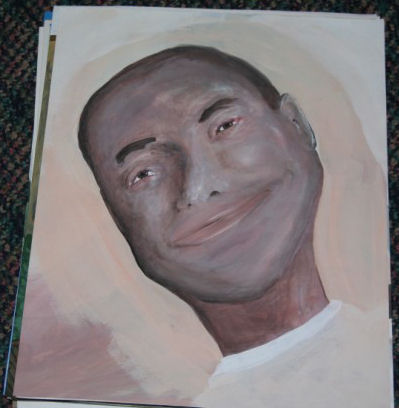
Mitch
The stupid idea that youth is wasted on the young is keenly matched by the idea that wealth is wasted on the rich. Both are but degrees of a measurement, like suffering. Smell the roses, and ask the insufferable Alexander of your own complaints to step out of the sunlight that warms your body.
Many of the universal forms and ideas to be meaningful to our minds are but passing infinities, like suffering and enjoying, youth and wealth, some smaller than others, some larger, but all are infinite slices to one degree or another. This is one limitation of our knowledge, we take wild missing infinite swings at reality to comprehend it. We are all like blind men in the dark, all of us with our own very long bamboo cane, bamboo canes so long though, it seems impossible to keep them from bumping into something in every direction we move them.
For this reason, no real philosopher worships at the alter or before the idols of any mere science. Such an attitude is a death sentence for philosophy. Step out of the sunlight that warms our bodies, Alexander. We come not to conquer by brute force, deceit, cunning or, the will of engineers and mere scientists. We come to take the world by the might of philosophy alone, that irresistible path towards absolute truth that can only be hinted at and then must be followed because we are inexorably drawn toward it. The analogy is our best sword, and it cuts through all, snuffing out ignorance like a candle in the night.
131
An analogy is at least a painting, while, a simple infinite slice, a mere simple swipe at truth given us by a so-called logical posit seems in most instances much too inferior an effort to suffice.
An analogy alone stands as the philosophers' best tool. Every philosopher has used analogies, but, since Kant described an analogy as fallible in his heretic effort to make a science of philosophy, the analogy has been held in disrepute. We all know Kant was a heretic for having made the attempt to reduce philosophy to a science. But, he should be better known for slandering and defaming the analogy.
If we look closely at an analogy, and, use care when we employ it, it seems obvious, self-evident if you will, that an analogy can suffocate ignorance. This is why the analogy is one of the most useful tools of philosophy.
The success of philosophy is undeniable. The continued advance of man-made dangers in the world has arisen because philosophy has been too successful when it was not philosophy.
132
The point is, philosophers must be careful when they posit. A philosophic posit should ideally be as simple as is possible. For the cogito, "am" would have been more than enough to state what Descartes thought he found. On that sour note, be sure, Socrates would have scowled straight through Descartes' then intensely quivering body, demanding, "You am, are you?", and, Diogenes would have laughed until tears came into his brighter eyes, incredulous of this man being capable of thinking... These criticisms apply to nearly all philosophy. But, we must nonetheless read it, for therein we can avert our own similarly devastating mistakes.
133
Every reference to the difference in languages is revealing as to how much we can know, and moreso, how much we cannot know. And, generations ago during prehistory we know humans understood much more of animal languages than we do today. Animals do talk. Animals have a consciousness we can comprehend to a certain degree, a degree which fades the more we lose touch with those animals. We are animals. And, diversity is representative of the depth of our knowledge.
But still we must as philosophers be brief, though being brief and simple by a posit isn't enough. A philosopher's posit should then be followed at great length to address all that he or she did not mean by any such posit, lest we should similarly tempt our own fate to achieve our own immoral immortality. You can stop praising the military achievements of Alexander now. And Hegel...
The problem of the misinterpretation of a philosophic posit arises because, like mathematics and language, the tools with which philosophers can make a posit, they are infinitely too large to fit the real world, and, at the same time, they are also infinitely too small to fit and fill by description even the smallest part of the real world.
Hence when we posit, we run minimally, a two-fold infinite probability of erring horribly, which is why we should always hold, that we are likely wrong, and, even if partly right, what we have gained, if anything, it is but a minor hint at a direction that might be only slightly better, if, and that's a big "if" for a philosopher, if what we have said is interpreted correctly, yet another infinity of unlikelihood.
Despite his inability to give us his much sought after grand unifying field theory, just perhaps the most important thing Einstein did give us was his posit, "The most incomprehensible thing about the world is that it is at all comprehensible." I have wondered many times, and then again too, did he possibly realize even a small part of the immensity of the task? As a philosopher, I have hoped he did.
Henri Bergson, (1859-1941) considered how vastly delusional is the human intellect. As philosophers, we must consider what Bergson has overlooked in the worthy challenge he places before all other philosophers.
Within Bergson's better efforts to substantiate free will, it seems clear he has not found the bottom of this problem when he states, "I hesitate between two possible actions X and Y, and go in turn from one to the other. ..." Here, Bergson perhaps makes a mistake common to his determinist foes. There simply is never an alternative course to be chosen between two actions where there are again, simply two choices. There is always an infinite choice and an infinite variety of course at every juncture. And, this is what substantiates free will, infinite choice at every infinite turn. Not even the concept of fate can conquer the infinite.
Here we reach our own juncture, for it is much more dubious, whether or not we as humans have the intellect to take advantage of any choice made of these infinite courses to affect an outcome we might desire. And it seems clear by our personal views and our view of history, few humans have the intellect necessary to affect a positive change to their environment, or more importantly, to the environment of the future. Free will is thus easier established than it is put to our good use.
134
Reading opens these doors, doors opened almost without remiss for a wasting of time, almost. You can observe a lot with your eyes shut tight too. Ask a blind man, a man blind since birth. His world is chock full of things you will have wholly over-looked. As I re-read that statement, it sounds condescending, and even too trite. Ask your cat if you have one. Cats talk with their tails. You might tell a blind man that. Or describe to him constellations of the stars in the night sky.
You see, the cogito is like that. It means one thing to me, and another to you. There is a correlation, but it is the diversity in apprehended meaning and knowledge, the enchantment, that gives the cogito value and direction, some good, some bad. If you don't remember, you should now as I describe it to you, the first time someone was speaking to a group within which you sat, and you didn't understand. You didn't understand simply because speech, especially when it is being given to a group, speech, like a physical gesture, often has its own meaning apart from the words that are being spoken.
There is a vast variation in the universal forms and ideas we each hold within our vessels of consciouness. An infinite variation.
Even "am" is a universal idea with many meanings.
It is doubtful, if you could see and experience the personal vessel of another's world, that you would recognize much. It is doubtful because every other's world-vessel is created separately, and literally from scratch, just as is your own. Yes, there are correlations, but these correlations too are individual creations. If this were not true, then humans would not have optimal adaptability, a prerequisite to survival at every level of inspection. You must learn your alphabet, and I mine, but they need not be either learned or apprehended the same way. They need only be somewhat functionally correlative. And, as we move over the globe, we indeed do find alphabets that are quite different from our own, even by our meager inspection of them.
The truly amazing thing about philosophy is, we see anything resembling progress, but here, the introduction of young readers to philosophy surely must be the exception. Here, whether my young readers go on to read more philosophy, or not, they have been given to the enchantment of the idea of philosophy, the apetite for it, their knowledge that is now their apetite, and while they would have and do paint their own paintings, of their own worlds, all by themselves, now, we can be sure they will look at them with a brighter light shone upon them. Step out of the sunlight that warms my body, Alexander.
135
The way different humans come to agreement, or, to a meeting of the minds, seems to be more the enchantment of a trance, not unlike amorous love, than it seems to be real cognizance, or, related directly to what we might believe is knowledge.
Even education is like this. I might adore or deeply respect my math teacher, and hence find the will to make the wholly abstract and false rules of mathematics fit into a personally cohesive whole within my world, the vessel of thought between my ears, but what I have thus learned surely is not cohesive or whole for anyone but me. It cannot be.
This too is lucky and necessary for human survival. Our worlds are unique, unique and varied to the collective advantage of the whole.
We all accept illusion because all we know is illusion, even if correlative to the real world, and, to the worlds of others similarly experiencing their own illusions. And then too, even our collective human knowledge is like a wide net sifting the immense ocean of truth beneath our small crafts.
What one person observes by watching has a manifold infinite probability of not being what anyone else observes by watching. Of more than 3000 present at the Texas tug-o-war, did anyone come close to seeing the reality of the situation with their observation?
All indictments against meaning based upon allegations of tautology then also seem to dissolve in this light. Oh, Berra... What did you know that so few others can only barely comprehend? They are instead enchanted by the false negation so often attributed to the test of tautology. They throw out the baby with the bathwater in this respect.

But you say, if tautologies are not meaningless, then what can be knowledge?
Enchantment, enchantment, enchantment! Enchantment leading towards the motivation of the will to find a path toward truth.
This is why as philosophers we seek a path to run down toward truth all our lives. It is not slipping on the ice or falling that hurts half so much as hitting the ground. So as we run, and while we run, we have knowledge. If we fall down, we know to get back up. Even our own knowledge does not stand still.
So then, what does logic mean? It means from within my own vessel, my world, I have either concluded alone, or better, in concert with another, that I have, or we have, found a proof of our separate illusions. We slap each other on the back and rejoice! But! Did not humans do the same thousands of years ago when they decided, Nothing can come from nothing? Noting this, you may yet awake from your dream.
Truth is found as a path, a path that never varies from doubt, and, when there is danger, and there is always danger, we hesitate to doubt yet again. In any sense, no one can help but make a mistake, but! Mistakes are the artists' tools and building blocks. Artists all make of their innumerable mistakes great works of art. So, logic then is the artistry, the enchantment of the artistry of making the most of our mistakes.
In this light, we see why critics are, though troublesome, even meddlesome, critics are invaluable. It is especially important we accept criticism after we have entered an unjust war, or, executed an innocent man, lest we do it again and again.
Philosophers, do not despair! It is this rich and constantly moving diversity of mistakes that is the beauty of the great gift of life, our vessels of consciousness each holding a different story, each told in a different manner in a world apart from our own that we must expect is real and not a dream at all. And, whether we speak the same language or not, none of us holds the same meaning to even a simple word like "am". Indeed, in some languages there is no equivalent word, "am", and, in other languages there are twenty words, each describing a different "am", and, literally all words are like that.
136
Diversity is the strength of the worlds of human beings, the rich diversity of varying consciousness, varying and distinct consciousnesses, each to a greater or lesser degree given to us by our surroundings and our apprehension of our own universal forms and ideas, that are taken from sensory data, and are begotten whole in our minds only as universal forms and ideas. Limited as it may be, our apprehension of the universal forms and ideas of others, such as the comprehension of all ideas, right or wrong, all of it again is passed through the he-goat's sieve and is once again given into universal forms and ideas, recast, repainted, re-sung, rebuilt, again anew, ready for our own opportunity, our chance! We should say upon the receipt of every new idea, Welcome to my home, to my world.
Breathe deep. Smell the air. Listen to the sounds. Feel your body. Taste it all and see what you can. You can observe a lot if nothing bothers you, eh Diogenes? What's that you say? You're puzzled? Oh. Well. That is the natural state that lets you know you are a philosopher. Preserve it. Cherish it always. It is confusion that gives rise to a search for the path towards absolute truth. All those loose ends are there for you to grab onto should you stumble with desire, dizzy with confusion or tire in route.
As philosophers, we do not practice eugenics upon ideas. Eugenics is an idea that the human species can be bettered by selective breeding, which necessitates selective sterilization, as in domesticated animals.
The problems with eugenics schemes are quite obvious. Who decides what is better? And, are we not limiting precious diversity? These same problems arise when we apply the eugenics scheme to ideas. Eugenics has been a non-starter for the science of the human genome, though there are still some who advocate it. The same principles of eugenics have been vigorously applied to ideas by empirical science, like the political science for hundreds, if not thousands, of years. The result has been disastrous. It must be abandoned by philosophers.
Scientists are all far out upon a limb where at any point they might fall broken branch in hand. Of the two riders approaching, one is our old friend philosophy. The other is accompanied by a hungrily grimaced look afixed to his horrid face. Philosophers must remain detached from the dangerous gambles of science, so if or, when the aforetold calamity of science happens again, the philosophers can pick up the pieces, or, warn of it before the rope breaks? Yes, I know, Who asked you for your opinion? Well, I did. I asked you your cherished opinion by writing this book. Be a philosopher. Speak. And, write down what you discover.
But Nietzsche put the restraint we all feel well when he said, "Every virtue has its privileges; for example, that of bringing to a condemned man's stake its own little bundle of wood."
There is wisdom in the aged, for they care not to fear to speak. They make no fewer mistakes, they simply express themselves more often.
137
I ask here that we not attempt to rewrite history, but to read it for what it tells us. The history of philosophy relates many stories of how many would-be philosophers became undone, having once heard the tale of absolute truth and, thinking they'd found it, they've repeatedly lost their way. Find it again by seeking the path towards truth. This is easy for philosophy and philosophers. Simply apply doubt and, then step back as the wonders of real philosophy again unfold.
To be great philosophers, you must read all the philosophy you can get your hands upon, but moreso, you must know what others who do not write know. From nonsense and nescience is where the better judgement of philosophers arise, anew, and in contrast, cleansing of all the errors that have surely been committed in the past, my present, all that rules us and our worries today. The diverse depth of material there is inexhaustively precious. And, it is best mined with doubt. Doubt me!
History generally tells us, historians are enamored with the vicarious thrill they get reliving the blood and gore intrinsic to conquest made by brute force. Historians seem incapable of relating or comprehending the folly of it all the way Diogenes knew it. Step out of the sunlight that warms my body, Alexander, for there I believe is the best path towards absolute truth.
Historians are not philosophers. Historians seek to tell us what and how things happened. This is a very tall order to fill, one mostly filled with tall tales and incredible na�vet�. History books that are one-hundred years old or older read wonderfully well for their candor, and, for their removal from our own ways of thinking about history.
138
And as for the being and the anti-being of these existentialist psychologists, any real philosopher knows, a human's world is wholly his own creation, and whether suffering or rejoicing in it, this world is one made by the instantaneous-processing of sensory data into universal forms and ideas, into which sensory data must be first made, to be known at all. The being is the ad hoc holder of this pre-processed information that has been transformed into universal forms and ideas before and thus so it can be known. The being, the consciousness we are is the judge of the reliability of it all, and while, like every judge, the being-judge is corrupt, we have hence discovered a use and a need for philosophy to lead us to a path towards absolute truth.
The effort required to overcome our once-removal from the real world is not slight-of-hand transcendent, it is not existentialist, it is not cosmic will, mystical, the noumenal self, or sufficient reason, it is not some enlightened consciousness, pre-established harmony, or, an exploration of the so-called subconsciousness, for there is no necessary knowledge, and principles of sufficient reason play no part in our efforts here, for these methods all are deceitful having come from within the minds of those who would make of philosophy either a science or some mystical self-hypnosis. Of the few things that are really self-evident, knowing the effort is philosophic, and that a well grounded philosophy leads to the path toward truth, is better than simply guessing why life is so like the first cream of spring when the cows are in the pasture upon fresh forage. It is part of the landscape, and not, a discovery of any mysteriously unique rational structures of the mind.
The temptation to succumb to the temptations of science and mysticism, the temptation for a philosopher to become a liar of theory, or the yogi of reincarnation for the prestige of a false self-assurance, as when a human is right - he knows it, the temptation of seating one's self on the throne meant for the best liar, the best liar to date, or the throne of the most enlightened mystic for philosophers, that temptation is grave, and, real philosophers know it is only a temporal truth, fleeting, and nothing like what philosophers seek the path towards.
Do not succumb to this temptation, for there we actually harm by misleading humanity.
139
Philosophers today must be philosophers. Oh, it's okay to dabble in science, and even to seek some small entertainment in mysticism, but it's not alright to call it philosophy. Philosophy is, and only philosophy can be philosophy. Only philosophy speaks for the future of humankind.
Mysticism is currently a harmless enough entertainment.
The very first thing however, philosophers must do prior to dabbling in science is to ascertain the effects different knowledge sets and the pursuit of these knowledge sets produce upon humankind.
No empirical knowledge set has a firm hold on absolute truth in the absolute sense that is represented by human reason. Here, in human reason, we find philosophy, even without empiricism, is wholly capable of defining what might turn events, or cause catastrophe, catastrophe due to empiricism, or, those due to human nature.
There is a proper philosophic method to define and engage the currently unstable and threatening preeminence of the knowledge sets developed by empiricism. That method can only defined by doubt, severe doubt about the sure application of the meaning and importance of human nature as it rubs up against the depths of these powerful, too powerful, empirical knowledge sets; human nature, that which expresses ever more alarm and anger about the calamitous overshoots of the empirical sciences; human nature, which is going to be the reckoning force of philosophy's success. Human nature is inherently non-empirical.
To determine whether or not science is providing any feasible path toward truth, one must also look at the causes and effects of the sciences in human terms, moral human terms. And, clearly empiricism, all sciences, physical, psychological, social and political, all sciences are like addictive drugs in their appeal, fanatical engagement, and all too often, also, in the resulting devastating effect each has upon humankind.
Philosophy's role here should be to temper and ameliorate the certain reaction against the tyranny of empiricism that will soon enough result as empirical failures gain more and more in infamy. Empiricism in some form might remain useful in the future, if empiricism is brought under control by philosophy, and, properly scaled back to where it no longer is a threat to humanity's future.
Philosophy's role to provide a sustainable path toward truth requires philosophers to assess well, and, expose thoroughly the false paths that are invariably the end result of the long enchantment with empirical methodologies that have occurred since the historical period known as The Enlightenment.
In the measure of progress too often taken, like a pulse, heralded and decried, scientific invention is nothing compared to the paramount moral importance of humankind's continued existence for all those who will follow us into our future.
My efforts here in this book have intentionally not attempted to create for any reader a complete system of philosophy, but rather to give a definition to philosophy. Even these defining characteristics of this book have been left intentionallly vague, a simple paring by suggesting what philosophy is not.
It is my own conviction that the systems and definitions made by philosophers are wholly anti-philosophic, though I only make this assertion as an historically supported guide post for other philosophers. Still, this anti-philosophy is more likely to provide a reason for overstated, over-believed and dangerous divisions among humankind than it is likely to provide a direction pointing toward any path to absolute truth.
The true test of any philosophy should be, Does it lead us to a path toward truth, absolute truth, and an absolute truth for human beings? In an age befouled by the empirical scourge upon humanity, defining that truth worth seeking is more than half the problem, however. Many humans by their euphoric addiction to the products of science still believe empiricism is a cornucopia, even as the evidence points increasingly toward a different end, and a far different moniker. We shall see.
The path towards truth requires us to recognize we are human beings, and, we are not a yeast culture growing in some temporarily resplendent but finite petri dish. Through philosophy, and very much less so science, very much less so, we have the capacity to infinitely extend and improve the possibilities of human existence for all those who might follow us in their own vessels of consciousness into this wonderful world.
No. Civilization does not advance. Is it an advance to wager all human life by taking these great empirical gambles? Civilization retreats, if it is civilized at all. If it is not civilized, it will sooner or later toss us all, and all our progeny over a cliff.
And what is philosophically remarkable about all of this? That it is note worthy, empirical thought is not responsible for leading us to this path towards truth. It instead is an intuition, from the gut... We now somehow instinctively know, we have been on the empirical path too long, and that, either a tiger could be sneeking up behind us, or, the edge we instinctively fear is coming in the mist of our finite existence must be nearing soon.
It was philosophy that led us here. And philosophy will lead us back, and away from the precipice to again, where we have been before.
So, then... As philosophers, make a list of everything in this world that you would like to get rid of because it endangers the world. Make as long a list as possible.
Now take your list and check off every thing that empirical science has created, or that science has made worse. (Include the political science in this quest.)
Now, take your remaining list, if you still have a list, and apply to it the question, can philosophy resolve the rest?
So now then. Let us also make a list of things empiricism has made for us that we find to be beneficial, a real comfort, and what does not adversely affect other humans in any of its manifestations, or, any of its permutations. Here the question is, have these Alexanders of empiricism given us the promised progress that drives this modality of human understanding?
As we have seen, if these is nothing there, the consequences are a grave death warrant the empirical credo.
Raising such questions is clearly the role of philosophy, to judge the efficacy of this and any modality of the human endeavor. Philosophy rules all, and, its judgement is enforced by the irresistable nature of philosophy, so, be ever so careful before you send us all back into what was previously termed the Dark Ages, then by empiricists of the Enlightenment.
Of course ferreting out the positives and the negatives of empiricism is no simple task to be accomplished in an evening, a day, a week, a year or even in an era, but, it is clearly the task before us now.
This is a question of utmost importance and, a question in which educators should be thoroughly immersed, for it will dictate what is to be taught to the young. There simply is no point in teaching that which harms humanity by its application. There simply is no measure of esteem or profit that outweighs the import of the well being of human existence and everything that otherwise ensures that continued existence.
We need only look at history to disprove the common notions, that 1) Those who know better than I have things well enough in control, 2) There is nothing that can be done anyway, and, 3) the apocalypse is at hand, and, we'll just have to let God sort things out. Each of these widely held conjectures is absurd, preposterous and quite morally bankrupt.
What do the results of our query here mean?
For one thing, it means you can observe a lot of things just by watching, something philosophers have refused to do for a thousand years because, seeking their own science, philosophers have thought a tautology, the repetition of an idea in different words, simply had no meaning. No meaning? What are and were they thinking?
Every writer knows, a tautology is yet another opportunity for the reader to more fully comprehend the intended meaning of the words written. Every poet knows a tautology is yet another opportunity for the reader to comprehend a meaning intended that words cannot express. And, every philospher knows words cannot express absolute truth, so we must seek that which cannot be expressed.
There were many who were wrong in seeking to make a science of philosophy, and they were just as wrong to think that the idea of a tautology was a useful eugenic exclusionary tool. Occam's razor here proved too simple an explanation of a very complex world.
No! The empiricists have not ended human war. They have made it worse. The paintings in the minds of the empiricists seem to require war. They seem by all appearances to have relished in war a means to showcase their empirical triumphs.
For a time the empiricists heralded their greatest destructive triumphs as the means to end war. This then was aptly termed mutually assured destruction. Here though, empirical policy planners under estimated human nature, as the planners of each wrongly assured country now plans again, finding there are those who would use these weapons against them, and indeed, these same empiricists themselves now contemplate using these weapons to defend themselves. Such is empirical truth.
It is as if the empiricists explored black magic or witchcraft to some false end of bettering the human condition, only to find instead they have further imperiled it.
All empirical thought and exploration is like this, and, despite the promises sought, those of a bettering human condition, we all have inherited from them an ever worsening and more perilous condition.
The question today isn't, shall we allow stem cell research, but rather whether we should allow medical research, indeed, even whether or not we should allow any scientific research. This question is coming.
Plenty of Americans have returned to the home where they grew up, and a lesser number of Americans have stayed put in the towns where they grew up. I ask you, what has science done for these places? Is life better today than it was thirty years ago? This is why this question is coming. It is growing increasingly apparent, science is the dog that bit us, not the cure for what ails us today.
So, Ye empiricists! Have you learned the lesson to be drawn from Aristotle yet? Revisiting the past, as we re-read Aristotle we cannot help but be struck by what he did not know, especially what he wrongly assumed, and we must measure the same of ourselves against these many things that we do not know, what we must have wrongly assumed, and especially as these follies of human reason must be infinite, just as they were for Aristotle. And trust well all Ye knaves of philosophy, Aristotle knew some things we cannot know, things even that we will never know.
First, Aristotle spoke and wrote fluent Greek, the ancient Greek of his day. All his verbalized thought was in that language. His few remaining writings are now the only remaining means by which we have to know his meaning about his scribed thoughts. Yes. We can read between the lines he wrote, or the translations of them, but are these his, or are they our thoughts? Is Aristotle what he meant, or is he what we take him to mean? The latter. But, Aristotle knew something, didn't he? And, much more importantly, the background of his tapestry, all those around him who also knew things we cannot know, those for whom Aristotle relied upon for his very words to have the meanings he intended.
Thus we can distinguish between what Aristotle knew, and what he did not know, or, at least we can as we perceive him. But Aristotle also lived in an ancient world that entirely encompassed his being. His own vessel of consciousness, the painting he painted within his fine mind, his time was quite different from our own, but, quite alike too, as we can know what we know and not what we don't know, just as Aristotle may have seen his knowledge. Given this given, we struggle to comprehend Aristotle apart from what we make him to mean. Rest assured, Aristotle seeing today what we have made of him, in our surroundings, in our culture, in our time, he would marvel, and likely be appalled.
Here, the sum of our similarities is the difference between what we know and don't know. This sum is the can't know.
We can surmise some of what Aristotle can't know. And Aristotle, were he alive, could surmise some of what we can't know. But, just as Aristotle, if alive, could surmise some of what we can't know. And, just as Aristotle, again, if alive, could not surmise all we can't know, neither could we or he know all of what neither Aristotle nor we can't know. The empiricists have failed here to reckon latter, to fathom the depths of what we and Aristotle can't know. This can't know is infinite beyond any redemption, for we do not even know the right questions to ask. All we can do is know there is a tiger lurking in the woods behind us on our trail.
Like us as for Aristotle, the larger realm remains for the can't know, what none of us can know. It is the greatest part of the thing in itself
Aristotle said we cannot know what is unknowable. We cannot. We can however measure it in innumerable ways, ways that philosophers must take into account if we are to uncover paths toward truth.
Now, of these things we know that we can surmise Aristotle could not know, we could call these then, species of the once unknowable things, things that have been or even may later come to be known. There still remains the far larger category, a genera of things that neither Aristotle could know, now can we know. Within this genera, we can rest quite sure there are infinite species of things neither we nor Aristotle can know. Agani this is the greater part of the thing in itself
What is remarkable about Aristotle is his method, and not the tally of the things he knew. In fact, most of the things Aristotle knew we now know were entirely wrong. Thus, we should similarly assume the same about our own tally sheet, but, this is not to say we should abandon Aristotle's methods, when in fact we should expand upon them. Nor should we look at Aristotle's tally, wrong as it was, and believe that he made methodical mistakes to come to his conclusions about the nature of things. It is the knowledge that methodologies are going to fail us that we should know. Despite his reliance upon his methodologies, Aristotle knew this, that methodology fails us, just as has every philosopher and empiricist since.
Even if at the base of all knowledge is wrong knowledge, all knowledge is an idea that appeals sensibly. Given this as our philosophic start requires an approach demanding our consideration of ideas to the exclusion of none, right or wrong knowledge, as we assume each either to be.
Let us assume and examine some wrong knowledge; witches exist. Witches are those who cause immoral things to happen. Our culture has given us the impression witches accomplish their immoral tasks by supernatural means. This, we might assume, is a clear error, as supernatural things do not exist. So what then are we left to assume about the deeds of witches? That immoral things occur as a result of their endeavors.
While we do not accuse Aristotle or his intellectual benefactors of practicing witchcraft within their metaphysical practice, as this too, we would assume, would be an error. We can point out, immoral results are the natural offspring of the application of scientific pursuits, even haphazard as scientific pursuit may be thought to be. Still, there should be little wonder about the possibility, that accusations of witchcraft can arise in reaction against the immoral results of the application of science, the immoral results of scientific pursuit.
The path toward truth is neither to be found in acceptance of the consequent immoral results of science as inevitable, nor in belief in the accusations of witchcraft that continue to arise. Both the scientists and the witch-hunters need to pull down their banners and step out of the sunlight, for the seductiveness of the ideas that make their appeals to our reason leads to global suicide.
So. Let us examine some of our conclusions, assuming they are either right or wrong. We wrongly assume there are witches. We ruled out supernatural as a means for accomplishing witchcraft. We noted immoral deeds are attributed to witches, and compared the purported immoral deeds of witches to the immoral results given us by the application of knowledge coming from scientific pursuit.
None of the immediately aforementioned is science. None of it is philosophy. From this point forward is philosophy. The only concrete summation about which we can make a logical assertion based on our discussion here founded in the wrong knowledge of the existence of witches is: It is within human nature to compare science and witchcraft when it is proposed as a proposition by an individual.
It should be noted this neither proves the tenets of witchcraft, science or those of human nature.
This is metaphysics, a method that scientists still agree is viable as a means to seeking questions to ask within a scientific framework. Scientists now universally agree, such a process a metaphysics can provide no proof.
Philosophers however, strongly suspect only questions can be asked with any certainness, and all proofs, these assertions, because of universally wrong basic assumptions... All the scientists' proofs are thus all too metaphysical. The differences between the scientific and the metaphysical are where the wrong assumptions lay, leaving little difference of merit.
Without basic assumptions both the metaphysicians as well as the scientists vehemently state, there can be no metaphysical or scientific progress. The philosopher knows, there is no progress. There is only some change and the surer passage of time, the latter being more critical to the existence of humans.
Here, in human reason, it is all too easy to make mistakes. In fact, it is impossible not to make mistakes.
This does not mean there is nothing we can know, and certainly there is plenty to do. It means instead, we know a great deal, but, like Aristotle, much of what we will come to know will be wrong. This is the nature of things as we try to comprehend them by taking on our cursory assumptions, that which we commonly think of as knowledge.
In this light, we should mark well the many species and the genera of false knowledge humans have posited thoughout the ages. Here, we have more chance of philosophic success simply because, if not all, most knowledge is quite false.
We can arrive at this conclusion in more ways than one, and one in particular that may be more to the liking of the empiricists, thus; it can be easily seen that there are possible infinitely more false posits of knowledge than there can be true posits of knowledge. As such, there must be something to be learned from these false posits.
Here, an example may be due. Aristotle knew the center of the Universe to be the earth. He knew this despite Pythagorean posits about the sun being at the center, these backed up by some very good arguments and observations. Astronomers now know that neither is the case, i.e., neither the earth nor the sun are the center of the Universe, the earth because it revolves around the sun, and the sun, because it revolves around the center of the Milky Way, our galaxy. Each posit it seems is a species of false knowledge. The genera of false knowledge to which each hypothesis belongs is not, as may be thought, that there is a center of the Universe, but instead, that we might know of it.
Cosmologists will explain this away stating, there is no center of the Universe, but they also still describe the Universe exactly as if there were a center.
It is enough to state succinctly, despite numerous postulates, we cannot know of the ultimate outcome of the center of the Universe question, to describe this genera of false knowledge. (This leaves open the possibility the center of the Universe could be discovered at some later date, perhaps inside the trunk of a taxi cab.)
Ultimately a surprising amount of knowledge belongs in the genera of false or at least dubious knowledge, for, regardless of how sure we are, and regardless of philosophic fame of the statements, we cannot know all men are mortal, and neither can we know Socrates was a man.
And of course we should not be surprised that Aristotle's posits are gibberish and gobbledygook. Ours generally can be no better, even if like Aristotle's they might be cogently enchanting. Such is all human reason, cogently enchanting.
This too is the plight of professors of philosophy who must teach logic to first year students of philosophy, all of whom sit mesmerized and failing to note their own failure so obvious to the professor, that to grasp logic is to know its vast shortcomings.
And, no. The empiricists cannot logically end war. The Greeks guided by Aristotle were famous for it, as were those of the Enlightenment who re-discovered Aristotle. When in his warrior years among the Babylonians, Alexander the Great was told of an oil that came from the ground and burned. He had a boy covered in the black tar and set afire. This man was as foul a barbarian as ever walked the earth until after his time. This is what Aristotle tutored.
War it seems is a common bi-product of philosophic posits. It is just as if when we know enough, it is a good enough reason to go to war.
So, obviously, we do not know enough, yet. Nor, it is all too apparent, will we ever know enough because we cannot rest knowledge upon absolutely true posits.
And just perhaps philosophy itself is the great poison of humans. Just as the State in my lifetime has assumed the role of bookie, the odds layer, and the gambling casino, it likewise at one time assumed much of the role of education, now, as it has always been argued, teaching youth things perhaps that should be left unknown. Who knows? Who knows the dangers of knowledge?
I know this, humans, were they placed upon another planet, young, and devoid of even language, they would never arrive here where we are today. Our cultures are mere aberations of normalcy. Those transplants might evolve into simian tree-dwellers with full lives and happiness that seems to escape so many here in our world today. We are our culture and not our genetics. Philosophy arose to combat and vilify culture. As Diogenes maintained, habits and morals are but accepted conventions for the most part.
Is it all but witchcraft? Likely it is so. Does a honey bee have free will enough to change the course of his tribe? his nation? his world?
I read recently in Leading Facts of American History by D.H. Montgomery, Ginn & Company, 1901, The conclusion of eminent scientists is that no part of the globe is better suited to the requirements of one of the master races of the world than the United States, and such statesmen as Lincoln and Gladstone have declared their belief that this country has a natural base for the greatest continuous empire ever established by man.
Philosophy is not about empires. Philosophy is about life and the irresistable path toward truth.
The empires of Philip and Alexander and dozens more have all come and gone. The scientific truths of Aristotle and all those who followed him have all been shown to be illusions. Hundred of millions have died in the empirical wars, slaughtered in the name of progress. Whole peoples have been exterminated. The world has been empirically plundered and wasted while we all wait to see if we are the next to go.
The path toward truth, what really counts important, has been placed before us by Diogenes. His words alone have stood the test of time. Step out of the sunlight that warms my body, Alexander.
At one time not so long ago in the Mediterranean world millions of people believed for hundreds, if not thousands of years the future could be told by reading sheep's livers. The "science" was called heptoscopy. The importance of this fact is that these people were thinking about the future. The vast multiplicity of the mind coupled with culture requires input to keep itself primed, active and engaged with the world, the thing in itself that none of us can truly know. It seems not to matter where the input comes from, whether from sheep's livers or the Nightly News, but that such input is poured in through the funnel of our senses so that our brains may paint it upon the walls of our conscious selves. From there we maw it over, assay the painting we have created, and then proceed to enchant each other with what we have found through our imperfect languages. The process of enchantment is also so tenuous in its relation to the thing in itself and indeed our own paintings in our consciouness, an infinite variety arises among us from which actions or inaction may be derived through reason, which is a belief in truth quite literally akin to reading sheep's livers.
Of course here, true to my own convictions I must add, there is a certain likelihood, due to my own lack of understanding, education, lack there of or, too much wrong-headedness in it, prejudice, or simple predisposition, or a host of other here undefined shortcomings I might have, I could be wholly wrong. I might even be the anti-philosopher I detest who writes for these young readers whom I have sought to introduce to philosophy.
And again with trumpets heralding from on high comes Berra, again, and again, giving it to us square in the face like some divine cream pie, "When you come to a fork in the road, take it."
Oh Diogenes! Oh, Socrates! Oh Zeno! Berra has made you all smile again! What's that you say? That is a path we can take towards absolute truth? Yes. Yes, I believe you are right. It is a good thing humorous cream rises to the top to make us all smile, or, we might all have been hopelessly lost long ago.
I leave the rest to you, my young readers here.
Congratulations! You are now a philosopher of the first rank. Welcome aboard.
140
As I know time passes much more quickly for an old man than it does for the young, I have to question if I have gone on at too great a length here for young readers, and thus, that I must quickly bring this work to a close, out of respect for a sure difference in the nature of time I presume for myself and for my young readers.
I don�t think I�ve given any youthful reader too much to consider, because even though I am fifty-six years old, I am still just a child like most of my readers. You should also know, those learned academics I spoke of in the introduction of this book, those who might venture to read this book to see how it is I have treated the subject of philosophy for young readers, they too are children, young readers just like each of you. They read here, and they too, just like you, they met Diogenes, yes, Diogenes and they met Alexander too.
Perhaps you�ll have to come back and read this book again when you get to be my age, and, then you�ll see what I mean when I say I am still a child like you.
One Philosopher�s Small Stone
Had I a stone upon which to write:
Oh! That I might yet sense all the world again,
A world through my senses, I thought I knew.
And as I reach out here, again, before I go,
Through all that it is all but impossible to know,
Guided by one human's frail reason and intuition,
And as much, more for my sure love of this life,
I posit here, so�
You need never doubt it. I too was once alive.
This is real truth. It is as true as any world.
And it is even better that you know
I had hoped in my time to know,
If it is as wonderful for you,
And that those few who knew,
Through your own delicious senses,
That your world is as wonderful too.
141
As philosophers you have not just an obligation to all around you, you have an obligation to all those who will follow you into this world as well. As to whether science or the science of politics have any bearing upon the path toward truth only philosophy can inform us, and here it would be wise to take a lesson from the meanderings of history. The path to absolute truth cannot be a straight line, or even one step simply following another. The path toward truth is a journey that leads here, there and sometimes into a complete about face, and back to from where we came.

In the beginning of this book I asked, what is philosophy? I asked this question of the reader. I have attempted to answer the question, most often by detailing for the reader what philosophy is not, and, as I have come full circle now to ask it again, I ask it now of young philosophers. I have not written the only book ever written about philosophy. But I have written a book that questions, what philosophy is.
What is philosophy?
I know. I know how important it is to give young readers a work such as this to introduce them to philosophy. I know how fortunate and opportune has been my path in this life that I should be given just such a chance to address these young readers. I have particularly cherished the great opportunity time has afforded me to expose the fraud of the deviant and abhorrent path we know as empiricism. Let the truer light of philosophy's doubt shine upon this near incorrigibly long nightmare, the pervasive knowledge sets of empiricisms that have surely enslaved and placed humankind upon its humbled haunches before the world-ending gallows.
This is an age of greatness. Though Diogenes would laugh this all off, mocking and howling how grand it's all always been, and noting for us, all ages are ages of greatness. It should be as well lived and as carefree for all of you too. Life is too precious to spend it otherwise.
That is the path toward truth in philosophy to which I now point. We should remember everything for as long as is possible, where philosophers of the past have led us as we retrace our steps, but have no doubt they have all taken us off the path toward absolute truth, for it seems in each, the vain desire to hold the real truth in their grasp has let it slip away from them and for all of us who fell under their spell, the very enchantment of their writings and elocution.
And yes, my young readers, philosophers all now, as I wrote this book I realized, I will be seen as a terrorist in the view of academic philosophers. I considered here, do I expose myself? Or, allow this discovery after a long study of what I have written, that I have justified terrorism here. Should it have been left to the academics, for which they could be commended? No. They are but fools and historians with a mean, average, bent. Let these academics lay idle on their sundecks like lizards wiling their fruitless time away.
Such a justification as I have offered thus far for terrorism is natural. The Mohammedans too studied Greek philosophy, the origin of all philosophy. The search for a path towards absolute truth proved irresistible to the Mohammedans too, though they, like the West drifted by the pollution of the idea in their own way. Perhaps their philosophers queried, How many Mohammedan fairies could fit on the head of a pin, or how many martyrs? It is irrelevant. It was no longer philosophy when they lost the philosophy to search for a path towards truth. And, after all is considered, Hegel gave some what they took as a justififation for two world wars, and many others including Nietzsche followed him there. Perhaps it was not their intent. Perhaps it was. It is not my purpose, or my intent here to justify any war.
To draw us all back together, to avoid war, to innoculate against terrorism and imperialism as well, I must add, yes, the terrorists as well as the imperialists have their justifications, but philosophy needs no bombs to affect change to the world. Neither does philosophy need high technology armaments, cruise missiles, laser guided munitions, bullet-proof vests, or video camera mounted helmets.
The justifications for war all lie in riling the mob, lately the nationalist mob, and, even the internationalist mob.
Philosophy conquers all by simply pointing to a path towards truth. Humans are more morally pliable than requires or demands war. We need but the sunlight that warms our bodies, Alexander.

Walmart
142
I write here to unleash the power, the explosive power, the incendiary power of philosophy. I have none of the restraints of academia to give me pause or caution, make me tepid in my approach, or force me to court favor. As I write I have nothing. I have nothing but the sunlight that warms my body. That is enough. I have nothing but a love and fond appreciation of a life nearing its end. I have nothing but a desire, the moral desire, to leave this world as good or better than I found it. My concern, my audience, my life now is dedicated not to myself, nor is it to you. It is dedicated to those unborn who are coming.
"In the mountains of truth you will never climb in vain: either you will get up higher today or, you will exercise your strength so as to be able to get up higher tomorrow." Nietzsche
There are things in this world that need to be obliterated, as well as illuminated to ensure a life worth entering in the future. I write to lead a new generation of philosophers away from where philosophy has found its decadent academic sundeck in the sunset of an era now over. Be philosophers. Cast your eyes farther than any other human has done hitherto. Obliterate and illuminate the ignorance. Neither Eastern nor Western philosophy has any hold on truth. There is only a path towards absolute truth. And you, if you are philosophers, you shall find it here, there and everywhere but especially in the precious vessel, that world, this is, that is your life, the greatest gift.
To those to whom you become advisers demand great sums from the rich, smaller sums from the less well to do, and nothing from those whom have not a farthing to spare, but give them all your philosophical advice. Join no hideously immortal bureaucracy, but command the world true and spend your fortunes wisely as did Carnegie in the end. Let small children have their childhood and there too for old men, give them theirs also, and, your life will be good like the sunrise all in red when you have been up all night walking the streets of your home town. Follow that path.
Now, as I began this text, I promised an introduction to philosophy that would not bias young readers. This I have accomplished and continue by stating, I may be wrong about anything and everything I have said here. In any introduction to philosophy the importance, the overarching importance of doubt as the philosophers' tool should be paramount. I have provided plenty of doubt and reasons therefore. I encourage my readers to doubt what I have written here. It is important to remain unconvinced. No. It is essential as philosophers you remain unconvinced for the definitive philosophy book has yet to be written. I am only capable of being a provocateur, and even if you cannot agree with me in any thought, know I wholly approve of your perseverance.
Doubt is the path towards the path towards absolute truth. It is not slipping on the ice, or falling that hurts half so much as hitting the ground. A failure to always doubt stretches like a rope until it breaks with sometimes terrible consequences. Reading philosophy without ameliorative doubt is not innocuous.
It is also important to give young readers of philosophy a strong and irreducible moral grounding. Until this work philosophy has had none. This is why I have railed so against the current state of philosophy.
143
Here, young readers, is the only moral imperative I give you.
Morality is that feeling, the feeling of obligation one develops as they with age come to know by the appreciation of their life, the gift that it is; that obligation to those who will follow us into this world; that they should enter a world at least as good and hopefully much better than that which we all entered, this is morality, the moral imperative. The ancient Greek philosophers would wholly agree with us here.
This is the one true moral theory sought by so many distinguished yet discouraged philosophers, philosophers who sought it for millennia in a science, empirically. It is not by empirical methods that the moral imperative has come to conquer the world, for it is infinitely more like truth than any mathematics, any science, or politics can be. The moral imperative so long sought has come to us by the philosophical method of doubt and re-doubt, and, it is proof of the supremacy of philosophy over all science.
Step out of the sunlight that warms my body, Alexander. Descartes has momentarily stopped thinking and being to behold it. Kant is weeping uncontrollably. Nietzsche's mouth is agape in siezure and awe. Sartre has run away, ashamed, his pants wet with urine. And Diogenes, he smiles again, after all these many years, his body warm again, his world, his painting of his world, his life's conscious vessel, again, he walks from out from behind the landscape in our own paintings, the paintings of all our own worlds. Again Diogenes lives to see philosophy conquer all. And again he asks,
Step out of the sunlight that warms my body, Alexander.
And Alexander? He with the stiffest of respect salutes Diogenes, again in the greatest admiration of his swift, spectacular, timeless and bloodless conquest.
All humanity, they cease to speak in tongues in their many maws that pause, hesitating, as the new moon again rises at the sunrise of this new day again, hesitant though, that it could be a danger, yet another oppression. All humans they raise their heads in unison, like deer in a field, startled. Is it an aberration? Or is it really there? Should we be ashamed, run and seek our safety?
No. This new moon rises at sunrise accompanied by the brighter sun that will warm all our bodies. It is but another glorious day, but more glorious, one that will be followed alike by many, many others, for many others too will know of the moral imperative like it has always been there, and it has. We just did not know it. We did not know, nor will we ever know just how good life is, for it is a path that can only be followed.
Be moral philosophers. You will find no path without a well-grounded moral sense.
Until now, morality has come to jus talionis, Latin for a right of retribution; that which is moral gave a right of retribution.
There can be no jus talionis for the destruction of the world, surely a moral wrong, and, the denying of it to all those who would otherwise follow us, even worse.
Indeed, when humans are murdered, jus talionis only happens for the living and not for the dead or their now impossible offspring.
Piggy-Back
Morality as it is without the moral imperative I have given you here, misses the mark entirely exactly because it provides for jus talionis, a right of retribution. There is no right of retribution. Justice is a fraud far worse than any false vanity.

Now. And, now, and only now, I can step into my painting, the painting of my world, I can step into it and escape, escape free, free to re-emerge anywhere in any other's world, their painting, as a philosopher whose marble bust is irrelevant, even superfluous to my simple and plain existence just as Alexander and Diogenes who both conquered their known worlds, one of his own mind, the other of all minds. I will have no consciousness of which I might be aware, but, I may be apprehended in the newer worlds by others. Let me be an inspiration to moral good for the love of life for which I had well enough of it, for my chance at existence, to leave this, a small note of thanks to the worlds of the future for as long as they exist.
And may they always be young in life in these real worlds into which others will paint their existences. Their vessels are indeed precious, as is yours, and, mine.
144
Now is your chance. Step into the warm sunlight that warms a body while you still have use for it. This is the challenge to you, my young readers, for you represent the whole human race of survivors, but... But take care if you posit some truth, for others will hear your words, or read them, and not know what it is that you meant, for no one can ever know exactly what another meant. Restrain yourself well. Bleed not the false truths espoused by these empirical theorists who seek the throne of their greatest and most convincing liar to date, for tomorrow will come, if we are lucky enough to live moral lives and preserve and sustain the future for those who might have the chance to follow us.
If there is anything philosophers have learned it is absolutely, absolutely nothing, absolutely nothing is apodictic, or incontestable. This is an illusion of a human that lives in a desert far and apart from any of the contentiousness that is life. No. Nothing is incontestable.
Like all real philosophers before us, we invite and entertain the queries of all comers, all these empirical pretenders, who come here to us, if they must, come to us carrying their colored banners held high. As they approach seeking affirmation of their immortality, as their armies march past us and as the armies of their foes march past us the other way, all with colored banners held high, we shall see, and perhaps only we shall see. We shall see if the same sunlight that warmed the body of Diogenes, if that same sunlight also shines upon all these mortal beings, all tutored by Aristotle, all these many Alexanders, these sons of the great Macedonian King, Philip who conquered the Greeks, each of them Alexanders who would conquered the known world. Come to us, if you must, Alexander.
We may be found on the ground like a dog warming our bodies in this warm sunlight, life, the same sunlight that warms every living being, awaiting all these great kings, awaiting them, to find us, if they will, if they must with their colored banners held high, armies all the while marching about to and fro. There is no urgency to our being found by them, these many Alexanders. They come before us to profess a knowing knowledge of absolute truth? Let them find us, then. We shall see what fools they might be today.
We shall see. We shall see even if, and when, they can find us. We shall wait for them, these Alexanders, all with their many accompaniments, their footmaidens and their generals, and their many clanging and cumbersome accoutrements of conspicuous consumption, their iron swords made for no other use than the slaying of humans, these great kings, these Macedonians. They can find us, if they feel they must, these sons of Philip of Macedonia, Philip who was himself, a great king. They come to profess a knowledge of absolute truth? We shall wait for them, here, for perhaps these great kings cannot even find us, then. But, let them come, all of them, anxious, and each with baited breath, seeking wise philosophers. Come to us as did Alexander the Great before the greater world of Diogenes of Sinope, the great philosopher who did not beckon Alexander's audience. Alexander came. And, Alexander left. We cannot know Alexander's immense awe. We can only sense it, for we have it within ourselves too.
The path to absolute truth is for us as it was for them. Take a deep breath, open your eyes wide, and if all seems well around you, enjoy it, for life is indeed wonderful. There may be armies, pestilence and deceit, and even insurrection to endure tomorrow, but for today, if all is well, then good. It then might be just a good day to live and to think, and just to be human beings, and philosophers. It might be a good day not to profess anything, but instead, to chirp like a bird, or to bark at a dog, or, to find a child to whom you can teach the silly ABCs.
Return to the home page
An Illustrated Philosophy Primer for Young Readers - The Grand Unifying Theory & The Theory of TimeFurther reading:
The Grand Unifying Theory & The Theory of TimeSome of my art at auction:
Art Auctions