
The Birth of Pups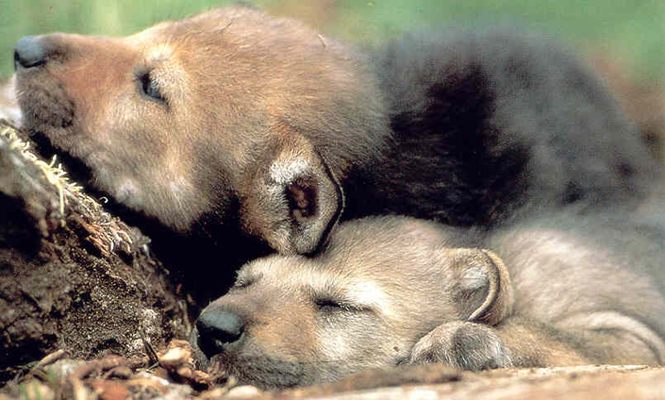
|
Cubs cannot maintain their body heat for their first three weeks of life, so their mother must stay with them in the den the whole time to keep them warm with her own body heat. This is why giving birth in a den tucked away from the elements is so important.
Having a mate is also essential for a nursing mother wolf. She cannot leave the den to hunt or her cubs may chill and die of hypothermia. So she is dependent for food on her mate and any other adult wolves in the pack. She stands little chance of raising her cubs alone should her mate die and there are no other pack helpers.
Wolves take great care of their cubs. Both parents share in the task of raising them.
And their adult offspring who are still with the pack, the cubs' brothers and sisters,
are devoted to
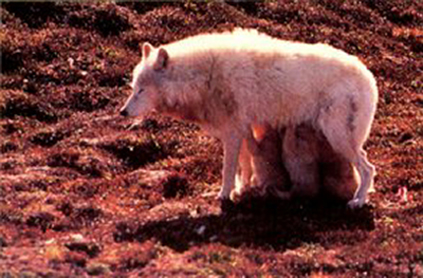 the cubs, taking as much care of them as their parents do. All the wolves
bring the cubs food from the hunt, play with them, guard them from danger and generally
tend to them. When the cubs grow up they may also help care for the next generation
their parents bear.
the cubs, taking as much care of them as their parents do. All the wolves
bring the cubs food from the hunt, play with them, guard them from danger and generally
tend to them. When the cubs grow up they may also help care for the next generation
their parents bear.
Wolf cubs reach full size within 12 months of birth or at most after 24 months. This is accomplished by increasing their birth weight, roughly half a kilogram (a pound), about 60 times over. But at birth they can only squeak and are born blind and deaf. After two weeks their eyes open and after three to four weeks they begin to hear and their milk teeth break through their gums. They are physically strong for their size and can crawl about and struggle with each other for the best teats to suckle. Their large eyes and short muzzle on a soft round furry body arouse in humans feelings of cuteness and of kindness towards them, and probably does in wolves too.
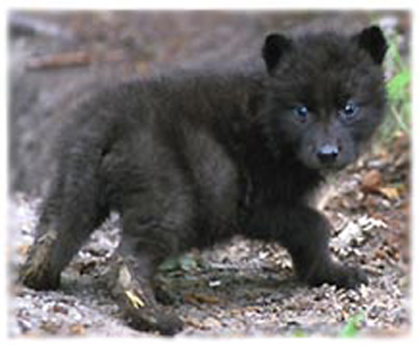
In the cubs' fourth week their mother begins to venture out of the den to get food for herself. At about this time the cubs emerge from the den and begin weaning on regurgitated food brought back by the pack's adults from their hunts. When the returning adults approach the den, the cubs rush at them excitedly expecting food. Cubs can get a second helping from food-bearing wolves if they eagerly pester them by licking the adults' mouths, as this stimulates regurgitation.
By five weeks of age, when the adults set off on a hunt, the cubs scurry along behind them a little way before eventually giving up and returning home. At eight to nine weeks of age the cubs are fully weaned and weigh about 7-10 kg (15-20 lbs) - the weight of a large portly domestic cat. Their ears, snouts and bodies stretch out as the cubs begin to lose their rounded looks and resemble the adults more. The cubs are now old enough to accompany the grown-ups, although they are not yet ready to take part in hunts. Finally the whole pack abandons the den for a rendezvous site.