Historical Interpretations of Indological Science, German Culture and Society, 1750-1914
A Two-Part Panel on August 11, 2001 for the
Second International Convention of Asia Scholars
Freie Universität, Berlin, August 9-12, 2001
Despite significant attempts over the years
by professional Indologists, South Asia specialists, and literary scholars,
a fully contextualized history of German Indology is still largely lacking.
Existing works on the subject are older, internal histories of the discipline
and are limited to addressing concerns contemporary with their creation.
Thus, they tend to ignore questions concerning the intellectual and cultural-political
context in which Indology as a science developed in the German states.
There are more historical studies available on British Indology than on
German Indology, even though historically German Indological production
in the form of travel accounts, grammars, lexicons, philosophical and philological
treatises, translations, commentaries, anthologies of Indian myths and
fables, and histories surpassed that of Great Britain—in fact, “certainly
surpassed all the rest of Europe and America combined” (Pollock, 1993).
While the lack of direct German colonial involvement
in India does not completely eliminate the relevance of Edward Said’s claims
in Orientalism (1978) for German Indology, it does however call for an
individual appraisal of the German case. If there was a special historical
connection between Germany and India or a special dialogue between their
intellectual traditions, as purported by some professional Indologists,
then this special relationship must be investigated historically. That
is, it must be viewed within the broader institutional and intellectual
currents and political developments in the German states as compared to
those of other European states.
The panel discussion will address the following
questions: What are the grounds for claiming the existence of a special
historical relationship between India and Germany? What was the impact
of Indological knowledge on German cultural identity and on the course
of German history? How were Indological knowledge claims employed for political
ends by Germans? What are the theoretical and ethical problems related
to the study of a foreign civilization which the history of German Indology
can illustrate?
Chair: Dietmar Rothermund, Heidelberg University
Organizer: Peter K.J. Park, University of California, Los Angeles
Co-Organizer: Indra Sengupta, Heidelberg University
PART I. 9 AM to 1 PM
Click on photos to enlarge
|
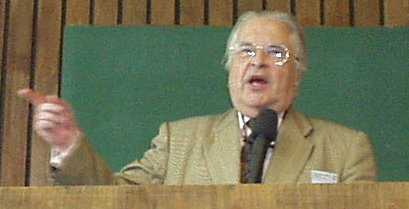
Chaired by Dietmar Rothermund, Heidelberg University (Heidelberg, Germany) |
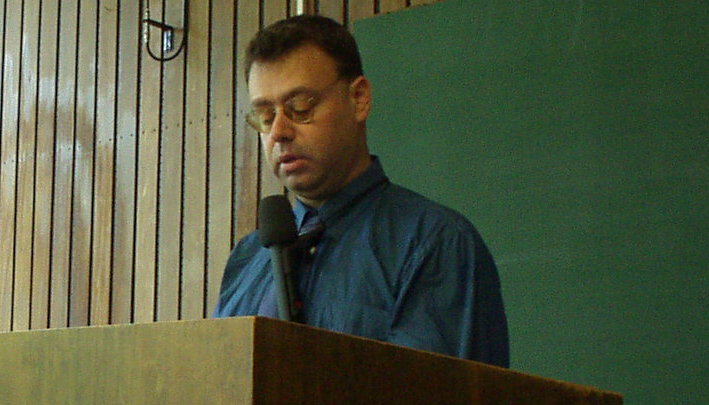 |
Chen Tzoref-Ashkenazi, Tel
Aviv University (Ramt Gan, Israel)
"India and European Identity: The Case of Friedrich Schlegel" |
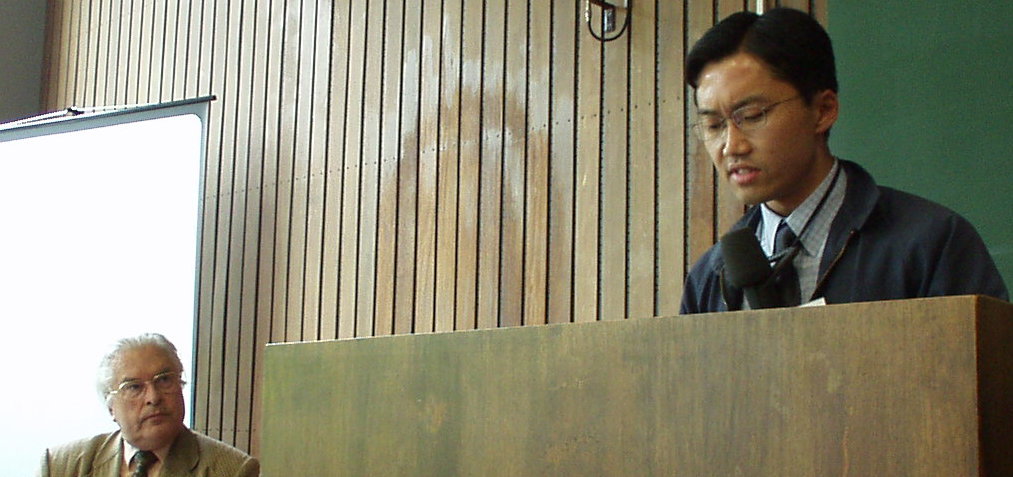 |
Peter Park, University of California,
Los Angeles (Los Angeles, United States)
"India and the Rise of the Comparative-Historical Sciences" |
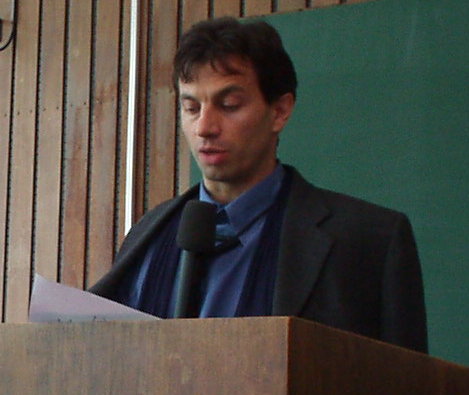 |
Saverio Marchignoli,
University of Bologna (Bologna, Italy)
"What is Yoga? Early German and French Indologies and the Theory of Translation" |
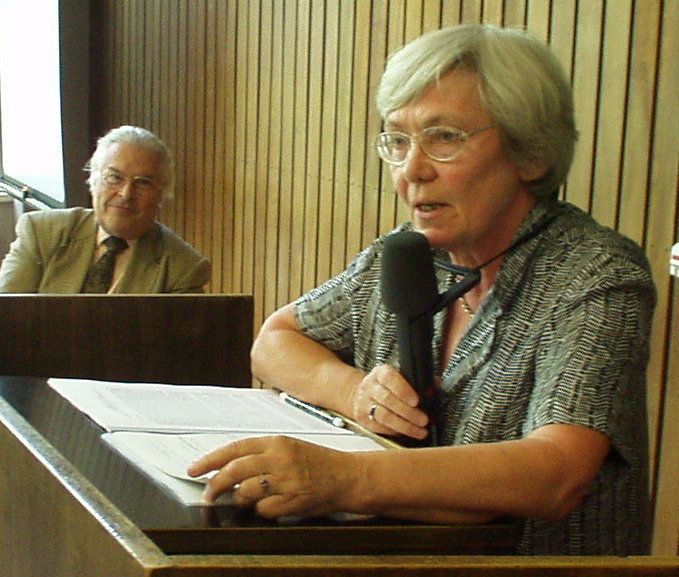 |
Commentator: Maria Schetelich, Leipzig University (Leipzig, Germany) |
PART II. 2 PM to 6 PM
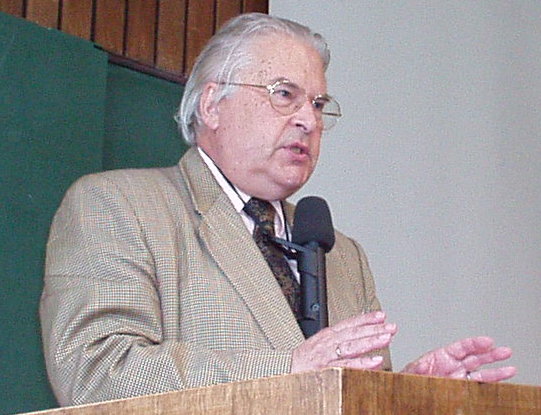 |
Chaired by Dietmar Rothermund, Heidelberg University (Heidelberg, Germany) |
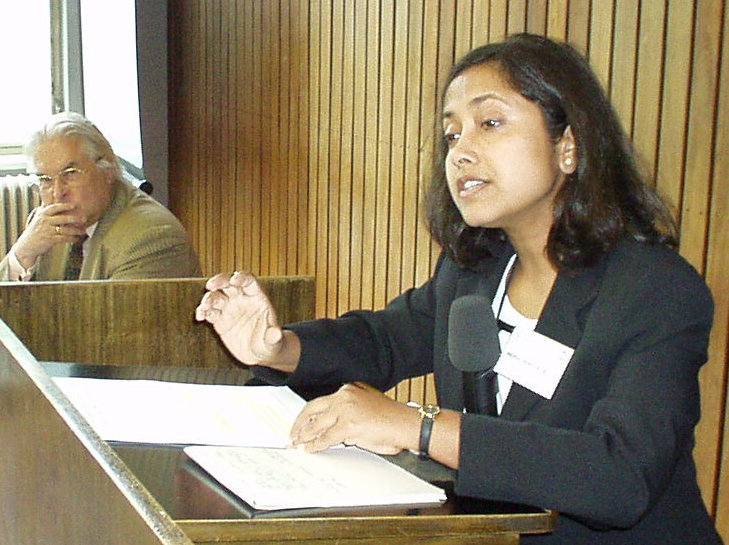 |
Indra Sengupta,
Heidelberg University (Heidelberg, Germany)
"State, University and Indology: The Politics of the Chair of Indology at German Universities" |
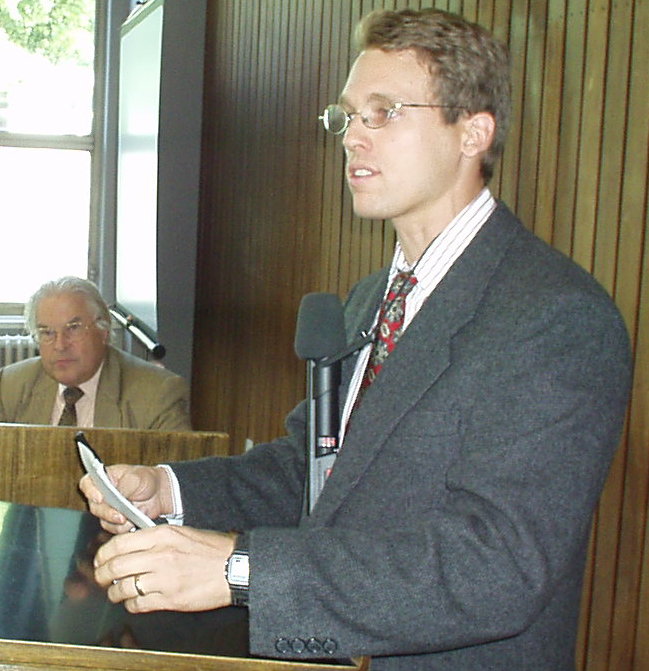 |
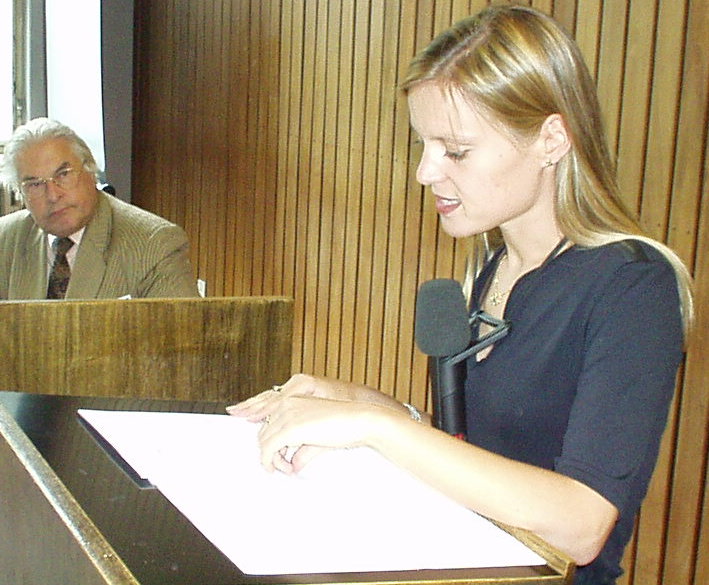
Douglas McGetchin, University
of California, San Diego (San Diego, United States)
"Wayward Disciples: Indology Students and Buddhism in fin-de-siècle Germany" |
 |
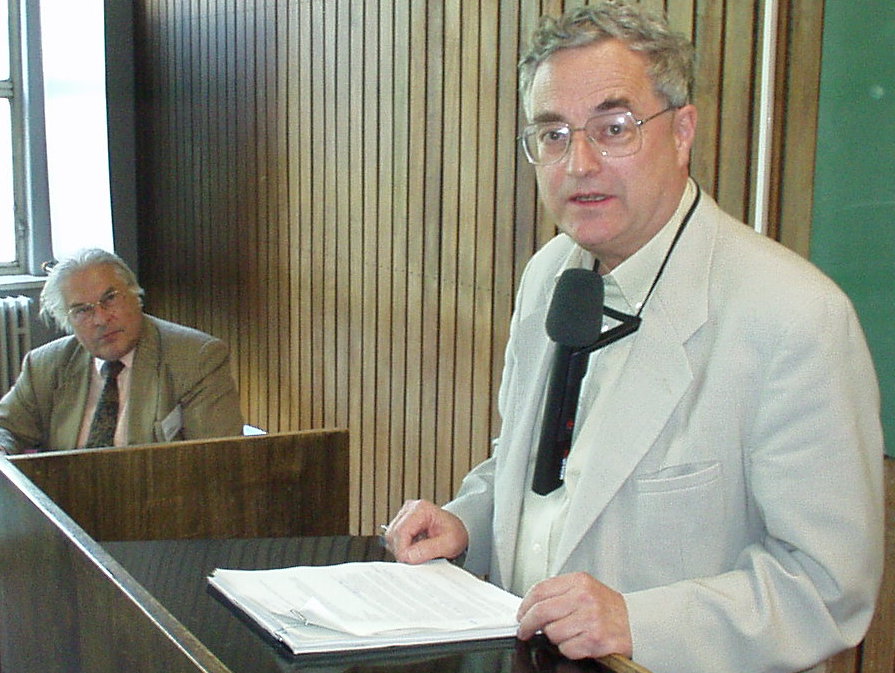
Pascale Rabault, Université
de Provence (Chambery, France)
"From Language to Man? German Indology and Ethnology in the Epistemological Battlefield of the Late 19th century" |
 |
Commentator: Jürgen Lütt, Humboldt University (Berlin, Germany) |
After the Panels
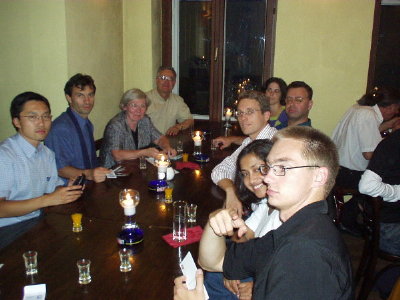 |
Dinner at Amrit, Oranienburgerstrasse, Berlin.
Left side of table, left to right: Peter Park, Saverio Marchignoli, Maria Schetelich, Jürgen Lütt. Right side of table, front to back: Frank Neubert (Leipzig University; gesturing to Pascale Rabault to get into the picture), Indra Sengupta, Doug McGetchin, Chen Tzoref-Ashkenazi, Dorit Tzoref-Ashkenazi. |
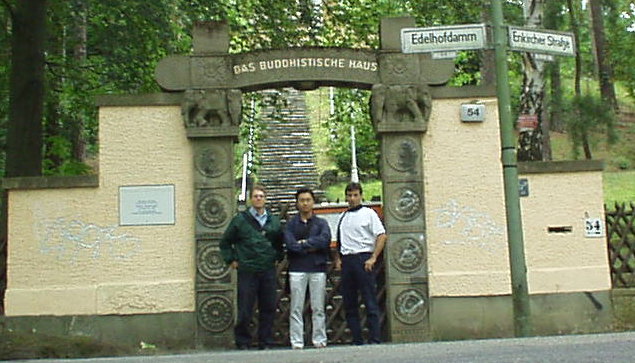 |
Visit to Paul Dalhke's (1865-1928) Buddhistische Haus (Buddhist House), Edelhofdamm 54, Frohnau-Berlin. Left to Right: Doug McGetchin, Peter Park, Saverio Marchignoli. |
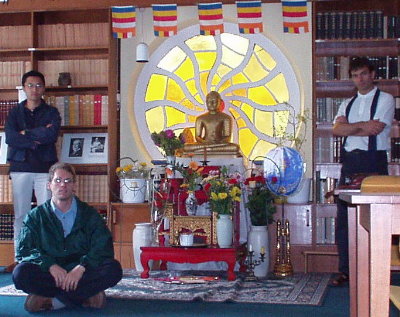 |
Library at Buddhistische Haus, Frohnau-Berlin. Left to Right: Peter Park, Doug McGetchin, Saverio Marchignoli. |
To International Convention of Asia Scholars (ICAS) II web
page
To Doug McGetchin's research
page and CV page.
Contact this web site's administrator.