| Black-footed Ferret life history | |||||||||||||||||
| Black-footed ferrets belong to the family Mustelidae along with skunks, mink and other weasel species. Ferrets are primitive carnivores yet the black-footed ferret only reached North America approximately 30,000 years ago by crossing the Bering land bridge from Asia. Upon reaching the plains, ferrets evolved to live in a very widespread and specialized habitat, relying almost completely on prairie dogs for both food and living in their extensive burrow systems. While the scientific discovery of ferrets dates back to 1851 and the surveys of John Audubon and John Bachman, only three 'functioning' populations of ferrets have ever been scientifically studied. Observations from these populations indicate that ferrets are relatively solitary animals, with females have one litter each summer and raising that litter by themselves. Male ferrets typically have larger home ranges than females and overlap more than one female's home range thus earning the species the label of having a polygynous mating system. |
|||||||||||||||||
![]() |
|||||||||||||||||
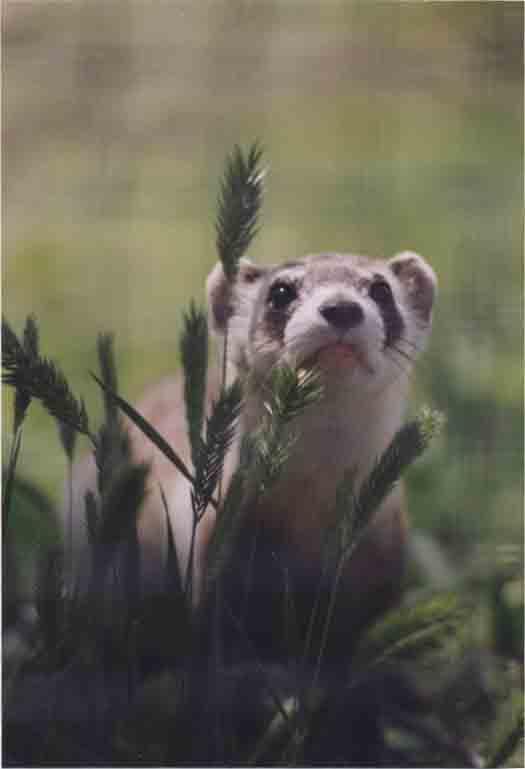
| Ferret at Bowdoin facility, Montana (Photo by Richard Jachowski) | |||||||||||||||||
| Ferret Research | |||||||||||||||||
| Ferret Map | |||||||||||||||||