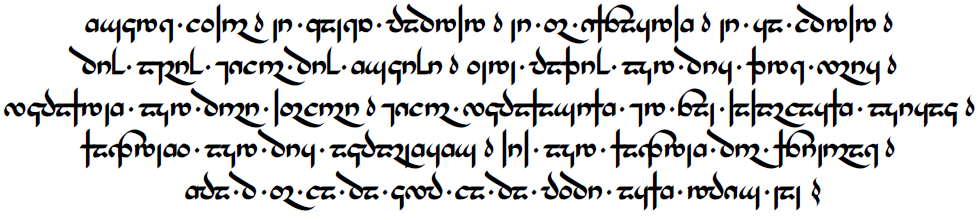
This is a simple prose translation of the text. Normally something of this subject matter would be put into verse, so this prose version will be followed by a verse translation that does not follow so closely the syntax and wording of the original.
1. imvaik fotar:
imvaik: "heavenly"; from imva "heaven(s)" and -ik, a suffix that means "pertaining to, having to do with."
fotar: "father"
- adjectives which occur inside noun phrases are indeclinable
- although there is no definite article, this phrase is in the unmarked vocative case, therefore it technically constitutes a complete noun clause.
2. sa gesku leyaitai,
sa: possessive adjective, 2s ("your")
gesku: "name"; from geser, "to know", and -ku, a suffix denoting means; thus gesku, like Latin nomen, is "that by which something is known." Nominative case.
leyaitai: "may it be praised"; leyer, "to praise, glorify" placed in the aorist present optative (indicating a wish or exhortation), 3s passive.
- sa acts as a determiner, taking the place of the definite article.
3. sa or ædwenaiti,
or: "kingdom, reign, realm"
ædwenaiti: "may it arrive/approach/come"; from æd, prefix meaning "toward, to", and wener, "to come." The verb takes the middle voice because it is intransitive.
4. sa ne fyaitai,
ne: "urge, impetus, will, desire"
fyaitai: "may it be done"; from fyeya, "to do."
5. ya? ehra? hæfar ya? imva?a.
ye ehir: "the earth"; locative case.
hæfar: "just as, just like"
ya imva: "the heavens, heaven"; plural noun.
-a: a suffix with little meaning, except to indicate that the word to which it is attached represents a positional phrase.
6. osais ledya? eŋai yan dyaik auran.
osais: "may you give"; from oser, "to give."
ledya: "today"; a contraction of la dya.
eŋai: "to us"; dative 1pl pronoun.
dyaik: "daily"; see imvaik in line 1.
aur: "food"
7. auvledaisi eŋai yara torfara,
auvleder: "to forget, forgive." This verb is transitive when it means "to forget"; when it means "to forgive," it becomes intransitive, and takes a dative of person and genitive of thing forgiven.
tor, torfo: "mistake, sin"
8. h�far auvledemadi hai wes teterfendi eŋanev.
hai: 3pl pronoun, dative case.
wes: relative pronoun, nominative plural.
terfel: "to miss, make a mistake, sin"; cf. tor, torfo in line 7.
-ev: postposition, "against."
9. dekwaisio eŋai yan evlersinim,
dekweya: "to lead"; intransitive, dative of person.
evlerse: "accusation, trial, suspicion"; this word has a wide range of meanings, but the legal sense is "trial." From ev, "against", and lerel, "to speak"; thus "to speak against, to accuse."
-im: postposition, "into, within"
10. tat eŋai dekwaisi yar dwasarek.
tat: "but", "while... still...", "rather"; the weak adversative.
dwas: "evil"
-ek: postposition, "out of, without"
11. ile y'or, fe ye vaul, fe ye loya endi ail�m ses.
ile: "for, because"
fe: "and"
vaul: "power, might, strength"
loya: "praise, glory"; cf. leyer in line 2.
ailæm: "always, forever"; composed of the pronominal adjective ail, "all, every", and the adverbial suffix -æm, meaning "at ... time".