Back in the 1990's I got frustrated trying to beat the market with my constant trading (mainly tech stocks). I listened to the bulls and bears in the media and tried to make money in what seemed more and more like a pyramid scheme to me while keeping an eye on things so, hopefully, I could run for the exits and get out in time in case of a crash. Over time I realized that my lack of experience and, especially, panicking during corrections (when I should have viewed them as buying opportunities) is what made me lose money.
Tech stocks are known to be highly volatile and risky mainly because of their cyclical nature and the fact that technology often changes providing opportunities for some investors as well as obsolescence for other technologies. The tech stocks were leading the way in the 1990's, but have lagged since 2000. Warren Buffet says the reason he doesn't invest in technology is because he doesn't understand it.
After the market peak around the year 2000 and during the long bear market, I got the idea of trying to use one account outside of retirement for generating income. Its generally recommended that investors focus on growth when they're young and then invest more and more in income (ie. dividends and interest) generating investments as they get older. During retirement, investors should have investments and/or other income sources (ie. social security) to provide enough income to live comfortably, while having some stocks and/or other investments for growth. Later on I learned that dividend paying stocks tend to beat non-dividend paying stocks over time (see chart below).
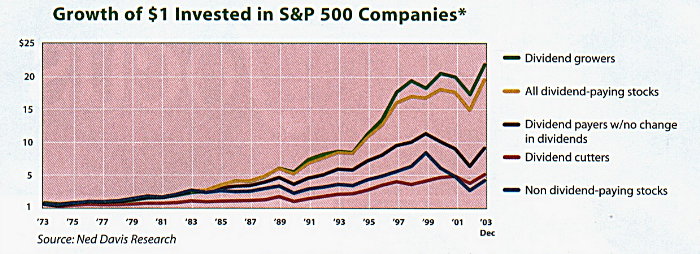
Many news letters in the 1990's discussed the over valuation of various sectors of the stock market and often recommended other sectors such as real estate investment trusts (REITs), utilities, etc. Ken Heebner was a fan of REITs in the 1990's when they had lower valuations. He manages the CGM real estate fund as well as other CGM funds.
So, early in the decade, I began reading about and buying REITs. Years ago you could buy the fastest growing REITs (shopping malls, etc.) when they were yielding 6 or 7%. Over time their stock prices went up faster than their dividends so I started selling these REITs and buying shares of RPF (which has a higher yield), a closed end real estate fund by Cohen and Steers. I already had some shares of RPF as well as RNP, UTF and RTU.
I also invest in oil and gas trusts, mainly Canadian ones since they can aquire new properties, mining companies, funds that invest in master limited partnerships, utilities and diversified funds that invest in companies that pay dividends. I own some high income funds, too, which invest in bonds and other debt securities.
Click the links below for more information
fund notes(under construction)