Anime
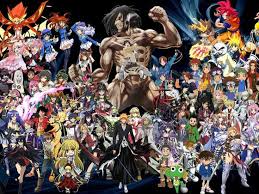 I watch a ton of anime. The word anime is the Japanese term for animation, which means all forms of animated media. Outside Japan, anime refers specifically to animation from Japan or as a Japanese-disseminated animation style often characterized by colorful graphics, vibrant characters and fantastical themes. The culturally abstract approach to the word's meaning may open up the possibility of anime produced in countries other than Japan. Many Westerners strictly view anime as a Japanese animation product. Some scholars suggest defining anime as specifically or quintessentially Japanese may be related to a new form of Orientalism.
The earliest commercial Japanese animation dates to 1917, and Japanese anime production has since continued to increase steadily. The characteristic anime art style emerged in the 1960s with the works of Osamu Tezuka and spread internationally in the late twentieth century, developing a large domestic and international audience. Anime is distributed theatrically, by way of television broadcasts, directly to home media, and over the Internet. It is classified into numerous genres targeting diverse broad and niche audiences.
Anime is a diverse art form with distinctive production methods and techniques that have been adapted over time in response to emergent technologies. It combines graphic art, characterization, cinematography, and other forms of imaginative and individualistic techniques. The production of anime focuses less on the animation of movement and more on the realism of settings as well as the use of camera effects, including panning, zooming, and angle shots. Being hand-drawn, anime is separated from reality by a crucial gap of fiction that provides an ideal path for escapism that audiences can immerse themselves into with relative ease. Diverse art styles are used and character proportions and features can be quite varied, including characteristically large emotive or realistically sized eyes.
The anime industry consists of over 430 production studios, including major names like Studio Ghibli, Gainax, and Toei Animation. Despite comprising only a fraction of Japan's domestic film market, anime makes up a majority of Japanese DVD and Blu-ray sales. It has also seen international success after the rise of English-dubbed and subbed programming. This rise in international popularity has resulted in non-Japanese productions using the anime art style. Whether these works are anime-influenced animation or proper anime is a subject for debate amongst fans. Japanese anime accounts for 60% of the world's animated television shows, as of 2016. In 2015, the 44th President of the United States, Barack Obama, referred to anime as one of the loved ones of American youth.
I watch a ton of anime. The word anime is the Japanese term for animation, which means all forms of animated media. Outside Japan, anime refers specifically to animation from Japan or as a Japanese-disseminated animation style often characterized by colorful graphics, vibrant characters and fantastical themes. The culturally abstract approach to the word's meaning may open up the possibility of anime produced in countries other than Japan. Many Westerners strictly view anime as a Japanese animation product. Some scholars suggest defining anime as specifically or quintessentially Japanese may be related to a new form of Orientalism.
The earliest commercial Japanese animation dates to 1917, and Japanese anime production has since continued to increase steadily. The characteristic anime art style emerged in the 1960s with the works of Osamu Tezuka and spread internationally in the late twentieth century, developing a large domestic and international audience. Anime is distributed theatrically, by way of television broadcasts, directly to home media, and over the Internet. It is classified into numerous genres targeting diverse broad and niche audiences.
Anime is a diverse art form with distinctive production methods and techniques that have been adapted over time in response to emergent technologies. It combines graphic art, characterization, cinematography, and other forms of imaginative and individualistic techniques. The production of anime focuses less on the animation of movement and more on the realism of settings as well as the use of camera effects, including panning, zooming, and angle shots. Being hand-drawn, anime is separated from reality by a crucial gap of fiction that provides an ideal path for escapism that audiences can immerse themselves into with relative ease. Diverse art styles are used and character proportions and features can be quite varied, including characteristically large emotive or realistically sized eyes.
The anime industry consists of over 430 production studios, including major names like Studio Ghibli, Gainax, and Toei Animation. Despite comprising only a fraction of Japan's domestic film market, anime makes up a majority of Japanese DVD and Blu-ray sales. It has also seen international success after the rise of English-dubbed and subbed programming. This rise in international popularity has resulted in non-Japanese productions using the anime art style. Whether these works are anime-influenced animation or proper anime is a subject for debate amongst fans. Japanese anime accounts for 60% of the world's animated television shows, as of 2016. In 2015, the 44th President of the United States, Barack Obama, referred to anime as one of the loved ones of American youth.

Videogames
 I play a ton of videogames too. A video game is an electronic game that involves interaction with a user interface to generate visual feedback on a two- or three-dimensional video display device such as a touchscreen, virtual reality headset or monitor/TV set. Since the 1980s, video games have become an increasingly important part of the entertainment industry, and whether they are also a form of art is a matter of dispute.
The electronic systems used to play video games are called platforms. Video games are developed and released for one or several platforms and may not be available on others. Specialized platforms such as arcade games, which present the game in a large, typically coin-operated chassis, were common in the 1980s in video arcades, but declined in popularity as other, more affordable platforms became available. These include dedicated devices such as video game consoles, as well as general-purpose computers like a laptop, desktop or handheld computing devices.
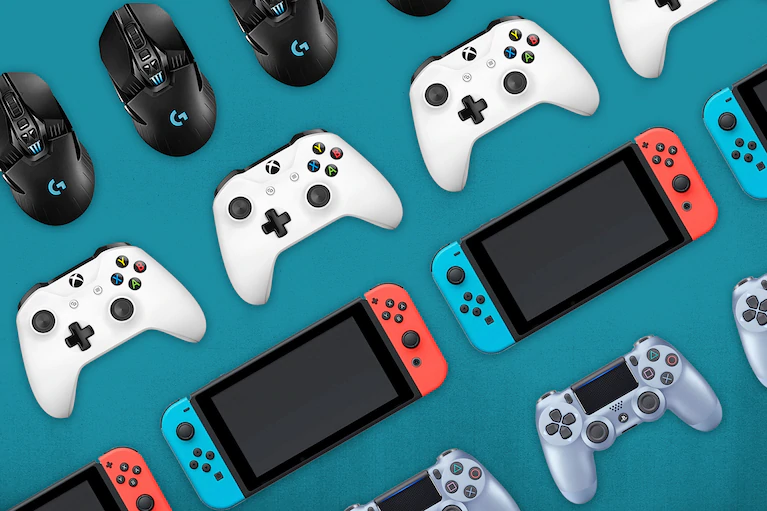
The input device used for games, the game controller, varies across platforms. Common controllers include gamepads, joysticks, mouse devices, keyboards, the touchscreens of mobile devices, or even a person's body, using a Kinect sensor. Players view the game on a display device such as a television or computer monitor or sometimes on virtual reality head-mounted display goggles. There are often game sound effects, music and voice actor lines which come from loudspeakers or headphones. Some games in the 2000s include haptic, vibration-creating effects, force feedback peripherals and virtual reality headsets.
Since the 2010s, the commercial importance of the video game industry has been increasing. The emerging Asian markets and mobile games on smartphones in particular are driving the growth of the industry. As of 2018, video games generated sales of US$134.9 billion annually worldwide,[1] and were the third-largest segment in the U.S. entertainment market, behind broadcast and cable TV.
I play a ton of videogames too. A video game is an electronic game that involves interaction with a user interface to generate visual feedback on a two- or three-dimensional video display device such as a touchscreen, virtual reality headset or monitor/TV set. Since the 1980s, video games have become an increasingly important part of the entertainment industry, and whether they are also a form of art is a matter of dispute.
The electronic systems used to play video games are called platforms. Video games are developed and released for one or several platforms and may not be available on others. Specialized platforms such as arcade games, which present the game in a large, typically coin-operated chassis, were common in the 1980s in video arcades, but declined in popularity as other, more affordable platforms became available. These include dedicated devices such as video game consoles, as well as general-purpose computers like a laptop, desktop or handheld computing devices.
The input device used for games, the game controller, varies across platforms. Common controllers include gamepads, joysticks, mouse devices, keyboards, the touchscreens of mobile devices, or even a person's body, using a Kinect sensor. Players view the game on a display device such as a television or computer monitor or sometimes on virtual reality head-mounted display goggles. There are often game sound effects, music and voice actor lines which come from loudspeakers or headphones. Some games in the 2000s include haptic, vibration-creating effects, force feedback peripherals and virtual reality headsets.
Since the 2010s, the commercial importance of the video game industry has been increasing. The emerging Asian markets and mobile games on smartphones in particular are driving the growth of the industry. As of 2018, video games generated sales of US$134.9 billion annually worldwide,[1] and were the third-largest segment in the U.S. entertainment market, behind broadcast and cable TV.