 |
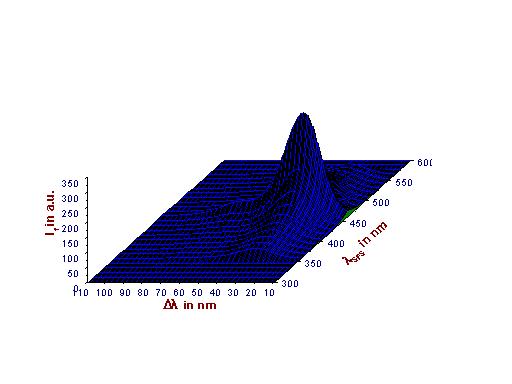
| Synchronous Fluorescence Scan Spectroscopy for Complex Mixture Analysis: Synchronous fluorescence scan (SFS) spectroscopy provides (a) narrowing of spectral band, (b) simplification of emission spectra and, (c) contraction of spectra range, compared to conventional excitation or emission spectrum, which makes chemical analysis of multi-component mixture easier without a preseparation procedure. In SFS, unlike excitation or emission spectrum both excitation and emission monochromators are simultaneously scanned. SFS and its derivative technique has been successfully used for benzo[a]pyrene, a carcinogen, determination in complex PAHs mixture and cigarette smoke. A multivariate synchronous fluorimetric method has been developed to analyse simultaneously PAHs mixture in water sample. The method generated "n x n" matrix by measuring the synchronous fluorescence intensity at "n" different optimized synchronous parameters (each parameter correspond to a particular analyte for identification) for mixture sample (Mj) as well as for each standard reference individual sample (Mij). Solving this matrix gives the coefficient of the individual component (Ci) present in the mixture solution. Multiplication of Ci with the standard reference concentration gives the concentration of an individual component in the mixture. The method was tested for 3, 6, 7, 10 and, 18 component PAHs mixture and is found to be simple and fast. Overlapping of spectra and interaction of fluorophores are major drawbacks in the fluorimetric multi-component PAHs mixture analysis. Micellar media was used as the solvent to reduce interference of PAHs by adjusting the fluorophore and micellar concentration in such a way that on an avarage one fluorophore is present in a micelle. Our results show that micellization help in isolating fluorophores and suppressing electronic energy transfer and the relative fluorescence of an individual compound compared to the mixture sample determines the level of accuracy of an unknown analysis in a multivariate analysis. |
 |
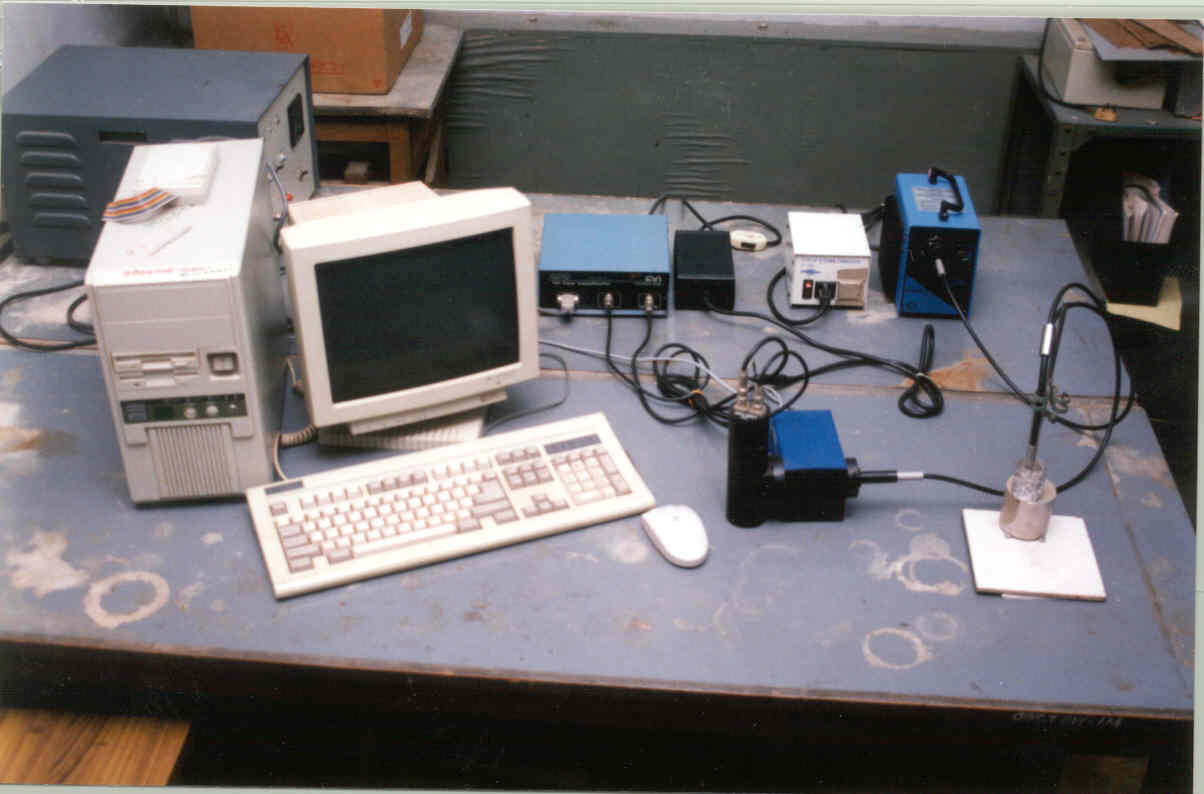
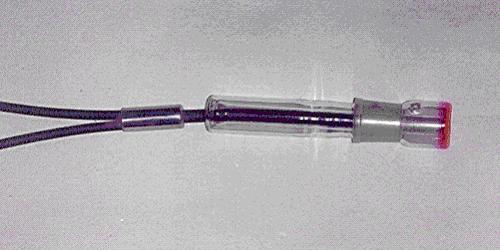
| Fiber Optic Chemical Sensor: Use of optical fibers in chemical detection system has made possible construction of optical sensors or "optodes" (for chemical analysis). Development of fluorescence based fiber optic chemical sensor (FBFOCS) is growing rapidly as it combines the advantage of optical fiber (as light transmitter) and sensitivity, selectivity and simplicity of fluorescence detection. In FBFOCS, analyte concentration is determined either by (i) direct measurement of active fluorescence species or (ii) monitoring the fluorescence properties of the chemical transducer (indicator or probe) with anylyte concentration. A FBFOCS consisting a Xe lamp source, bifurcated optical fiber, PMT detector, monochromator and, a PC for data analysis has been constructed (right, from the top third picture). Contact between optical fiber and analyte sample is important in FBFOCS to evaluate the reversibility, reproducibility, sensitivity and selectivity of the sensor. A novel disposable glass sensor head (right, from the top fourth picture) has been developed to avoid the physical contact between optical fiber and analyte sample. Th sensor was found to be successful to monitor PAHs prinicipally perylene and antharcene at environmental level (trace level) and for sensing fluorescence transducer in polymer films. Nitro armoatic compounds (NACs) e.g. nitrobenzene, m-dinitrobenzene, o-nitrotoluene, m-nitrotoluene, p-nitrobromobenzene, o-nitroaniline, p-nitrophenol etc, are industrial and environmental important for their analysis. Selection of a fluorescence transducer/probe is crucial in quenching based sensor. Benzo[k]fluoranthene, a condensed multi-ring compound with high fluorescence quantum yield (~1) and large Stoke's shift is found to be a promising indicator for NACs estimation. The sensor film, in poly (vinyl alacohol) film, shows minimal interference from different organic molecules and has good reversibility and reproducibility. |
 |
 |
| Selective Fluorescence Quenching, An Alternate for PAHs Identification: Selective fluorescence quenching is beneficial in chemical analysis when a molecule quenches selectively either alternant or non-alternant PAHs. It is observed that electron acceptor like nitromethane selectively quenches alternant contrast to non-alternant PAHs and electron donot like 1,2,4-Trimethoxy benzene quenches non-alternant constrast to alternant PAHs. Among various chloroalkanes and chloroalkenes tested, carbon tetrachloride emerges as a selective quencher molecule for alternant PAHs in the concentration range 0-1M. Benzo[k]fluoranthene, known as exception to "nitromethane selective fluorescence quenching rule", is quenched by carbon tetrachloride suggesting it as a better selective quencher compared to nitromethane in order to distinguish between alternant and non-alternant PAHs, although extensive work needs to be done in this regards. Another electron acceptor, cetyl pyridinium chloride (CPC), a hydrophobic quencher molecule, was used as a quenching agent to study fluorescence quenching of pyrene, perylene and, fluoranthene by conventional and synchronous fluorescence measurement. A quenching inhibition factor (QIF) was efined for added quencher in an inert micellar medium. The obtained quenching parameter QIF compares well with the calculated Kq and Eq. The quenching mechanism is explainable by a quenching spehere of action model. Larger QIF for pyrene indicates that it is getting fully incorporated into the palisade layer because of its smaller size. In the micellar medium, the fluorescence quenching efficiency in tn the order: pyrene > perylene > fluoranthene. The study shows that not only the alternant and non-alternant nature of the fluorophore, but also the size of the fluorophore determines the quenching efficiency in the micelle by a hydrophobic quencher. |
| Checking Alduration of Liquid Petroleum Fuels: Adulteration of liquid petroleum fuels is a serious problem in South Asia. Two novel mthods based on synchronous fluorescence scan and excitation emission matrix spectral subtraction fluorescence have been developed for determination of adulteration in petrol/diesel. Comparison of SFS spectra of petrol, diesel and their mixtures with kerosene in front surface, 45 and 90 degree sample geometries reveals certain distinct characteristics of SFS spectra. This enables development of calibration plots for mixture samples (petrol-kerosene and diesel-kerosene) based on the shift in SFS maximum and SFS intensity. Excitation emission matrix spectral subtraction fluorescence technique was used to estimate the adulteration of petroland diesel by kerosene. These methods can easily differentiate between the neat and adulterated samples. The methods are found to be simple, reliable and superior in terms of sensitivity (0.1 % v/v) compared to other methods. |
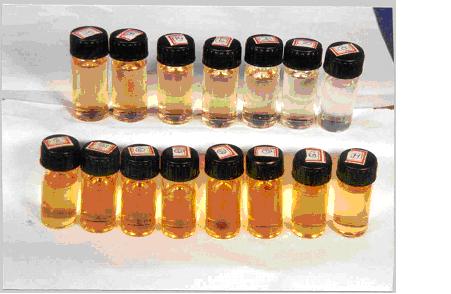 |
| Spectroscopic Evaluation of Petroleum Products at Higher Concentration: Petroleum products are multifluorophoric and show a systematic bahaviour with respect to their fluorescence characteristics. Petroleum products e.g. 2T oil, Mobil, diesel, petrol, kerosene etc. have been characterised and PAHs present in these systems were investigated qualitatively and quantitatively using absorption, conventional fluorescence, synchronous fluorescence scan and, excitation emission matrix fluorescence (3D Fluorescence). The relative fluorescence quantum yield is a function of the excitation wavelength and is different for different petroleum products. A method was developed to find out the total fluorescence quantum yield of petroleum products at higher concentration, which provides the overall fluorescence quantum yield of a fluorophore at various possible excitation wavelenghts. The study reveals that (i) the relative concentration of higher ring PAHs decreases with the increase in aromatic ring size in petroleum products, (ii) reseonance energy transfer from lower to higher aromatics and, self-quenching via solvent collision of PAHs at higher concentration are dominant factors in petroleum products, whereas solvent polarity plays a minor role. |
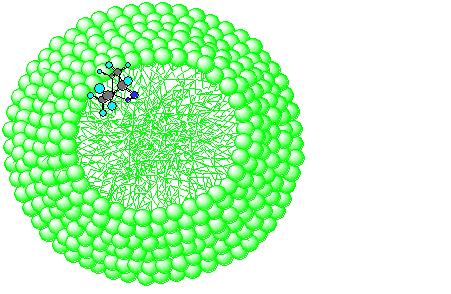
| Study on Salt Induced Structural Change of Micelle: Micelle undergoes structural change in presence of added salt, consequently, increasing the size, diameter and aggregation number (number of surfactant(units present in one micelle) of the micelle. Perturabation of salt on micelle plays a vital role in micellar growth. As the ionic strength of the microenvironment enhances the micellar growth, the binding of the exteranal probe molecule with the micelle/monomer in both ground and excited state is important to understand the kinetics, dynamics and, stability of the micelle/monomer. The size and shape of the external probe molecule can influence the conformation of the micelle. For such case, initially synthesis and characterization of various cyanine dyes having different hydrophobic chain length e.g. N-hexyl, N-dodecyl, N-tetradecyl, and, N-hexadecyl-4-(p-N,N-dimethyl minostyryl) pyridinium bromide were carried out, later on, these molecules were used as fluorescent probes to study the effect of NaCl on conformational change of sodium dodecyl sulphate (SDS) micelle. The probe molecule has a positive charge with different hydrophobic chain length and effect on crtitical micellar concentration (CMC), binding constants, aggregation number and stability of SDS micelle with NaCl salt concentration could be easily understood using this fluorescent molecule, thus, the probe molecule is found to be susceptible in the present investigation. |
 |
| Time-resolved Anisotropy Decay for Studying Dynamics of Macromolecular Systems: Excitation of a plane polarized light to a fluorophore and collection of linearly polarized components of the detected emission reveals information about size, shape, and flexibility of macromolecules (e.g. micelles, polymers, host-guest complexes) and bio-molecules (e.g. proteins, lipid membranes, nucleic acids). In case of linearly polarized excitation, those molecules whose absorption oscillators are oriented parallel to the direction of polarization are preferentially excited. This results in highly polarized fluorescence if the molecule do not rotate during the interval between the absorption and emission of light. If the molecule is free to rotate, the orientation of the absorbing molecules will be partially randomized, that results in partial depolarization. This is the case when the rotational relaxation time is much shorter than fluorescence decay time so that the molecular orientation effectively becomes randomized before fluorescence occurs. If the fluorescence lifetime is known and the depolarization is measured, the Brownian motion can be calculated, which is an indicator of size, shape and flexibility of the fluorescent moiety. The degree of depolarization of fluorescence can be estimated from anisotroy decay. The rotational dynamics of various cationic, anionic and neutral micelles, human serum albumin, and antigen-antibody complexes (immuno-assay) have been study using azoalkane as test external fluorescent probe. |
| Structure, Reactivity and Mechanistic Study of Photochemical Reaction: Substitutent present in a chemical reaction plays an crucial role in designing new chemical and drug compounds. Phenoxy radicals are important intermediate in many biological and industrial preocesses and their association with the antioxidant activity has led increased interest in these systems. The excited state photochemical reaction of n-pi* excited 2,3-diazabicyclo[2,2,2]oct-2-ene (DBO) by 22 different phenols, 6 phenyl methyl ethers and 11 alkylated benzenes has been studied. The stuy shows a structure-reactivity relation and the kinetics rate law is explainable by Hammet rate law. The high isotope effect and Hammet relation suggest that a polar effect on hydrogen abstraction mechanism. The investigation also rules out role of steric effect in the reaction n-pi* excited DBO with toluene, hexamethylbezene, ethylbenzene and hexaethylbenzene. |
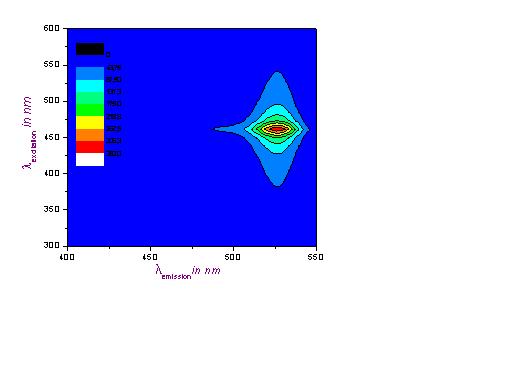
| Excitation emission matrix fluorescence |
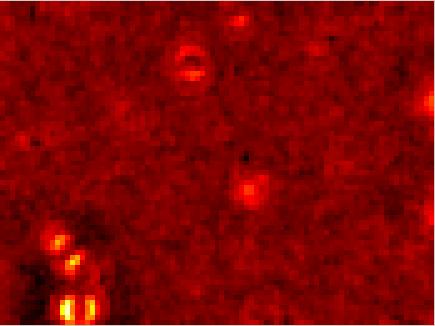
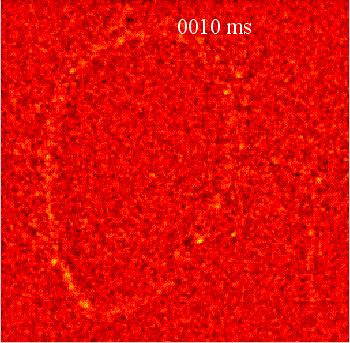
| Single Molecule Imaging & Spectroscopy: Fluorescence based single molecule detection has a significant impact in analytical and physical chemistry, biology, life sciences and medicine. The ability to manipulate a single molecule in solution and surfaces has been more exciting possibilities. Fluorescence microscopy, e.g. wide-field, near-field and confocal microscopy, has been recently widely used for studying single molecules in ambient environment. Single molecule measurement reveals the distribution of molecular properties in heterogeneous systems. We are involved in single molecule fluorescence imaging, spectroscopy and characterisation. We are involved in directly visualising the emission orientation pattern of a single molecule using a wide-field defocussing method. This method is found suitable to study the photophysics of different chemical and biochemical macromolecular species by directly obtaining the emission orientation pattern (right, from the top first picture). We are also interested in observing single fluorescent molecule or fluorescent proteins inside the cell (right, from the top second picture). This imaging method could be useful to study diffusion of single biological macromolecule in vivo and in vitro. |
 |
 |
| Total synchronous fluorescence scan spectroscopy |
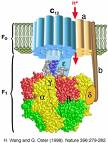
| Studying Molecule Motors such as ATP Synthase at Single Molecular Level: Studing molecular motors has been an very interesting topic since years because these protein molecules act like nanomachines in living cells and convert directly chemical energy to mechanical energy and/or vice versa inside the cell during ATP hydrolysis and/or ATP synthesis. We are interested in understanding one of the nature's very basic principles on how these molecular motors directly converts chemical energy to mechnical energy and vice verse without converting to any intermediate energy step to regulate various physiological activities. Single molecule microscopy as well as magnetic or optical tweezers are very useful in this context. We studied mechanical synthesis of ATP by F1-ATPase and nuceotides and inorganic phosphate dependency during mechanical rotation of F1-ATPase by external force. |
 |