 n Earth

 20 OCTOBER 2004
Every expert would agree; the aim of a terrorist is to create terror, therefore, wouldn't over-publicising acts of terror help them achieve this...maximum coverage, maximum terror? Who does this suit? It certainly sells a lot of newspapers, fulfilling the public demand for sensation, and profiting the journalist involved. Maximum reaction to the perceived risk is most obviously reflected in the politics. It suits right wing politics to have a strong terrorist element to stimulate fear and highlight the need for their hard line policies. Opinions become entrenched, people start to use words like "evil" because it is never explained why the terrorist acted as he did. Is it news that evil people do evil things?
Despite Blair spinning like a top under tabloid pressure, its no news that terrorists can't be negotiated with...we knew this too. The Irish PM, Colonel Gadaffi and assorted others jumped on the bandwagon of meaning well, however, in marketing terms, any publicity is good publicity. Bad publicity is the entire point for the terrorist.
In Japan, the prime minister disempowered the terrorists by saying quite simply “those captured knew the risks, and it is impossible to negotiate". The hostages were returned unharmed. It wasn’t Blair's fault per se, but being guilty to flinching to the terrorist induced public pressure is the sort of weakness only serves to strengthen their resolve.
Nobody
examined the reason why he was killed. It was briefly mentioned that
Bigley's danger money would have set him up for life. I’m sure his
work would have helped the locals, but would he have gone there if
he wasn’t being paid? A lucrative contract guaranteed to lead to his
early retirement, one way or another; he went there to make a
killing, and the terrorists had the same intention. A foreigner
arriving shortly after a foreign invasion force, employed by a
foreigner company. Someone, perceived to be in league with the
unilateral action; part of a larger global agenda which to the
extremists made him fair game for decapitation. No examination of
larger, more pertinent questions such as why a couple of Japanese
aid workers walked away unscathed, and why a British contractor
didn’t. Appropriate coverage should be given to accurately highlight
any risks, and a response measured by the number of people any given
event effects.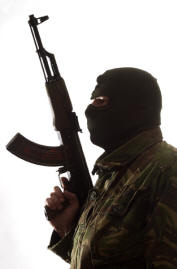
Bigley took a calculated risk which failed. It was his choice. Thirteen thousand civilians killed so far, none of whom had the luxury of a choice or financial compensation for the risk of just living there. If we were to have a minute of silence for each one of them, we’d be silent for nine whole days. Following this story, a minute's silence dedicated the following day at workplaces and football grounds around the country. Is it healthy dedicating a half hour segment of “National and International” news to the fate of a single person? The media must be more responsible and less sensational in its handling of the news. The manipulation of emotion from sadness to hate. Only through a proportional coverage of lead stories and an intelligent examination of the underlying political issues, can the viewer gain an understanding of how the story affects us.
*On the 20th October another Briton has been taken prisoner; and this time an innocent aid worker. This author, for one, wonders if the lack of pragmatism and responsibility in the media, public and government reaction to the Bigley saga served to encourage such terrorist action by demonstrating the response it would cause.
