





Light Sheer - Bibliografia
Riportiamo di seguito alcuni degli articoli piu' significativi della bibliografia scientifica internazionale su Lightsheer (english):
1.Effective, permanent hair reduction using a pulsed, high-power diode laser
2.Clinical use of the Lightsheer diode laser system
3.A brief history of laser hair removal technology
1.Effective, Permanent Hair Reduction Using a Pulsed, High-Power Diode Laser
Christine C. Dierickx, MD*; R. Rox Anderson, MD*; Valeria B. Campos, MD*; Melanie C. Grossman, MD** *Wellman Labs of Photomedicine, Harvard Medical School
**Laser and Skin Surgery Center of New York
Summary provided by Coherent Medical, Inc.
The study summarized below was presented in progress to FDA, which cleared the LightSheerTM Diode Laser System for hair removal in December 1997. This summary is intended to allow users of this system to better inform their patients. This is not a peer-reviewed medical publication, and is provided by Coherent Medical solely for informational purposes regarding its products. It is not a substitute for clinical observation of laser-tissue interaction and clinical experience. Training is recommended prior to using the LightSheer Diode Laser System.
INTRODUCTION
A solid-state, 800 nm pulsed near-infrared diode laser1 was studied for permanent hair reduction. The effect of laser fluence (energy per unit area), single vs. multiple treatments, and single vs. multiple pulses were determined in different skin types (Fitzpatrickís type I through VI).
Semiconductor diode lasers are considered the most efficient light sources available and are particularly well suited for clinical applications. The pulsed diode laser used in the study delivers high-power laser pulses, in combination with a proprietary skin cooling system, to target pigmented hair follicles deep within the dermis. Treatment operates on the principle of selective photothermolysis, which combines selective absorption of light energy by the melanin in hair follicles with suitable pulse energies and pulse widths (pulse duration) that are equal to or less than the thermal relaxation time (TRT) of targeted follicles in human skin. There are two important anatomical targets for inactivation of hair follicles: 1) stem cells in a ìbulgeî of the outer root sheath about 1 mm below the skin surface; and 2) the dermal papilla located at the deepest part of the follicle, which varies with hair growth cycle. Research and extensive clinical use of lasers for hair removal have identified important parameters to optimize the efficacy and safety of laser treatment:
- Wavelength: Most laser hair removal systems are designed to remove unwanted hair through selective photothermolysis. This process involves local selective absorption of an intense light pulse at wavelengths that: 1) are preferentially absorbed by the desired hair follicles but not by the surrounding tissue; and 2) penetrate deeply into the skin to reach the important targets for inactivation of hair follicles. In laser hair removal, the most important and dominant absorber is melanin. In all colors but white hair, there is sufficient melanin in the follicular epithelium and matrix to act as a chromophore for light absorption in the follicle. Laser energy is selectively absorbed by the melanin and causes thermal damage to the hair shaft and follicle. Hair growth is impeded or eliminated with sufficient fluence of the appropriate wavelength, due to selective thermal damage of the hair follicle. The ideal laser wavelength for hair removal is strongly absorbed by melanin but not by surrounding tissue and reaches deeply into the dermis. Wavelengths between about 700 and 1000 nm fit these criteria.
- Pulse Width : Pulse width is a very important parameter for effective laser hair removal without epidermal injury. For hair removal, the optimum pulse duration is approximately equal to the thermal relaxation time (TRT) of the hair follicle. The TRT is defined as the time required for an object to cool to half the temperature achieved immediately following laser exposure. For human terminal hair, TRT varies from about 10 to 100 milliseconds. Laser pulses much shorter than the TRT cause insufficient heating of the target structures (bulb and papilla) surrounding the hair shaft. Pulse widths much longer than the TRT may cause non-selective damage to the surrounding dermis. The first laser hair removal treatment to be cleared by FDA used Nd:YAG laser pulses about a million times shorter than TRT for hair follicles, and failed to produce long-term hair removal. The pulsed diode laser used in this study was specifically designed to produce pulse widths matching the TRT of terminal hair follicles.
- Fluence: Previous studies have shown that stronger laser treatments, or treatments using the highest tolerable fluence, produce better hair reduction results. The risk of side effects also increases with fluence. In the study summarized here, a range of fluences was given without regard to the skin type of the patient.
- Cooling: Even laser light with perfect specificity for melanin can cause damage to the skin surrounding the hair follicles because the epidermis also contains melanin. Therefore, it is imperative to use an epidermal cooling strategy to cool the epidermis while sufficient laser energy is delivered to damage hair follicles. The most effective cooling method available is active cooling. When in contact with a cold object, heat flows from the epidermis. The important targets for hair removal lie at least 1 mm below the skin surface. When the skin is actively cooled for 0.2-1 seconds, these targets remain warm, while the epidermal temperature plummets. Epidermal temperatures less than about ñ10 C cause tissue injury from freezing. Clinically, it is valuable to cool the skin before, during and after the laser pulse for maximum epidermal protection and patient comfort. Fast cooling requires good contact with a cold, thermally conductive substance. Sapphire is ideal, as it has excellent thermal characteristics and operates as a heat sink removing heat from the epidermis. In addition, the diode handpiece utilized in the study allowed compression of the area being treated. Compression forms excellent thermal contact, collapses blood vessels (a competing target), and forces hair to lie down, bringing hair follicle roots closer to the surface. Consequently, the laser energy is more effectively targeted to the intended site of action.
- Number of Treatments: Temporary hair removal is easily achieved in a single treatment. The amount of permanent hair reduction per treatment varies between patients, increasing with the fluence used for treatment. Most patients require more than one treatment, typically 2-5, to achieve nearly complete, permanent hair reduction. In this study, 89% of the patients achieved significant permanent hair reduction (defined as greater than 15% hair reduction) after one or two treatments with the pulsed diode laser.
- Number of Pulses (Single versus Multiple Pulsing): Multiple pulses given to a site do not have significantly greater effectiveness than a single pulse. However, the risk of pigmentary side effects is somewhat increased. Intentional multiple pulsing to a single site should be avoided.
STUDY DESIGN
The primary objective was to investigate effectiveness and safety of a pulsed diode laser in permanent reduction of pigmented hair. This large, long-term, prospective, blinded, controlled and quantitative study was designed to study fluence-response relationship, one versus two treatments, and single versus multiple pulses.
Ninety-two (92) patients were treated at two facilities: 46 patients at the Massachusetts General Hospital in Boston and 46 at the Laser and Skin Surgery Center of New York, in New York City. There were 45 males and 47 females with varying hair colors and skin types (Fitzpatrickís skin type I to VI; predominately II to III). All patients were treated and examined at 0, 1, 3, 6 and 9 months, and thirty-five patients were also followed up at 12 months.
| TABLE 1. FITZPATRICK CLASSIFICATION OF SKIN TYPES | |
| Skin Type | Characteristic |
| I | Always burns, never tans |
| II | Always burns, sometimes tans |
| III | Sometimes burns, always tans |
| IV | Rarely burns, always tans |
| V | Moderately pigmented |
| VI | Black skin |
The device used was a semiconductor diode laser system that delivers pulsed, infrared light at a wavelength of 800 nm, pulse duration from 5-20 ms and fluences from 15-40 J/cm2. Testing with diode lasers has shown that at 800 nm, the laser light effectively penetrates the dermis, where follicular melanin is the dominant chromophore. Given that the thermal relaxation time for hair follicles ranges from 10-100 ms, the pulse duration of 5-20 ms produced by this device is long enough to allow heat conduction from the pigmented hair shaft during each pulse.
The laser handpiece contains high-power diode arrays, eliminating the need for an articulated arm or fiber-optic beam delivery system. The handpiece integrates a condenser thatmixes light to produce a fluence of 15-40 J/cm2 over a uniform 9x9 mm area. The handpiece contains an actively cooled convex sapphire lens that, when pressed against the patientís skin slightly before and during each laser pulse, provides thermal protection for the epidermis. The cooling lens not only allows higher doses of laser energy to safely and effectively target hair follicles, but also allows compression of the target area placing hair roots closer to the laser energy.
Before each treatment, eight test sites were positioned on a patientís thigh or back with two micro-tattoos or other anatomic landmarks to ensure exact location of the test sites at follow-up visits. Hairs at each site were trimmed to a uniform length using clippers, and the skin was cleaned with isopropanol. Digital images of the treatment sites were taken at the initial visit and at each follow-up visit (1, 3, 6, 9 and 12 months). A charge-coupled-device video camera with a photographic ring flash and frame-grabber was used to provide high-resolution hair imaging. The camera was connected to a computer with image acquisition hardware and image analysis software. The number of hairs was counted blindly in each test area before laser treatment, and at each follow-up visit.
The exposure schedule for the eight treatment sites is shown in Table 2. The fluence range tested was 15-40 J/cm2 and the pulse duration was 5-20 ms. At those sites receiving two treatments, exposure was repeated one month after the first treatment. At sites receiving multiple pulses, three pulses were applied to the same area, two seconds apart. All patients also had a control site that was unexposed and shaved.
| TABLE 2. EXPOSURE SCHEDULE | ||||
| Site | Pulse Width (ms) | Fluence (J/cm2) | Number of Pulses | Number of Treatments |
| 1 | 5 (See Footnote 2) | 15 | 1 | 1 |
| 2 | 10 | 20 | 1 | 1 |
| 3 | 15 | 30 | 1 | 1 |
| 4 | 20 | 40 | 1 | 1 |
| 5 | 20 | 40 | 1 | 2 |
| 6 | 20 | 40 | 3 | 2 |
| 7 | 20 | 40 | 3 | 1 |
| 8 (Control) | - | - | 0 | 0 |
Clinical evaluation of results and CCD imaging were conducted at 0, 1, 3, 6, 9, and 12 months after treatment. Approximately 4,000 images were analyzed during this study. Investigators visually assessed skin response, including hypopigmentation, hyperpigmentation, erythema, edema and textural differences, using a response grading scale of 0-3 (none/absent to full/severe). Hair count, hair phase, growth rate, and shaft diameter were quantified using the digital images. Biopsies were also taken at sites with obvious laser-induced hair loss, at different times after exposures, and were processed and examined by light microscopy.
| TABLE 3. BIOPSY TIMELINE AND COUNT | |
| Time Biopsy Taken | No. of Biopsies |
| Before Treatment | 5 |
| Immediately After Treatment | 3 |
| 1 Week After Treatment | 1 |
| 1 Month After Treatment | 1 |
| 3 Months After Treatment | 1 |
| 5 Months After Treatment | 2 |
| 12-17 Months After Treatment | 4 |
An independent statistician performed data analysis. Hair reduction was defined as the percentage of terminal hairs absent after treatment, compared with the number before treatment. Hair reduction was quantified at each follow-up visit for each site, and the mean hair loss and standard error were calculated.
RESULTS
Treatment demonstrated two different effects on hair growth: hair growth delay and permanent hair reduction. A measurable growth delay was seen in all patients (100%) at all fluence/pulse width configurations tested; this growth delay was sustained for 1-3 months.
Table 4 shows percentage of hair reduction for all sites for all laser configurations. After two treatments at 40 J/cm2 (20 ms pulse duration)3, the average permanent hair reduction was 46%. Two treatments significantly increased hair reduction as compared to one treatment, with an apparently additive effect. At a fluence of 40 J/cm2, the initial treatment removed approximately 30% of terminal hairs, and the second treatment given one month later removed an additional 25%. Triple-pulsing (3x) did not significantly increase hair reduction over single pulsing, after one or two treatments. However, the incidence of side effects was higher for triple pulsing.
| TABLE 4. HAIR REDUCTION RESULTS | ||||||
| Fluence | Number of Treatments | Precentage of Hair Reduction | ||||
| 1 mo. | 3 mo. | 6 mo. | 9 mo. | 12 mo. | ||
| 5 ms, 15 J/cm2 | 1 | 65.4 | 21.5 | 17.9* | 15.5* | 26.6 |
| 10 ms, 20 J/cm2 | 1 | 66.7 | 21.0 | 22.2 | 20.7 | 25.9 |
| 15 ms, 30 J/cm2 | 1 | 70.8 | 30.2 | 28.7 | 30.6 | 29.4 |
| 20 ms, 40 J/cm2 | 1 | 70.2 | 26.8 | 29.8 | 32.5 | 32.5 |
| 20 ms, 40 J/cm2 | 2 | 69.3 | 51.5 | 37.1 | 42.3 | 46.6 |
| 20 ms, 40 J/cm2 3x | 2 | 71.1 | 51.9 | 36.8 | 41.4 | 46.2 |
| 20 ms, 40 J/cm2 3x | 1 | 68.9 | 30.8 | 32.3 | 32.4 | 38.5 |
| Control | 0 | 17.3 | 10.5 | 10.8 | 6.3 | 5.5 |
Hair regrowth stabilized at 6 months at all fluences; there was no further hair regrowth between 6, 9 and 12 months. This stabilizing of hair regrowth or hair count is consistent with the clinically accepted growth cycle of follicles (Table 5) and the definition of permanent hair reduction, being a significant reduction in the number of terminal hairs after treatment, which is stable for a longer period than the complete growth cycle of follicles at the body site tested.
Statistically significant reduction in average hair regrowth (p<0.01) continued at 3, 6, 9, and 12 months for all sites, at all fluence-pulsewidth configurations, after both one and two treatments. Eighty-nine percent of patients exhibited significant permanent hair reduction at all configurations.
| TABLE 5. DURATION OF GROWTH CYCLES | |||
| Location | Telogen (months) | Anagen (months) | Total (months) |
| Back | 3-6 | 3-6 | 6-12 |
| Thigh | 3-6 | 3-6 | 6-12 |
| Arm | 3-5 | 1-2 | 4-7 |
| Calf | 3-4 | 4-5 | 7-9 |
In addition to statistically significant hair reduction, treatment with the laser also showed reduction in hair diameter and reduction in color of regrowing hairs. Regrowing mean hair diameter decreased by 19.9%, and optical transmission at 700 nm of hair shafts regrown post-treatment was 1.4 times greater than transmission pretreatment (p<0.05). These added benefits of the treatment are cosmetically desirable, since thinner, lighter hairs add to the appearance of hair reduction.
Histological analysis suggested two mechanisms for effective, permanent reduction of terminal hair: miniaturization of coarse hair follicles to vellus-like hair follicles, and destruction of the follicle with granulomatous degeneration with a fibrotic remnant. The histological examination in this study showed that treatments with the pulsed diode laser caused immediate thermal damage in follicles with large, pigmented shafts, while follicles with small vellus shafts showed no effect. Both pigmented and non-pigmented areas of terminal hair follicle epithelium showed thermal coagulation necrosis, with minimal or no damage to the adjacent dermis. Histological analysis also demonstrated that triple pulsing did not produce more follicular damage than single pulsing, although the dermis between closely spaced follicles was occasionally injured by triple-pulsing. Sebaceous glands near the treated follicles showed no or minimal thermal damage, and sweat glands and dermal capillaries appeared normal.
This study was intended to elicit side effects, by covering a wide range of fluences, regardless of skin type. Side effects with pulsed diode laser treatment were fluence and skin type dependent. Hyper- or hypopigmentation was minimal in fair skin, and increased with fluence and with darker skin type. At the highest fluence given of 40 J/cm2, the incidence of hyper- or hypopigmentation was greater for patients with skin types III through VI. In addition, clinical experience has shown that these high fluences may elicit somewhat greater side effects in treatments of large areas.
Immediately after treatment, the typical response is perifollicular erythema and edema, which subsides within a few hours. In this dose response study, all fluences were given to most patients, regardless of skin type. (At the New York site, fluences at or above those that showed evidence of epidermal injury were not delivered. This resulted in several
patients who did not receive the highest fluences.) Approximately 20% of patients exhibited pigment changes which resolved in 1-3 months. The vast majority of pigment changes were transient, but with darker skin types and higher fluences, some persistent pigment changes were noted. Triple pulsing increased the incidence of hyper- or hypopigmentation as compared to single pulsing, but did not significantly increase hair reduction.
CONCLUSIONS
The pulsed diode laser utilized in this study1 provides a safe and effective treatment that achieves both temporary and permanent reduction of unwanted, pigmented hair. Permanent hair reduction occurred in 89% of the patients in this large, long-term, prospective, blinded, controlled and quantitative study.
On average, about half of the hair had permanent hair reduction after two treatments at a fluence of 40 J/cm2. Many patients had nearly complete, permanent hair reduction after two treatments, while a few had little or no permanent hair reduction.
Regrowing hair is typically thinner and lighter in color, adding to the cosmetic benefit.
Both the efficacy for hair removal and the risk of side effects increase with increasing treatment fluence. There was an apparent threshold fluence for inducing side effects in each skin type.
The mechanisms for permanent hair reduction include miniaturization of terminal hairs, and degeneration of follicles damaged by selective photothermolysis.These study results support the clinical utility of the high-power, pulsed diode laser as a safe and effective device for permanent reduction of pigmented, terminal hair.
In clinical practice, fluence and pulse width should be adjusted for skin type. At one clinical location over 1,000 clinical treatments were performed with this device, in which fluence and skin type were matched to optimize the efficacy and safety of treatment. When this was done, the incidence of side effects was less than 1%, and was limited to transient changes in skin pigmentation.
Footnotes:
1Now commercially available as the LightSheer Diode Laser System.
2Pulse width setting for the system tested. Current system has a pulse width setting of 7.5 ms for 15 J/cm2
3A lower fluence is recommended until significant experience is obtained with the LightSheer. Please contact your Coherent sales representative for a copy of Recommended Guidelines for Treating Patients for more
information.
RECOMMENDED REFERENCES
Absten GT, Joffe SN. Lasers in Medicine. An Introductory Guide. Second Edition, Chapman and Hall:London, 1988.
Anderson RR "Laser-Tissue Interactions", chapter 1 in: Cutaneous laser surgery: the art and science of selective photothermolysis (Goldman MP, Fitzpatrick RE, eds). St Louis: Mosby-Year Book, 2nd Ed., 1998:1-18.
Anderson RR, Parrish JA. Selective photothermolysis: precise microsurgery by selective absorption of pulsed radiation. Science 1983;220:524-527.
Anderson RR, Parrish JA. The optics of human skin. J Invest Dermatol 1981; 77:13.
Anderson RR: Polarized light examination and photography of the skin. Arch Dermatol 1991;127:1000-1005.
Bertolino AP, Klein LM, Freedberg IM. Biology of hair follicles. In Fitzpatrick TB, et al, (eds) Dermatology in General Medicine. Fourth Edition. McGraw-Hill:New York, 1993.
Cotsarelis G, Sun TT, Lavker RM. Label-retaining cells reside in the bulge area of the pilosebaceous unit. Implications for follicular stem cells, hair cycle, and skin carcinogenesis. Cell 1990; 61:1329.
Dierickx CC, Grossman MC, Anderson RR, et al. Long pulsed ruby laser hair removal. Lasers Surg Med 1997;S9:167.
Dierickx CC, Grossman MC, Farinelli WA, Anderson RR. Permanent hair removal by normal-mode ruby laser. Arch Dermatol 1998;134:837-844.
Divaris DX, Kennedy JC, Pottier RH. Phototoxic damage to sebaceous glands and hair follicles after systemic administration of 5-aminolevulinic acid correlates with localized protoporphyrin IX fluorescence. Am J Pathol
1990; 136:891.
Dover JS, Margolis RJ, Polla LL, et al. Pigmented guinea pig skin irradiated with Q-switched ruby laser pulses: morphologic and histologic findings. Arch Dermatol 1989;125:43-49.
Farmer ER, Hood AF. Pathology of the Skin. Appleton and Lange:East Norwalk, CT, 1990.
Fitzpatrick TB, Eisen AZ, Wolff K, et al. Dermatology in General Medicine. McGraw-Hill:New York, 1987.
Fitzpatrick TB: Soleil et peau. J Med Esthet 1975;2:33-34.
Frishberg DP, Sperling LC, Guthrie VM. Transverse scalp sections: a proposed method for laboratory processing. J Am Acad Dermatol 1996;35:220-222.
Goldberg DJ. Topical solution-assisted laser hair removal. Lasers Surg Med 1995;7S:47.
Grossman MC. What is new in cutaneous laser research? Dermatol Clin 1997;15:1.
Headington JE. Transverse microscopic anatomy of the human scalp. Arch Dermatol 1984;120:449-456.
Kligman AM. The human hair cycle. J Invest Dermatol 1959; 33:307.
Nanni CA, Alster TS. Laser-Assisted Hair Removal: Optimizing treatment parameters for hair removal using a topical carbon-based solution and 1064 nm Q-switched Neodymium:YAG laser energy. Arch Dermatol
1997;133:1546-1549.
Sahoo A. The history of laser hair removal technology. Newsletter of the International Guild of Professional Electrologists, Spring 1997.
Sun TT, Cotsarelis G, Lavker RM. Hair follicular stem cells: The bulge-activation hypothesis. J Invest Dermatol 1992; 96:775.
Van Gemert MJC, Welch AJ. Time constants in thermal laser medicine. Lasers Surg Med 1989;9:405-421.
Wheeland RG. Clinical uses of lasers in dermatology. Lasers Surg Med 1995;16:2.
Wheeland RG. Laser-assisted hair removal. Dermatol Clins 1997;15:469.
Whiting DA. Diagnostic and predictive value of horizontal sections of scalp biopsy specimens in male pattern androgenetic alopecia. J Am Acad Dermatol 1993;28:755-763.
Whiting DA. The value of horizontal sections of scalp biopsies. J Cut Aging Cosmet Dermatol 1990;1:165-173.
2.CLINICAL USE OF THE LIGHTSHEER DIODE LASER SYSTEM
Rox Anderson, M.D.
Harvard Medical School
March, 1998
reprinted with permission
INTRODUCTION
The most efficient laser in the world, is the 800 nm semiconductor diode laser. Extremely high-power diode lasers have not been available for dermatology until now. The LightSheer (TM) Diode Laser System uses state-of-the-art diode laser arrays to achieve power, efficiency, and reliability in a small package designed for versatile office use. This paper summarizes clinical efficacy and safety data for hair removal.
HAIR REMOVAL
Unwanted, pigmented hair is a common cosmetic problem for both sexes. Until recently, the only long-lasting method of hair removal was electrolysis, which requires tedious insertion of an electrode into each hair follicle. The late Leon Goldman first described ruby laser injury to pigmented hair follicles. Over 20 years ago, Ohshiro noted hair loss from nevi after treatment with a ruby laser. At fluences affecting hair follicles however, the epidermis was severely damaged. A detailed understanding of "selective photothermolysis" (1) later emerged, and is widely applied for vascular, pigmented lesions, tattoos, and now hair removal.
The first quantitative, controlled clinical study of laser hair removal in normal human skin was reported by Grossman, et al (2). Ruby laser pulses were delivered through a cold sapphire handpiece held in contact to protect the epidermis. This pilot study showed two significant responses of dark, terminal (coarse) hair follicles, reported by the investigators in two peer-reviewed journals:
- Temporary hair removal for 1-3 months in all subjects, at all fluences (2).
- Permanent reduction* of hair at fluences >30 J/CM2, for at least two years after a single treatment (3).
- Hair loss was greater in sites that were shaved (vs. wax-epilated) before treatment. "Permanent" is defined as significant and stable loss of hair for a period longer than the complete natural hair growth cycle (about one year).
Through a cooperative license and research agreement with Massachusetts General Hospital, Palomar supported basic and clinical research by R. Anderson and colleagues, leading to FDA clearance of the first ruby laser system for hair removal, the EpiLaser. A confusing array of devices now exists for hair removal-along with speculations about actual performance. in partnership with Coherent, Palomar continues its leadership with the introduction of revolutionary technology in a versatile laser system for dermatology, the LightSheer Diode Laser System.
Effective laser hair removal requires damage to parts of the living hair follicle responsible for production and regeneration of a hair shaft.
Anatomically, there are two main target structures:
- the "bulge", a region of epithelial stem cells located 1-1.5 mm below the skin surface
- the "bulb"" a deep, heavily-pigmented, proliferating part of anagen follicles.
The bulge is usually devoid of melanin, but is in close proximity to the pigmented hair shaft. Plucking or wax-epilation of hair shafts prior to laser treatment significantly reduces effectiveness for long-term hair loss, but does not affect temporary hair loss (2).
All hairs go through a cycle of active growth (anagen), transition (catagen), and resting (telogen) phases. The length of hair at different body sites is governed by the duration of anagen. Duration of telogen also varies with body site, and may be as long as a year on the leg. Temporary loss of hair can therefore be achieved simply by inducing telogen. This is the mechanism for the reliable, nearly complete loss of pigmented hair for several months after each treatment with the LightSheer diode system and several other lasers. It is important to realize, however, that temporary hair loss does not predict permanent hair loss-which is what most patients seek. Reliable, controlled, quantitative, long-term clinical results are the only way to be sure of performance.
The LightSheer diode laser and its unique handpiece are specifically optimized for treating pigmented hairs. This was accomplished by a combination of wavelength, high power, laser pulse duration, large spot size, convergent beam optics, aggressive skin cooling and capability for compression of the skin during delivery of each laser pulse. *FDA clearance for claim of permanent reduction pending (Palomar
EpiLaser). There are 3 distinct responses which account for an apparently-permanent (3) reduction of pigmented, coarse hair:
- miniaturization of hair follicles (dominant mechanism for LightSheer)
- decreased pigmentation of regrowing hair
- degeneration of hair follicles with replacement by fibrosis
CLINICAL STUDIES
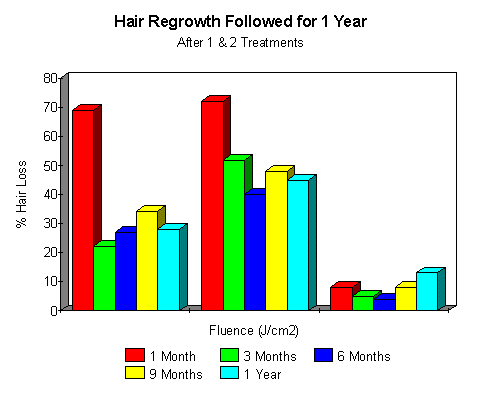
Studies were performed at Massachusetts General Hospital and the Laser and Skin Cancer Center of New York. Large test sites on the back or thighs of 58 consecutive patients with skin type I-V (fair to dark-skinned) and any hair color, were shaved and treated with a rance of 15-40 J/CM2 fluence, using the LightSheer diode laser. Baseline and subsequent regrowing terminal hair counts were taken from high-quality digital images of each site. Adjacent, untreated control sites were also counted. Results from one and two treatments given approximately two months apart, were compared in each patient, at each fluence. Treatment at any body site elected by the patient was also given. Efficacy is best appreciated as the percentage of terminal hair which regrows over time, shown below for different fluences:
Figure 1. Hair regrowth followed for one year after 1 and 2 treatments, at a fluence of 40 J/cm2. Shaved control sites (right hand cluster) received no laser treatment.
-
First Data Set - 1 Treatment only, at 40 J/cm2
-
Second Data Set: - 2 Treatments, both at 40 J/cm2
-
Third Data Set - Shaved Control - no treatments
The data in Figure 1 is not just "best cases" it is from all consecutive patients treated under identical conditions. The study showed:
- 100% of patients have complete or nearly-complete, temporary hair loss for 1-3 months after each treatment, at all laser fluences.
- Long-term reduction of hair occurred in the majority of patients.
- Histology (not shown) was consistent with miniaturization of hair follicles, and granulo matous degeneration of hair follicles as\ the dominant mechanisms for loss of terminal hair.
About 70% of patients with black, brown, auburn, or red hair had long-term hair reduction, whereas only about 10% of patients with blonde hair had long-term hair reduction. The degree of long-term hair reduction was fluence-dependent
SIDE EFFECTS
No scarring has been observed, but it is wise to warn patients that this might occur rarely after any skin treatment. The most common side-effect, seen in about one patient in six, is transient hyper- or hypo-pigmentation, which clears in 1-6 months. Pigmented lesions such as lentigines and freckles may become permanently removed. These pigmentary changes are fluence- and skin type-dependent; the ideal patient for laser hair removal has dark hair and fair skin. Moderate pain, perifollicular erythema and edema occur commonly and resolve within a few days after each treatment. Local blisters rarely may occur at high fluences in dark-skinned patients.
TREATMENT GUIDELINES - HAIR REMOVAL
Skin color
Tolerated fluence is set by epidermal pigmentation. Fair-skinned patients are most easily treated. For patients presenting with a "tan" or with dark skin type, pretreatment with topical 4% hydroquinone (or other bleaching agents), sunscreen and sun avoidance for 6 weeks, should be considered prior to laser treatment.
Hair color
Temporary (1-3 month) hair loss almost always occurs after each laser treatment, regardless of hair color. However, the effectiveness for a permanent hair reduction is strongly correlated with hair color. Blonde or white haired patients are unlikely to experience a permanent reduction in hair. Hair loss in these patients can be maintained if desired, by treatment at approximately 3-month intervals.
Anesthesia
LightSheer's cold handpiece greatly reduces pain during treatment. Although less-sensitive areas (back, legs, axillae) can frequently be treated without any anesthesia, topical anesthesia is generally used, e.g. EMLA!.
Technique
Patients should not epilate or pluck hair for several weeks before treatment. Hair is shaved, usually before application of anesthetic, prior to laser treatment. After removal of anesthetic cream (if used), laser pulses at the desired fluence and spot size are delivered with the handpiece pressed firmly against the skin. The handpiece is then picked up and placed firmly on an adjacent site, until the desired area is covered. Because of active cooling, overlapping pulses to one skin site are not harmful.
Immediate responses
The ideal immediate response for hair removal, is vaporization of the hair shaft with no other apparent effect. After a few minutes, there is perifollicular erythema and edema. if there is confluent edema or a positive Nikolski sign (epidermal separation forced by lateral pressure on the skin), fluence should be reduced.
Body site
All body sites except the eye can be treated safely.
Safety
This high-energy laser system is specifically designed for deep tissue penetration, and strong absorption by melanin. it is capable of causing severe retinal injury when applied near the surface of a patient's eye. Do not use this laser or similar devices on or near the surface of a patient's eye. Use anywhere inside the skeletal orbit may potentially cause direct eye injury. Proper eye protection must also be worn by patient and operating personnel to prevent inadvertent exposure to the eyes.
SUMMARY
The LightSheer Diode has been shown to be safe and effective for pigmented hair removal. The actively-cooled handpiece combined with long pulse duration and smooth pulse structure, reduces epidermal injury.
REFERENCES CITED
Anderson RR, Parrish JA "Selective photothermolysis: precise microsurgery by selective absorption of pulsed radiation" Science 220: 524-527, 1983
Grossman MC, Dierickx CC, Farineiii WA, Flotte Tj, Anderson RR "Damage to hair follicles by normal-mode ruby laser pulses" J Amer. Acad. Dermatol 35: 889-894, 1996
Dierickx CC, Anderson RR "Permanent hair removal by normal-mode ruby laser" Arch Dermatol. 1998 (in press)
Anderson RR, Parrish JA "Optics of human skin" J. Invest. Dermatol. 77:13-19, 1981
Note., In addition to hair, removal, the LightSheer Diode Laser System is also cleared for the treatment of leg veins.
R. ROX ANDERSON
3.A Brief History of Laser Hair Removal Technology
Alison Sahoo
Palomar Medical Technologies, Inc.
December, 1997
The laser was invented in 1957 by American physicist Gordon Gould and developed into a working model three years later by Dr. Theordore Maiman. Since that time, it has become the cornerstone of a wide variety of medical and aesthetic applications, including long lasting removal of unwanted hair.
Laser energy, when applied directly to the human body, is absorbed by either the blood (hemoglobin), water (in the skin) or melanin (1), depending upon the color of the laser light used. Lasers generating colorless light (carbon dioxide and erbium lasers), blue-green light (argon laser), yellow light (pulsed dye and argon-pumped tunable due lasers), green light (copper vapor and krypton lasers) and red light (ruby, alexandrite and Nd:YAG lasers) were found early on to exhibit different properties and each be preferable for different medical procedures. Their highly precise beams were able to reduce bleeding during surgery; facilitate removal of diseased tissue, and reduce the need for anesthesia, enabling many procedures to be done on an outpatient basis. Additionally, healing time was often reduced, along with the sizes of post operative scars.
Early Investigation
Shortly after the laser's introduction to medical applications in the early 1960's, Dr. Leon Goldman began investigating the use of lasers to disable hair follicles. His goal was to develop a system which would treat many hairs at the same time - a bulk procedure which would treat large and/or densely-haired areas quickly. Although the concept was good, his system of directing laser energy at the melanin in the hair follicle resulted in damage to the surrounding skin (hyperpigmentation, hypopigmentation and/or blistering) when the free floating melanin in the epidermis also absorbed the ruby laser light. It would be nearly 30 years before the technology was developed which would control this unacceptable side effect.
Several companies, however, were inspired by these early efforts to use lasers for hair removal. In 1968, Union Carbide's Korad division commissioned a study by Dermascan (manufacturer of the Proteus thermolysis machine) of the effects of applying laser energy directly to each hair follicle. They found that while this could be a viable modality to disable the growth process, a delivery mechanism (probe) could not be developed which would transmit sufficient laser energy but still be thin enough to be comfortable for the patient.
Nonetheless, in the early 1970's, Omnicron Corp. launched a photo epilator which used coherent light (similar to, but less penetrating than today's directed laser energy) to epilate hair. This was the first commercial attempt to disable hair follicles using the power of light, and did so by means of inserting a fiber optic probe into each hair follicle. As predicted by the Korad study, the system failed when it became obvious that sufficient light energy could not be comfortably introduced into each follicle with the probe.
This early attempt was followed by other companies who marketed systems that, like the Onmicron device, subjected individual hair follicles to directed light. In the early 1980's, Lasetron, Inc. utilized an argon laser to direct energy at the hemoglobin surrounding individual hairs. This technology heated the hemoglobin and thereby coagulated the follicles. Although this device did prove effective indisabling the hair follicles, it was not faster (although it was considerably more expensive) than conventional electrolysis. It soon became apparent that this was not an economically viable procedure, and conventional electrolysis(2) remained the treatment of choice for long term/permanent hair removal.
Additional research into hair-by-hair epilation using light energy continued, and several technologies, including laser systems developed separately by Dr. Dennis Weisman at the University of Michigan, Paradigm Laser, Inc. of New York, and a directed light source similar to the Omnicron system (the "D'Plume" system manufactured by Carol Block, Inc.) have also been investigated. Although some of these have been patented and/or licensed for use, they have not yet been shown to offer any benefit over conventional electrolysis.
While these early systems involved application of laser light to individual hairs, the holy grail of hair removal has remained the bulk treatment of many follicles at once. This reduce the time required to treat an area by a factor of 50 or more and eliminate the need for repeated short-term treatments (waxing, shaving, depilatories). Both corporate and academic researchers continue to work on this problem, and several systems were investigated. Many of these technologies have since been commercialized (see "Current Technologies"). The first company to market a bulk treatment laser hair removal system became Thermolase, Inc. when it opened the first of a world wide chain of laser hair removal salons in La Jolla, California in January of 1996.
Current Technologies
The SoftLight system was developed in the early 1990s when Thermolase's parent company, ThermoElectron, built and tested a low-power (for which skin cooling was not an issue) Nd:YAG laser for the removal of tattoos and birthmarks. In the process of treating body areas, it was noticed that, in certain cases, the hair fell out and did not readily return. The system was optimized by varying the
treatment parameters - notably by waxing the body area first and applying a black carbon gel which would absorb the laser energy and more completely disable the follicles.
During this time, some two dozen specialized laser companies that had been actively researching medical applications, began to introduce systems that would treat a variety of medical and aesthetic conditions. Many of these systems represented the results of extensive research - on average 5 - 7 years of hardware development and 3 - 5 years of clinical testing. The new laser procedures quickly found acceptance by both physicians and patients, with more than 400,000 PRK procedures for nearsightedness performed worldwide since the treatment's introduction in 1988 and over 200,000 skin resurfacing procedures performed since inception in 1994. The total estimated 1996 laser system sales of $1.28 billion meant approximately 9,700 new installed systems worldwide. The body of research on laser-tissue interactions that has resulted from these ophthalmic (nearsightedness, farsightedness, glaucoma, macular degeneration, etc.), gynecological (hysterectomies, breast reduction, etc.) dental (lesion removal, crown lengthening, bridge impressions, gum reshaping, whitening, hole drilling, etc.) surgical and aesthetic (skin resurfacing, removal of wrinkles, tattoos, spider veins, lesions, warts, stretch marks, scars, etc.) systems has also been used to further the development of systems specifically designed for hair removal.
In 1994, Dr. R. Rox Anderson and Dr. Melanin Grossman of the Massachusetts General Hospital Wellman Laboratories of Photomedicine, working with the Goldman model of a high-power ruby laser directing energy to the melanin in the follicle, hit upon the idea of using a water-cooled delivery handpiece to cool the skin surface when the laser energy was applied to many follicles. This proved to be the key in making the melanin-model viable. Over the next 2 years, the key operating parameters of spot size, fluence (energy density), pulse duration and repetition rate were optimized so that the maximum amount of energy could safety be delivered to the largest skin area with each pulse and create a heating effect in the follicle ("photothermolysis") that would prevent regrowth. This process of photothermolysis - coagulating the follicle using light energy - is analogous to the electrolysis modality of thermolysis, in which a heating effect is created in the follicle using short-wave energy. This maximizes the damage to the hair follicles, for a treatment that offers clients freedom from unwanted hair for several times as long as the nearest non-permanent alternative.
Since the commercialization of the Anderson-Grossman technology (marketed by Palomar Medical Technologies, Inc. as the EpiLaser), 5 other laser hair removal systems have been cleared to market by the US FDA that incorporate skin-cooling technologies and offer bulk hair removal via photothermolysis. Several of these use proprietary cooling gels, which, when applied to the skin during laser treatment absorb excess energy and prevent skin from damage. Others deliver laser energy of a longer pulse duration that theoretically is absorbed more completely by the target follicles ("thermokinetic selectivity") with less heat absorption in the skin. With the exception of the SoftLight Nd:YAG, all of these systems target laser energy to the melanin in the follicle to create a heating effect and prevent regrowth.
It should also be noted that of the 9 laser or photo-based systems currently cleared to market by the US FDA for bulk hair removal, 2 of these are non-laser light sources. These technologies deliver coherent, columnated light of many wavelengths (colors) which the system operator filters to select the wavelength best suited for absorption by melanin in the follicle.
What does the future hold? With more than 600 US facilities now offering laser hair removal, this treatment appears to meet a strong consumer demand for quick, long lasting hair removal. In Europe and Australia, where the treatment has been offered since 1995, public enthusiasm remains strong. Research continues to optimize both results (provide the longest lasting, most consistent results with minimal adverse side effects) and equipment (boost system reliability, ruggedness and ease of use). Practitioners are also developing new ways to integrate laser with electrolysis for both quick and permanent results, and improving pre & post treatment protocols to minimize side effects and maximize results.
Notes
- These are the only naturally occurring substances in the human body that will absorb laser energy. Tattoo ink can also act as a chromophore, and is effectively removed using the Q-switched ruby laser.
- Electrolysis here refers to the 3 needle-based modalities (galvanic, thermolysis, blend). It should be noted that in the 19 US states with no electrology licensing laws, the term "electrolysis" may also be used for the non-needle (aka "tweezer") modalities which claim permanent hair removal by touching target hairs with an electrified probe. These systems are dependent upon the hair conducting this current into the base of the follicle to create a heating effect and prevent regrowth. There is much current controversy in allied health circles as to the effectiveness of these technologies vis-à-vis needle electrolysis.