Biography
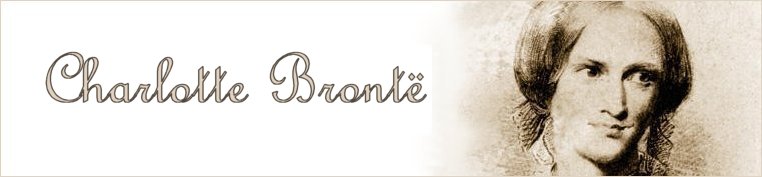
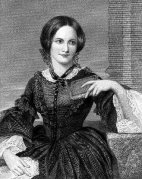
Charlotte Brontë was born in Thornton, Yorkshire, on 21st April 1816, the third of six children, although both her elder sisters, Maria (born 1814) and Elizabeth (born 1815), died in 1825 of tuberculosis. She was educated at the Clergy Daughters' School at Cowan Bridge, which later provided the inspiration for Lowood School in Jane Eyre, and Roe Head School in Mirfield, where she later returned as teacher for three years.
Charlotte worked as a governess in various private houses from 1839 to 1841, before she and her sister Emily travelled to Brussels in 1842 to enroll in a school run by Constantin Heger, with whom Charlotte is reportedly have fallen in love. Her time in Brussels provided the inspiration for The Professor.
Charlotte's first publication was a collection of poetry written with both her sisters under the assumed names of Currer, Ellis and Acton Bell, published in 1846. It was not a success, selling only two copies. Charlotte turned to her novels after this failure, continuing to use the name Currer Bell as a pseudonym until she was persuaded to reveal her identity in the wake of the enormous success of Jane Eyre.
Charlotte married Arthur Bell Nicholls, her father's curate in Haworth, Yorkshire, in 1854, only to die nine months later during her first pregnancy. It is unclear as to the cause of her death - both typhus and tuberculosis are possibilities. She was buried in the family vault in the Church of St. Michael and All Angels in Haworth.
The novels
Charlotte wrote four novels in her lifetime: Jane Eyre (published 1847), Shirley (1849), Villette (1853) and The Professor (published posthumously in 1857). Her novels were often deemed to be coarse and uncivilised by the critics of the time, especially when her female identity was revealed. Despite this they were all, most especially Jane Eyre, a resounding success, a success which has persisted throughout the years and has resulted in Charlotte's elevation to a position as one of England's greatest novelists.