 |
| Bulguksa |
|
|
 |
 |
 |
 |
| return to/ de retour a |
 |
 |
 |
| Les couleurs vives des batiments et statues nous ont frappe. A gauche on voit un des quatres gardiens du temples qui sont abrites dans un portail. Le dragon est une corniche au coin d'un batiment; on voit aussi les poutres qui supportent le toit. En-dessous 2 autres gardiens. |
| We found the colorful statues very impressive. Above: a decorative dragon head and beams supporting the temple's roof. |
| Every temple is protected by 4 huge statues representing demigods. They're housed in the last of three gates leading to the center of the temple. |
| Just outside the city of Gyongju we visited Bulguksa, the restored temple of the ancient Silla dynasty. Temple structures are mostly made of wood and therefore are reconstructions. The only original structures are the stone pagodas in the courtyard. This was our first visit to a Budhist temple and we were fascinated by the many halls where different bounsvathas are venerated. Peolple of all walks of life and ages mill about taking pictures, reading historical inscription and occasionally stopping in to a prayer hall. |
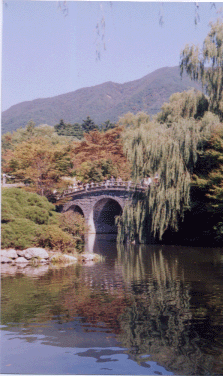
Vue de l'etang au poissons. Bridge over the watery mountain. |
| Le temple, situe a quelques minutes de la ville, est superbe. Afin de parvenir au batiments qui forment le coeur du temple nous avons traverse un beau jardin au milieu duquel se trouve un pitoresque etang. L'etang est habite par de gros poissons rouges (nourrit par les visiteurs) ainsi que des tortues. Les gens font prendre leur photo devant de tres enormes et vieux arbres. Certains viennent au temple pour rendre hommage a Buddha, certains simplement pour se detendre. |
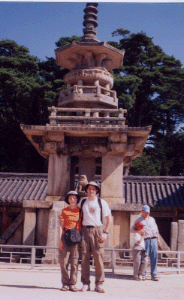
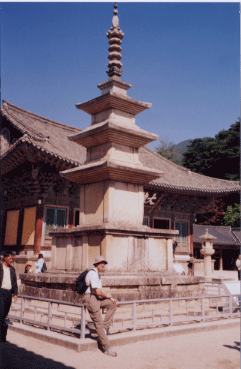
| Les deux celebres pagodes du temples se partage la principale cour interieure du temple. Leurs differents styles refletent les styles de deux differents periodes. A droite la plus ancienne dite a trois etages et a gauche la plus recente dite a quatre etages. |
| Korea's two most famous pagodas. Although we did not appreciate them nearly enough at the time, we have since seen a documentary explaning the complexity of mathematics that the Silla people intuitively apllied in building them. They are most rightfully National Treasure #1 and 2. |
| View of the roof tops from the elavated platform behind the main hall. The temple's architecture is remarkable. Nails were not used and the roofs are supported by beams and interlocking brackets at the corners. |
| P.S. Corbis.com has a library of pictures which are so superior to our own that we decided to use them. |
| Depuis l'arriere du temple ou peut observer les toits et l'architecture tres particuliere du temple. |
 |